


Large Blue White Vessel
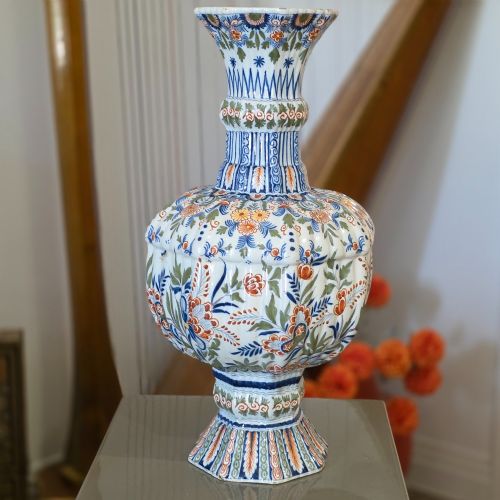
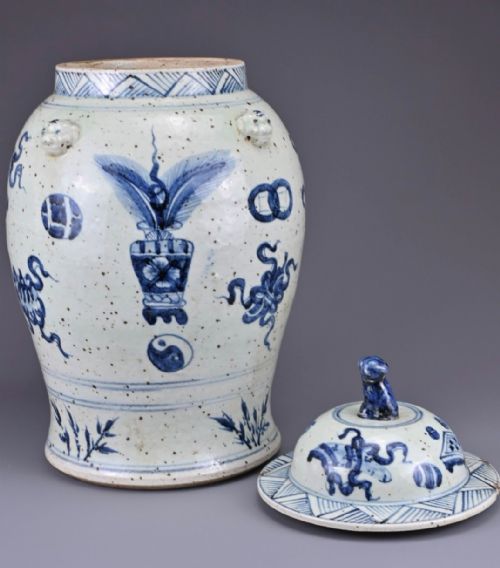
These large blue white vessel examples are substantial ceramic containers that command attention in a room through scale and cobalt pigment.
Large Blue White Vessel
When you examine a large blue white vessel on this page, you encounter forms ranging from massive jars and double-gourd vases to apothecary albarelli, jardiniere planters, and broad bowls. The selection spans the nineteenth century, eighteenth century, Edwardian era, and seventeenth century, drawing on diverse ceramic traditions including Chinese Qing Dynasty, Japanese Arita Imari, Dutch Baroque, and Italian Majolica faience. Most pieces you meet here are substantial ceramic or porcelain containers designed for display or utilitarian storage, combining scale with striking cobalt pigment decoration.
The utilitarian origins of these objects vary widely across the inventory, encompassing pharmacy wet drug jars, incense burners, brush pots, and wash basins alongside purely decorative vases. Makers and regions adapted the fundamental white ground and blue pigment formula to suit local aesthetic demands, producing both restrained scholarly vessels and flamboyant export wares. Buyers encounter pieces that served practical apothecary functions as well as those created entirely for interior ornamentation.
How they were made
The manufacture of these pieces relies primarily on porcelain and earthenware bodies finished with glazes and cobalt pigment. Potters painted cobalt directly onto the unfired clay body or onto an opaque tin glaze before applying a clear topcoat and firing the piece at high temperatures in a kiln. This technique allowed intricate botanical, figurative, and geometric motifs to fuse permanently with the glassy surface.
Makers utilised specialised techniques depending on regional tradition, such as the translucent body of Chinese porcelain or the porous earthenware base typical of Italian Majolica and Dutch Delft faience. Enamel additions occasionally supplement the cobalt decoration on later pieces, introducing secondary palettes that interact with the dominant blue and white scheme.
One nineteenth-century Japanese porcelain vase listed here is noted specifically for being unusual and amusing.
What varies in quality
Quality in these ceramics rests upon the clarity of the cobalt pigment and the precision of the brushwork across a large surface area. Superior pieces display deep, luminous blues with varied tonal gradations that do not bleed excessively into the surrounding glaze, while lesser examples present flat or muddy coloration with blurred outlines.
The structural integrity and potting skill required to fire a substantial ceramic form without severe distortion also separate standard output from finer examples. Well-balanced proportions, clean throwing or moulding lines, and a smooth, stable glaze surface distinguish the more accomplished works from heavier, coarser domestic productions.
Copeland & Garrett
The Large Blue White Vessel Glossary
- Albarello
- A cylindrical apothecary jar used in pharmacies and drugstores for holding dry or wet medicines, often featuring an incurved waist for easy gripping.
- Cobalt Pigment
- A metallic colourant applied under or over the glaze to produce deep blue decoration on ceramics when subjected to high kiln temperatures.
- Tin Glaze
- An opaque white lead glaze containing tin oxide, providing a smooth canvas for painted decoration on earthenware bodies such as Majolica and Delft.
- Double-Gourd
- A ceramic vessel form consisting of two bulbous sections stacked vertically, associated with traditional Asian kiln designs.
- Qingbai
- A type of Chinese porcelain featuring a pale bluish-green translucent glaze over an incised or carved white body.
Large Blue White Vessel: Frequently Asked Questions
What were large blue white vessels used for?
These pieces served varied functions ranging from holding medicinal wet drugs in apothecary jars to burning incense and storing scholar's brushes. Many larger examples were created primarily for interior display within grand rooms.
Over time, utilitarian containers transitioned into purely decorative objects, valued for their commanding presence and striking cobalt imagery.
How do I care for a ceramic vessel?
Keep large ceramic and porcelain vessels out of direct sunlight and away from temperature fluctuations that might stress the glaze. Dust them gently with a soft dry cloth.
Avoid using water or liquid cleaners on antique pieces, particularly those with tin glaze or enamel additions, to prevent moisture damage.
How can I tell Japanese Imari from Chinese porcelain?
Japanese Imari pieces often incorporate iron red and gilt alongside cobalt blue on a slightly greyer or denser ceramic body. Chinese export porcelain typically relies more strictly on cobalt blue decoration against a brighter white ground.
Motifs also differ, with Japanese wares frequently displaying dense floral and textile-inspired patterns.
What is Majolica faience?
Majolica is a type of tin-glazed earthenware developed in Italy during the Renaissance and continued in later centuries. The porous clay body is coated in an opaque white glaze that accepts painted pigments directly.
This technique produced vibrant pharmacy jars and decorative vessels with distinctively matte or semi-gloss surfaces.