


Blue White Bottle Vase
These blue white bottle vase examples range from seventeenth-century Dutch delftware to nineteenth-century Chinese porcelain, shaped by centuries of cobalt decoration.
Blue White Bottle Vase
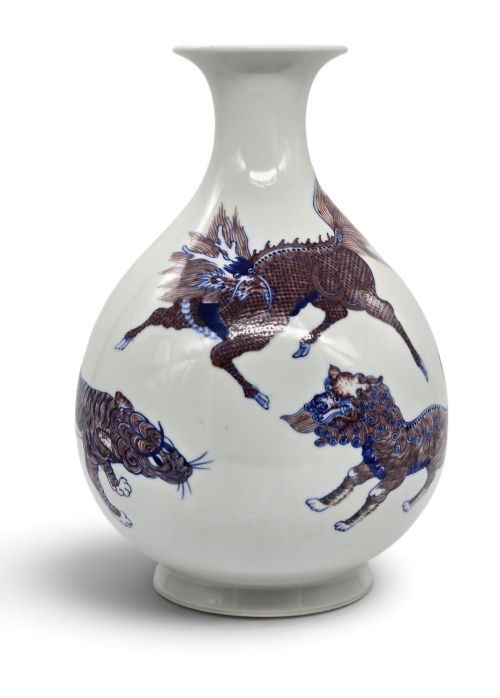
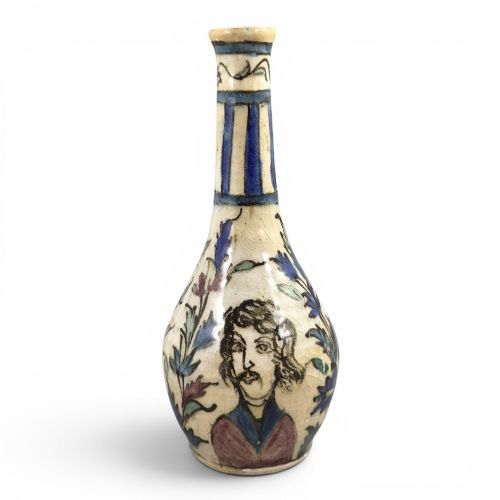
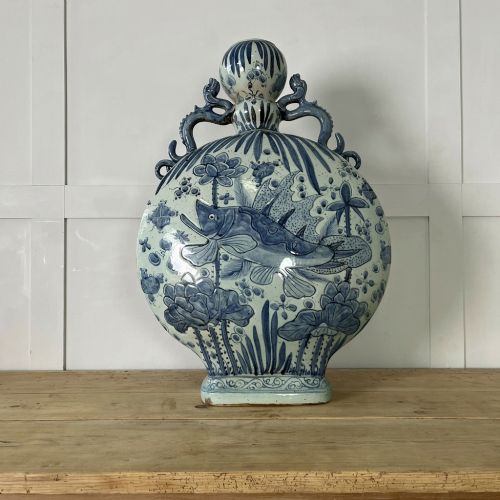
A blue white bottle vase takes the form of a slender neck rising above a rounded body, shaped for holding single stems or standing as a display piece. The pieces seen here span centuries, originating from Chinese kilns, Japanese workshops, Persian furnaces, and European potteries.
Chinese porcelain forms the core of what you will encounter, featuring underglaze cobalt painting across periods from the Wanli era through the late Qing dynasty. Alongside these, Dutch delftware, Italian majolica, and English Lambeth pottery provide the European tin-glazed interpretations of the oriental aesthetic.
The silhouettes vary from wide garlic-mouth openings and moon flasks to tall pharmaceutical albarelli and wine bottles. Collectors find domestic British delft sitting beside export wares and Japanese Arita productions, each adhering to the restricted palette of blue pigment on a white ground.
How they were made
Potters shaped these bodies from porcelain, ceramic, fritware, and tin-glazed earthenware before applying cobalt oxide designs by hand. The pigment went onto the raw clay or tin enamel, absorbing the clear glaze during high-temperature firing to achieve the characteristic deep blue hue.
Techniques shifted between the traditions of Jingdezhen, Arita, and European delft potteries, utilising underglaze painting and tin glazes to create opaque white surfaces. Copper-red details occasionally join the cobalt oxide on nineteenth-century pieces, adding variation to the monochrome scheme.
Listings feature porcelain, ceramic, fritware, and tin-glazed earthenware spanning from the seventeenth century through the 1930s.
What varies in quality
The clarity and depth of the cobalt pigment dictate the visual strength of each piece, distinguishing hurried factory production from careful brushwork. Control over the kiln firing determines whether the white ground remains crisp and the blue tones stay sharp without blurring.
The precision of the potting, from the weight of the base to the symmetry of the flaring neck, marks the skill of the original workshop. Finer examples display controlled pictorial scenes, such as dragons or figures, painted with confident strokes rather than repetitive stencilling.
The Blue White Bottle Vase Glossary
- Albarello
- A cylindrical pottery jar used by pharmacies for storing drugs and ointments. Italian majolica examples often feature waisted sides for easier gripping.
- Chinoiserie
- European artistic interpretations of Chinese decorative styles. Dutch and English potteries employed this aesthetic during the seventeenth and eighteenth centuries.
- Tin-Glazed Earthenware
- Pottery coated in a lead glaze rendered opaque by the addition of tin oxide. This creates the white surface required for painting blue cobalt designs.
- Underglaze
- Pigment applied to a ceramic piece before it receives its final clear glaze and firing. This technique protects the painted design beneath a glossy finish.
- Fritware
- A type of pottery utilising crushed glass or quartz mixed with clay to achieve a dense, white body. Persian Qajar pieces frequently relied on this compound.
Blue White Bottle Vase: Frequently Asked Questions
How do I date a blue white bottle vase?
Examine the base for reign marks, factory symbols, or characteristic potting traits that point to specific dynasties or European centuries. Foot rims and glaze textures provide physical clues about the era of manufacture.
Compare the cobalt shade and painting style with known examples from periods like the Kangxi reign or eighteenth-century English delft production.
Are these vases meant for holding water?
Many antique ceramic and porcelain vessels remain porous or hold historical repairs that make modern use risky. Earthenware bodies, in particular, can seep moisture through hairline fractures.
Displaying them dry protects the glaze and structural integrity of fragile nineteenth-century and earlier pieces.
What is the difference between porcelain and delftware?
Porcelain is fired at extremely high temperatures using specific clays to create a vitrified, non-porous body that rings when struck. It originated primarily in Asian kilns.
Delftware uses a softer earthenware body covered in an opaque tin glaze to imitate the appearance of imported Chinese porcelain.
How should I clean my bottle vase?
Dust the surface gently with a soft, dry cloth to remove everyday particles. Avoid abrasive cleaners or soaking pieces with old repairs.
Water can destabilize historical adhesives or penetrate unglazed foot rims, so minimal intervention preserves the material best.