

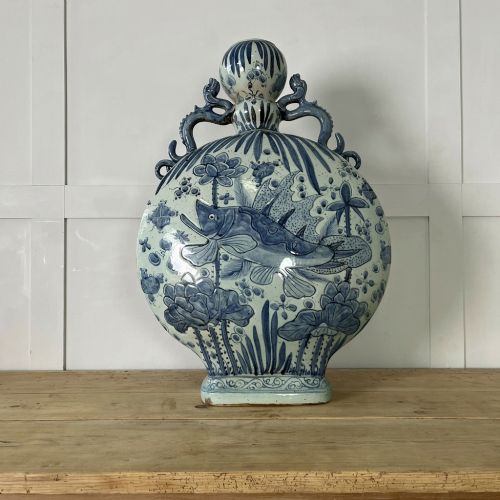


Traditional Chinese Vase
These traditional chinese vase examples combine porcelain, cloisonne and lacquer craftsmanship from the nineteenth and early twentieth centuries.
Traditional Chinese Vase
A traditional chinese vase selection encompasses porcelain, cloisonne enamel and carved lacquer pieces spanning the nineteenth and early twentieth centuries. These objects range from miniature vessels to monumental temple vases, alongside examples adapted into table lamps with fabric shades.
Blue and white porcelain bottle vases, double gourd vessels and dragon motifs dominate the evidence. Buyers also encounter Famille Rose, Famille Verte, crackleware and celadon glazes.
Many items originate from the Qing Dynasty, Guangxu period and Cantonese workshops. Plant stands, jardinieres and moon flasks supplement the primary vase forms.
Materials and Techniques
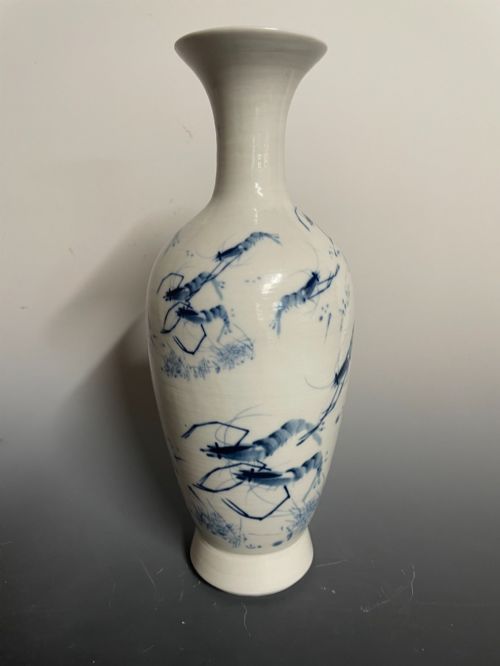
Porcelain serves as the primary medium, shaped into bottle vases, meiping vessels and moon flasks finished with cobalt glaze, flambe effects or crackleware textures. Underglaze blue painting and seal marks define many ceramic bodies.
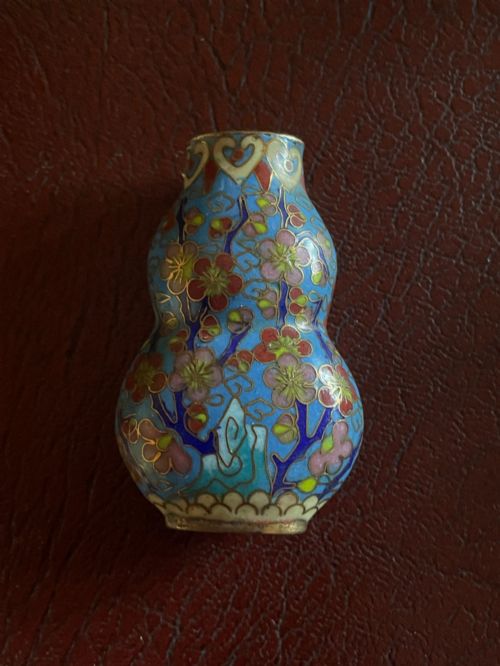
Cloisonne enamel on brass wirework provides colourful decorative surfaces, frequently paired with twin handles or miniature proportions. Carved red cinnabar lacquer introduces deep relief carving on wooden cores.
Export pieces often incorporate silk and fabric elements when mounted as lamps alongside brass and wood components.
Listings feature porcelain, brass, wood, enamel, fabric, silk, cobalt glaze and copper across nineteenth and early twentieth century periods.
Judging Quality
The refinement of the hand-painted cobalt blue or enamel detailing distinguishes standard production from superior artistry. Crisp lines in cloisonne wirework and deep, clean relief carving on cinnabar lacquer mark out better examples.
Condition of the glaze, integrity of the porcelain body and originality of any applied mounts or bases dictate the standing of a piece. Converted lamps retain varying degrees of original vessel fabric.
The Traditional Chinese Vase Glossary
- Cloisonne
- Enamelwork created by pouring coloured pastes into compartments formed by soldered metal wires on a metal base. This technique produces intricate patterns across vases and lamps.
- Meiping
- A high-shouldered vase form originally designed for holding plum branches. These vessels taper towards the base with a narrow neck.
- Famille Rose
- A palette of opaque enamels dominated by pink or rose colours introduced during the Qing Dynasty. It adorns numerous nineteenth-century export vases.
- Crackleware
- Pottery featuring a network of fine cracks intentionally created in the glaze during firing. It appears on several nineteenth-century blue and white pieces.
- Celadon
- A pale green jade-like glaze applied to porcelain bodies. It creates a subtle translucent surface finish.
Traditional Chinese Vase: Frequently Asked Questions
How are these vases dated?
Dating relies on stylistic indicators, glaze types, reign marks such as Quianlong or Kangxi references, and documented production periods from the nineteenth and early twentieth centuries.
Changes in palette, such as the introduction of Famille Rose enamels, help narrow down the decade of manufacture.
Were these vases used as lamps?
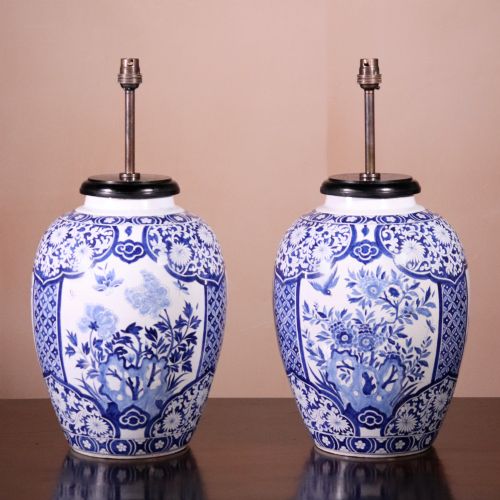
Many traditional chinese vase examples were adapted into table lamps during the nineteenth or twentieth centuries, often incorporating silk shades and fitted wooden bases.
Original ceramic forms included temple vases, bottle vases and moon flasks intended for display.
What is a moon flask?
A moon flask is a flattened spherical porcelain vessel featuring a short neck and two loop handles. The shape derives from nomadic leather canteens.
Examples in the evidence include extra large porcelain versions finished in traditional styles.
How do I identify Canton porcelain?
Cantonese porcelain typically displays vibrant Famille Rose or Rose Medallion enamel decoration featuring figurative and floral scenes. These pieces frequently date to the nineteenth century.
They appear both as standalone vases and as pairs adapted into lamp bases.