




Large Blue Serving Dish
A large blue serving dish brings centuries of ceramic artistry and generous proportions to the table for grand feasts.
Large Blue Serving Dish
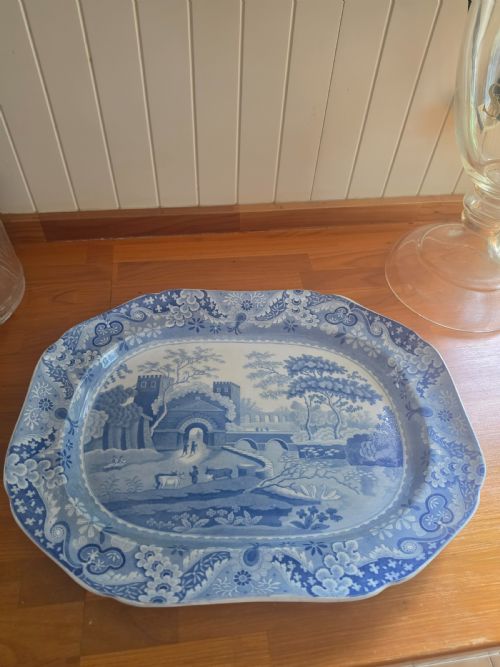
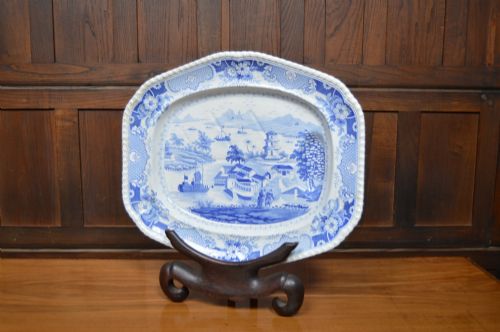
When you search for a large blue serving dish, you encounter substantial platters, chargers, and meat plates designed for domestic hospitality across the eighteenth and nineteenth centuries. These vessels served the dining table during formal meals, accommodating large joints of meat, game, or copious amounts of vegetables.
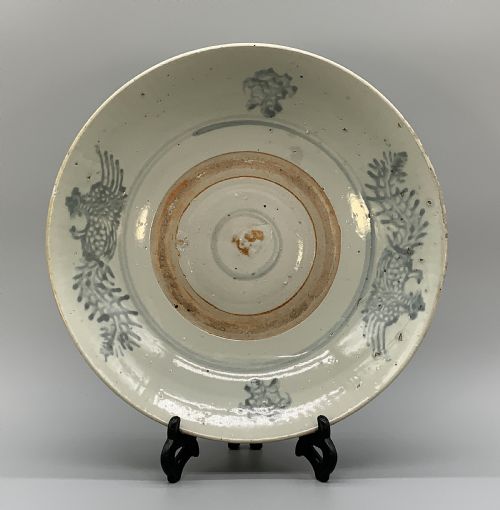
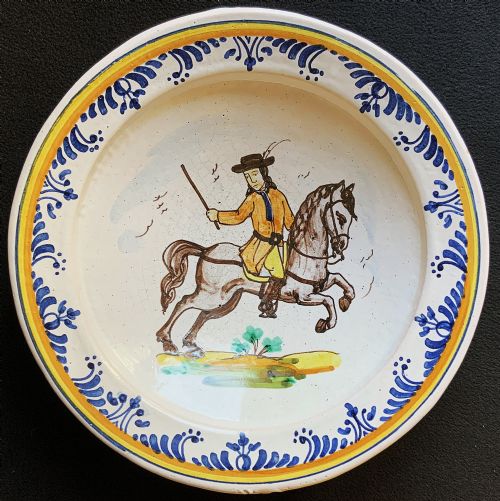
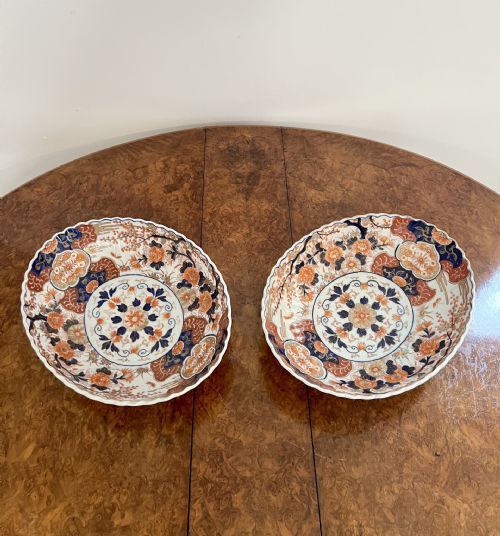
The versions most commonly met on this page span the Victorian and Regency periods, alongside earlier English earthenware, robust ironstone, and imported oriental porcelains. Makers utilised transfer printing, hand painting, and deep cobalt pigments to decorate these wide surfaces with landscapes, temple scenes, and floral motifs.
Forms range from flat meat platters with integrated drainage wells to deep soup tureens and scalloped display chargers. Their origins stretch from English earthenware factories to continental porcelain houses and Japanese kilns.
How they were made
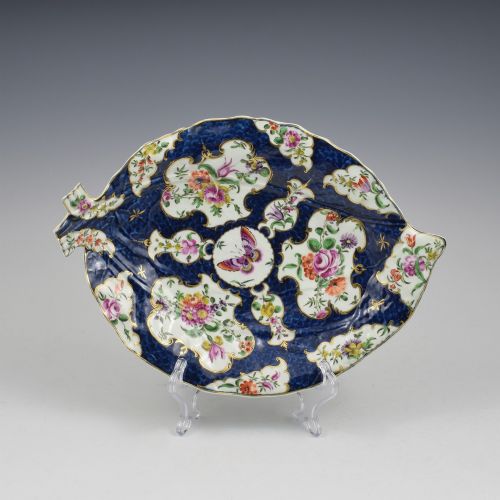
Potters shaped these pieces using earthenware, porcelain, ironstone, and glass, applying opaque glazes and rich enamel colours. Earthenware and ironstone provided the sturdy body required for heavy daily service, while porcelain allowed for finer, translucent walled dishes.
Decoration relied heavily on copperplate transfer printing in deep blue pigments, supplemented on select pieces by hand painted details and gold leaf gilding. Kiln firing fixed the cobalt under the glaze, ensuring the characteristic deep blue coloration remained durable and bright over centuries of use.
Listings feature eighteenth and nineteenth century periods, utilising earthenware, ironstone, porcelain, and glass across various regional styles.
What varies in quality
Quality reveals itself in the crispness of the transfer print, the clarity of the white ceramic body, and the complexity of the painted or moulded design. Superior pieces display deep, uniform cobalt blue without smudging, alongside sophisticated hand finishing and robust potting.
The distinction between standard utility wares and top tier examples lies in artistic ambition, such as intricate Well and Tree reservoirs for meat juices, hand painted polychrome enamels, and esteemed factory marks from renowned potteries.
Spode·Copeland and Garrett·Minton·Mason·Ridgway·Don Pottery·Elkin Knight and Bridgwood·Samson
The Large Blue Serving Dish Glossary
- Transferware
- Earthenware or porcelain decorated by applying a paper transfer printed from an engraved copper plate. This technique allowed intricate pictorial scenes like pastoral landscapes and temple views to be reproduced rapidly in deep blue.
- Ironstone
- A dense, durable type of ceramic patented in the nineteenth century to imitate Chinese porcelain. It resists chipping and staining much better than standard earthenware, making it ideal for heavy serving platters.
- Charger
- A large decorative or serving plate that exceeds standard dinner plate dimensions. They often display elaborate painted or printed scenes and sat at the centre of formal tables.
- Well and Tree
- A specialised serving platter featuring a carved channel system and a central well to collect juices from roasted meats. This design kept the meat elevated during carving.
- Pearlware
- A refined form of earthenware developed in the late eighteenth century featuring a subtle bluish glaze that pooled in recesses. It bridged the gap between creamware and later white ironstone.
Large Blue Serving Dish: Frequently Asked Questions
How were large blue serving dishes used?
These large vessels were principal dining table fixtures designed to present roasted meats, game, or communal portions during formal meals. Their generous surface area accommodated substantial quantities of food for family gatherings and feasts.
Many featured specialised wells and drainage channels to collect carving juices, while decorative chargers remained on display or held fruit and side dishes when not serving meat.
How do I care for antique ceramic platters?
Wash antique earthenware and porcelain gently by hand using mild detergent and warm water. Avoid modern dishwashers, as harsh detergents and abrasive heat cycles damage historic glazes and delicate gilding.
Store large platters securely in plate racks or flat on padded shelves to prevent edge chipping and strain on their historical bodies.
How do I distinguish ironstone from earthenware?
Ironstone possesses a significantly heavier, denser feel and a more opaque, vitreous body than standard porous earthenware. When struck lightly, high quality ironstone produces a clearer, higher pitched ring.
Ironstone also resists crazing much better than typical nineteenth-century earthenware dishes.
What does transfer printing look like on old dishes?
Transfer printed designs exhibit fine, stippled lines formed by engraved copper plates pressed against tissue paper. Under magnification, you may spot tiny overlapping joins or slight blurring where the printed paper met the curved ceramic surface.
The cobalt blue colour sits beneath or within a glossy clear glaze, giving the pattern depth and permanence.