




Antique Blue Glazed Platter
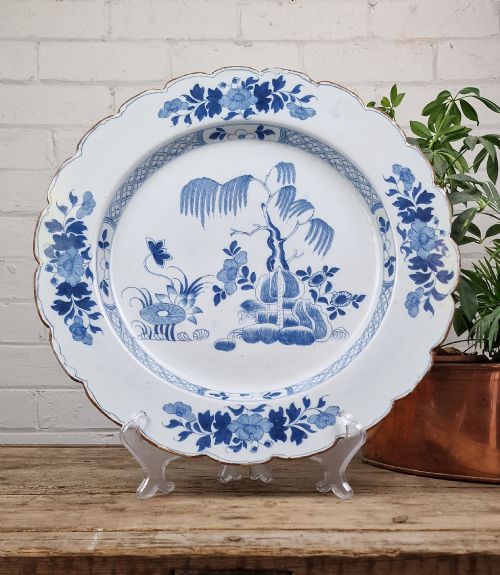
An antique blue glazed platter brings rich tin-glazed earthenware and transfer-printed ceramics into a room, offering centuries of decorative artistry for your table.
Antique Blue Glazed Platter
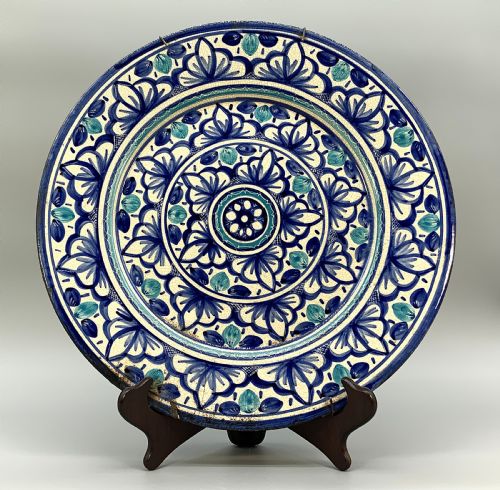
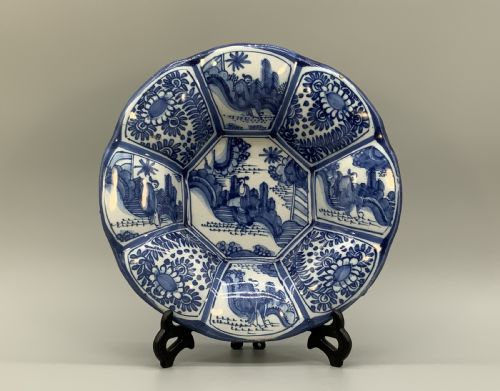
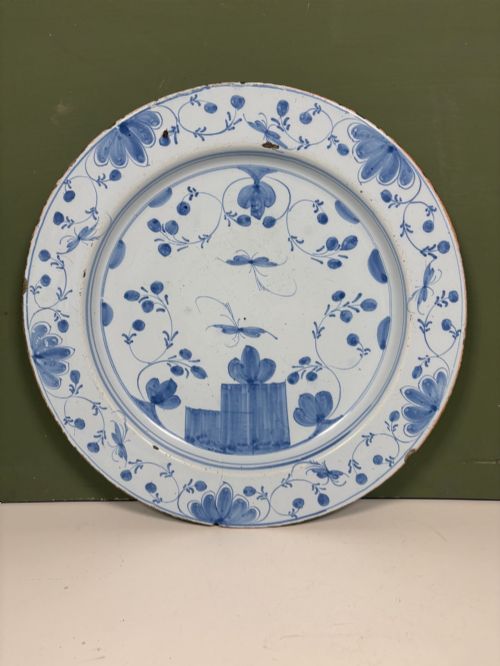
When you search for an antique blue glazed platter, you encounter large chargers, serving dishes, and decorative plates spanning from the seventeenth century through the Victorian era. The selection centres heavily on tin-glazed earthenware chargers from English and Dutch potteries, alongside later nineteenth-century transfer-printed meat platters and continental faience.
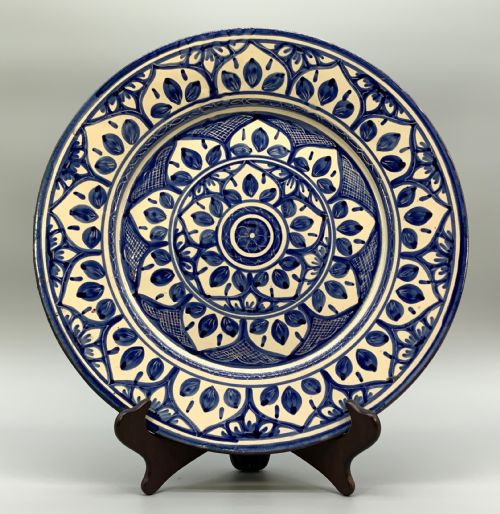
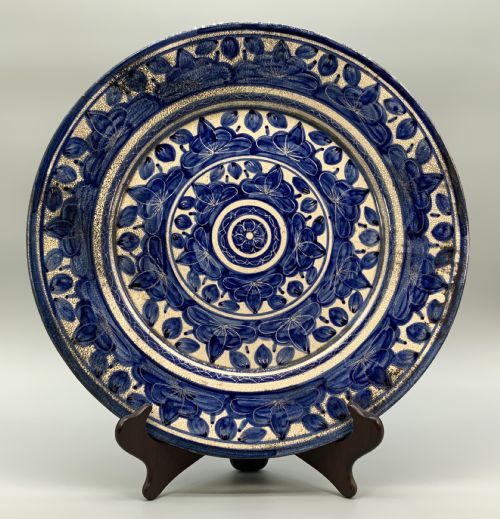
These forms served practical dining roles on large tables or functioned as decorative wall displays in domestic interiors. The domestic serving dish and the wide charger dominate the selection, showing deep blue pigments applied over white grounds in various regional traditions.
Materials and Techniques
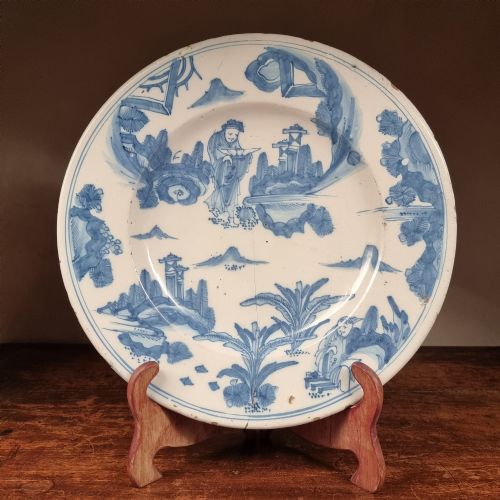
Potters shaped earthen clays on the wheel or pressed them into moulds to create heavy chargers and serving dishes, finishing them with tin glazes that provided an opaque white surface. Artisans painted cobalt pigment directly onto this absorbent glaze before firing, capturing deep blue tones that reacted uniquely in the kiln.
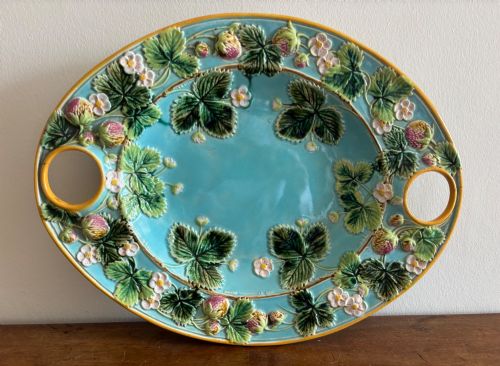
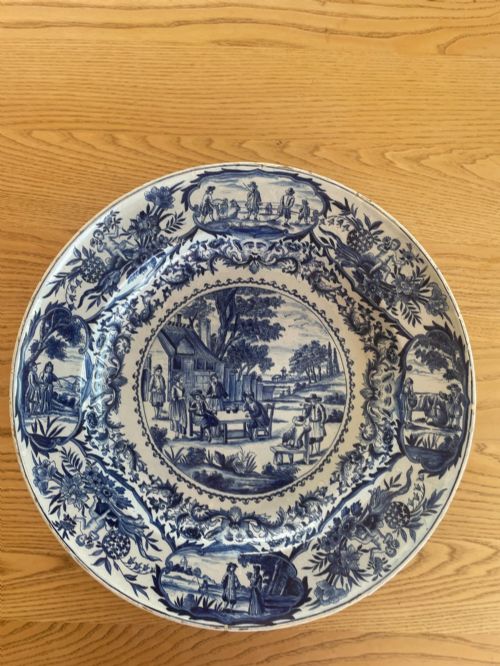
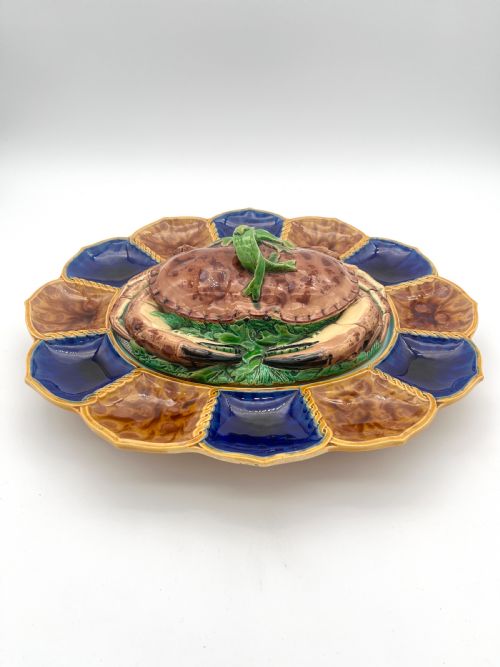
Later nineteenth-century pieces introduced transfer printing techniques, allowing intricate pictorial scenes like the Bridge of Lucano to transfer smoothly onto stoneware and earthenware bodies. Enamel colours occasionally joined the cobalt pigment, particularly in polychrome delftware and majolica productions.
The listings span multiple centuries, ranging from seventeenth-century English and Dutch delftware to nineteenth-century Victorian majolica and transfer-printed earthenware.
Assessing Visual and Technical Merit
Quality rests in the crispness of the cobalt painting, the stability of the tin glaze, and the balance of the ceramic body. Early delft chargers often show natural kiln warping and glaze pooling, which demonstrate genuine age rather than mechanical production.
The sophistication of the painted motif separates standard domestic ware from masterworks, whether through detailed Chinoiserie landscapes or historical Istoriato scenes. Finer pieces retain strong pigment saturation and uniform glaze coverage across the entire surface of the charger.
George Jones·Minton·John Ridgway·Spode·Moorcroft
The Antique Blue Glazed Platter Glossary
- Charger
- A large decorative plate or serving dish, typically measuring over twelve inches in diameter. These pieces often hung on walls or anchored formal dining tables.
- Tin-Glazed Earthenware
- Pottery coated with a lead glaze made opaque by the addition of tin oxide. This white surface served as the canvas for blue cobalt painting.
- Delftware
- Tin-glazed earthenware produced in the Netherlands and England, famous for blue and white designs. It frequently incorporates stylistic elements inspired by imported Chinese porcelain.
- Transfer Printing
- A mechanical decoration technique developed in the eighteenth century. It applied engraved copperplate prints onto ceramic surfaces using paper transfers.
- Maiolica
- Tin-glazed earthenware originating in Italy, often decorated with vibrant historical or classical scenes. The technique spread across Europe, influencing continental faience.
Antique Blue Glazed Platter: Frequently Asked Questions
What is a charger plate?
A charger is a large decorative plate historically used as a base for other dishes during formal meals or displayed upright on walls.
These substantial pieces measure significantly wider than standard dinner plates, making them ideal centerpieces for historical table settings.
How do I care for antique pottery?
Antique earthenware requires gentle handling, hand washing with mild soap, and complete avoidance of modern dishwashers.
Keep these ceramic pieces away from sudden temperature changes and direct sunlight to protect their fragile tin glazes and pigments.
How do I date delftware?
Dating involves examining the clay body, the thickness and colour of the tin glaze, and the painting style on the reverse.
Earlier seventeenth and eighteenth-century pieces often exhibit distinct foot rims, glaze crazing, and characteristic hand-painted blue pigments.
What is transfer printing?
Transfer printing is a manufacturing process that transfers ink engravings from copper plates onto ceramic bodies via tissue paper.
This technique allowed potteries to produce intricate, consistent blue and white pictorial scenes on meat platters and tableware.