




Cobalt Blue Pottery Platter
A cobalt blue pottery platter brings rich historical depth and vivid colour to a table, uniting centuries of ceramic artistry through deep metallic pigment.
Cobalt Blue Pottery Platter
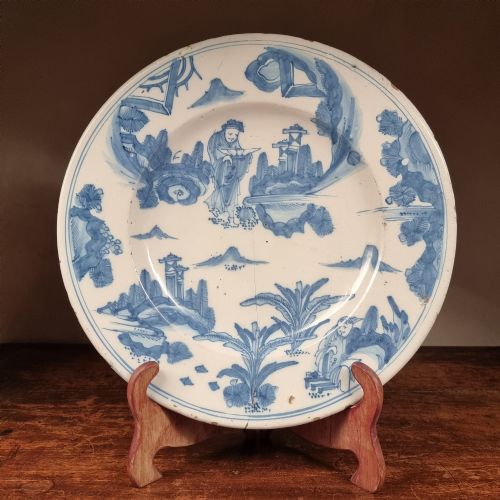
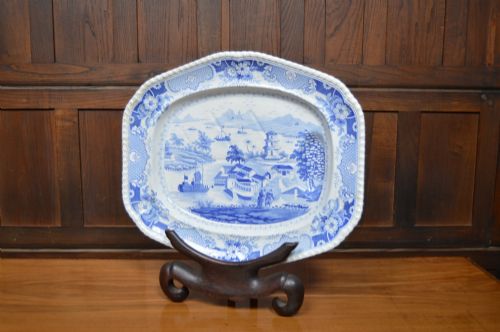
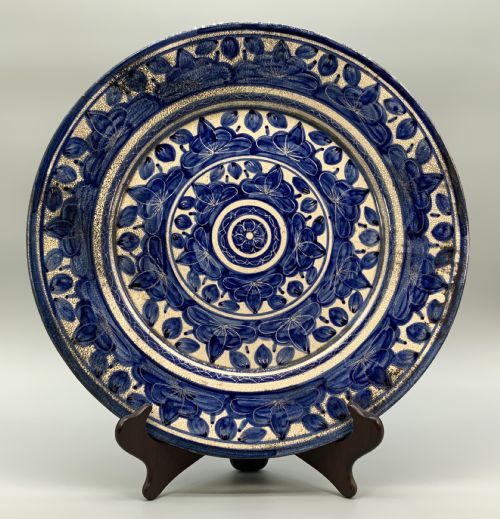
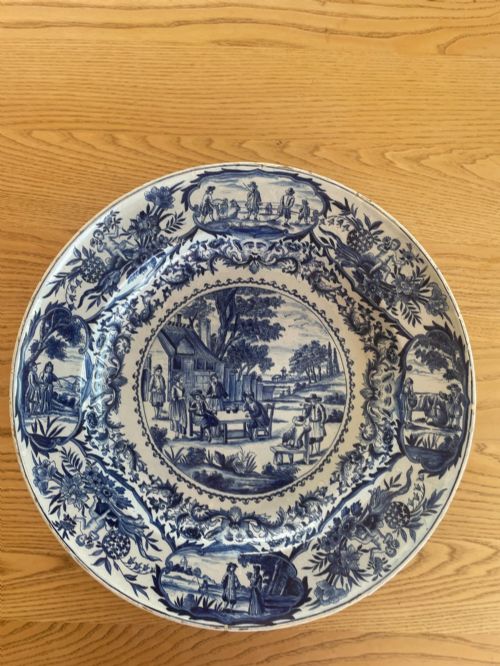
A cobalt blue pottery platter encompasses a broad spectrum of large serving vessels, decorative chargers, and deep dishes designed for presentation or dining. When searching for this phrase, buyers encounter examples spanning from the seventeenth century through the Victorian era, reflecting shifting domestic uses over time.
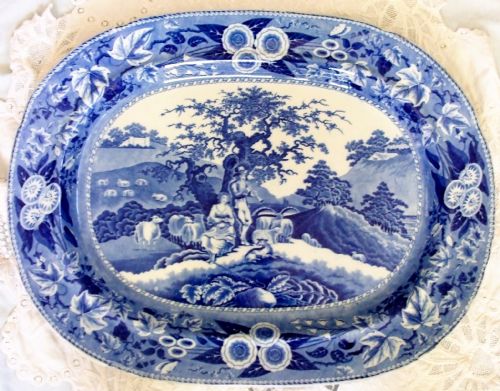
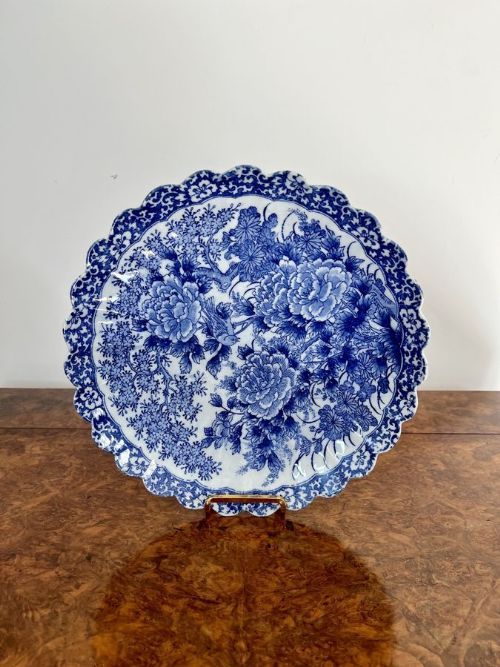
The selections available here lean heavily towards nineteenth-century English transferware and earlier tin-glazed earthenware chargers from Dutch and English kilns. These pieces display diverse pictorial transfer prints and hand-painted motifs, ranging from classical ruins to exotic landscapes.
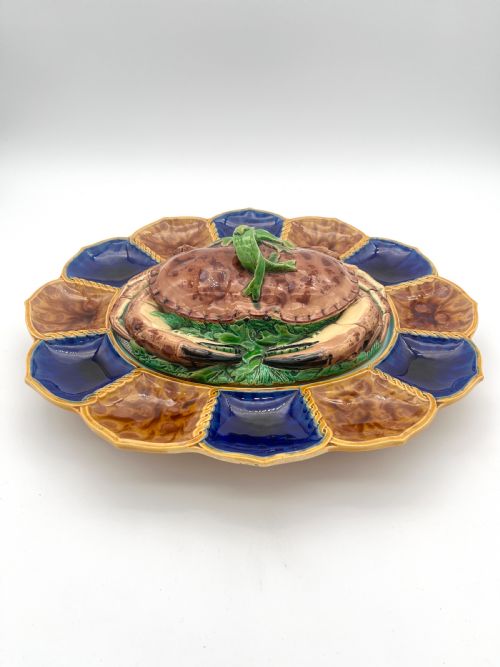
Forms vary from shallow serving dishes and meat plates to substantial wall chargers and tureens. Each object demonstrates the utilitarian and decorative roles these ceramics played in historic households.
How they were made
Potters utilised earthenware, pearlware, and porcelain bodies, shaping them on wheels or pressing them into moulds to create flat platters and deep chargers. These clay bases determined the weight and durability of the finished vessel.
Cobalt pigment was applied directly to the raw clay or onto an opaque tin glaze before firing at high temperatures to achieve the characteristic deep blue hue. Transfer printing techniques later allowed intricate pictorial scenes to be mechanically transferred onto the ceramic surface before final glazing.
Several platters depict exotic elephants and piping shepherds, proving that historic livestock possessed an unexpectedly global travel itinerary.
What varies in quality
Quality rests in the crispness of the transfer print and the depth of the cobalt pigment against the white background. Superior examples show precise registration without blurring or pooling of the colour.
The artistic merit of the hand-painted details or the complexity of the engraved transfer scene dictates the distinction between standard utilitarian wares and exceptional collector pieces.
Mintons·Thomas Lakin·John Rogers and Son·Brameld and Co·Don Pottery
The Cobalt Blue Pottery Platter Glossary
- Transferware
- Ceramic pottery impressed with a design transferred from a copperplate engraving. This technique revolutionised mass production in Staffordshire during the nineteenth century.
- Tin Glaze
- An earthenware glaze made opaque by the addition of tin oxide. It provides a smooth white surface suited for hand-painted cobalt decoration.
- Charger
- A large decorative plate or platter used traditionally for ceremonial dining or wall display. These oversized pieces showcase intricate central motifs.
- Pearlware
- A refined form of earthenware developed by Josiah Wedgwood that featured a subtle bluish tinge in the glaze. It bridged the gap between creamware and later white stonewares.
Cobalt Blue Pottery Platter: Frequently Asked Questions
How were antique platters used?
These large vessels served substantial joints of meat or displayed fruit at formal dining tables. Wealthy households also mounted them on walls as decorative art.
Over time, their roles shifted from daily dining service to prized cabinet and wall display pieces collected for their historic patterns.
Can I use these platters today?
Historic ceramics require gentle handling and hand washing to preserve fragile glazes and centuries-old earthenware bodies. Modern dishwashers and microwaves will damage the glaze.
Many collectors prefer to display them on stands or walls rather than risking daily culinary use.
How do I identify a Delft charger?
Delft chargers typically feature tin-glazed earthenware bodies with hand-painted blue designs applied over an opaque white glaze. They often exhibit characteristic glaze flakes on the unglazed foot rings.
Earlier examples from the seventeenth and eighteenth centuries show distinct potting irregularities and heavier earthenware fabrics.
What is flow blue pottery?
Flow blue refers to a nineteenth-century transferware technique where lime or ammonia chloride was introduced into the kiln atmosphere. This caused the cobalt pigment to blur or bleed deliberately into the surrounding white glaze.
The resulting smoky, ethereal effect became immensely popular in Victorian households across Britain and America.