


Large Blue Canvas Art
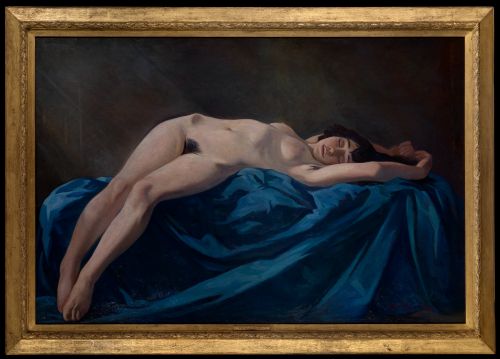
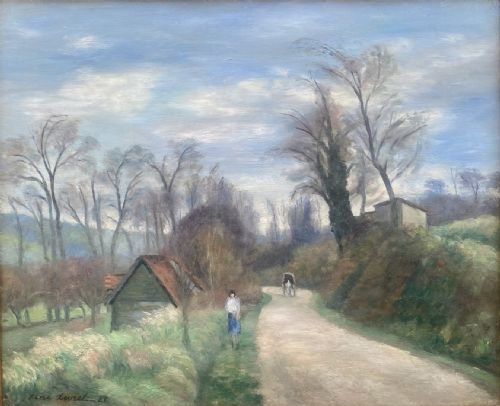
Large blue canvas art gathers oil paintings on canvas spanning the nineteenth century through the mid-twentieth century.
Large Blue Canvas Art
Large blue canvas art comprises oil paintings on canvas stretching from the nineteenth century into the mid-twentieth century, capturing subjects from landscapes and seascapes to portraits and abstract compositions. Buyers searching for large blue canvas art encounter works originating from British, French, Belgian, and wider European studios, reflecting periods from Victorian realism through to mid-century abstraction.
The selections on this page feature framed and unframed oil paintings executed on canvas stretched over wood supports, frequently set within gilded wood frames. Domestic interiors, coastal harbours, and studio portraits dominate the formats, offering substantial scale for wall display.
How they were made
The physical build relies on woven canvas stretched across timber frames, providing a flexible ground for oil paint applied with brushes or palette knives. Artists built up colour through layers of oil paint, sometimes adding textured impasto or thin glazes depending on the movement and period.
Surrounding many canvases are wooden frames finished with gilt or gilding, designed to protect the perimeter of the fabric and provide a formal boundary for the wall art. These frames utilise traditional joinery and carved ornamentation suited to the era of the painting.
A nineteenth-century canvas includes a portrait accompanied by blue chow dogs.
What varies in quality
Quality rests in the confidence of the brushwork and the handling of the composition, distinguishing academic precision from looser impressionist or abstract interpretations. The harmony of the palette and the structural integrity of the canvas stretcher dictate the overall success of the piece.
The craftsmanship of the frame also influences the piece, with hand-carved gilded wood surrounds offering greater artistic synergy with the oil painting than simpler later mouldings.
Eric Robertson·Rene Levrel·William Littlejohn·William Sydney Cooper·John Horsburgh·Thomas Rose Miles·Gustave De Breanski·Paul Jean Clays·Jean Denis Maillart·Arthur Pond
The Large Blue Canvas Art Glossary
- Canvas
- A heavy woven fabric typically made from hemp or flax that serves as a flexible support for oil painting.
- Impasto
- Paint applied thickly to a canvas, standing out in relief from the surface and catching the light to reveal the artist's brushwork.
- Gilt wood
- Wood that has been decorated with a very thin layer of gold leaf or gold powder, commonly used for period picture frames.
- Post-Impressionism
- An art movement extending the impressionist rejection of rigid academic standards in favour of bolder colours and distinct forms.
- Maritime realism
- A genre of painting focused on ships, coastal views, and the sea rendered with accurate observation of natural conditions.
Large Blue Canvas Art: Frequently Asked Questions
Where were large oil paintings displayed?
These large paintings hung primarily in domestic drawing rooms, public institutions, and artist studios as primary decorative statements.
Their substantial scale meant they were commissioned or acquired for rooms with high ceilings and generous wall space.
How do I care for an oil painting on canvas?
Keep the canvas away from direct sunlight and steady humidity levels to prevent the fabric from sagging or the oil paint from cracking.
Dust the surface gently with a soft, dry brush and avoid using water or chemical cleaners on the paint layer.
How can I tell the period of a canvas?
Examine the preparation of the canvas, the composition style, and the framing materials used at the back of the work.
Signatures, dates inscribed on the stretcher bars, and the specific mix of pigments offer further clues to the decade of creation.
What subjects are most common?
Landscapes, coastal harbour scenes, and portraiture form the majority of the subjects recorded across these periods.
Artists frequently returned to river views, agricultural paths, and maritime traffic for their large-scale compositions.