




1960s Abstract Art Painting
These 1960s abstract art painting works bring mid-century energy and bold modernist colour straight to a room.
1960s Abstract Art Painting
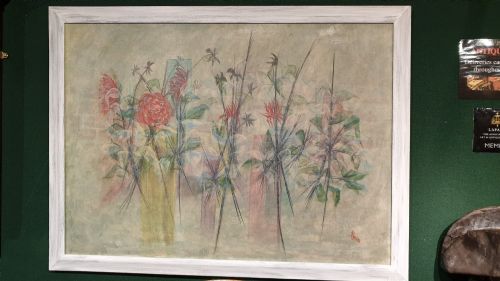
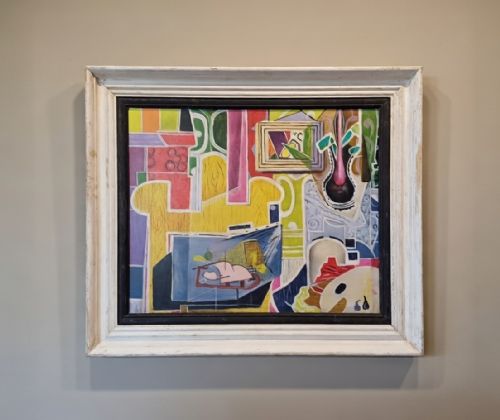
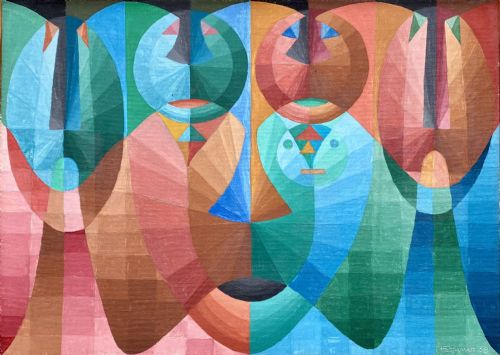
A 1960s abstract art painting captures the experimental spirit of the mid-century period through non-representational forms, expressive brushwork, and structured geometry. Pieces on this page span from structured op art and cubist-influenced still lifes to large impasto cityscapes and expressive Cornish nudes.
Most examples originate from British and French artists working during the mid-century modernist era, often bearing dates spanning the early to late sixties. Buyers encounter everything from intimate board compositions to very large canvases framed in wood.
The aesthetic vocabulary ranges from vibrant geometric optical patterns to thick impasto textures and abstracted landscapes. These works reflect a period when artists broke decisively from traditional figuration to explore pure colour, line, and surface.
How they were made
Artists built these compositions primarily using oil paint applied to stretched canvas or wooden board, occasionally layering pigments thickly to create heavy impasto textures. Support frames were typically constructed from wood, sometimes accented with gilt finishes.
Techniques varied from precise geometric op art planning to fluid, expressive application associated with abstract impressionism and mid-century modernist movements. The handling of the medium directly defines the surface rhythm, whether smooth and optical or heavily worked with a palette knife.
Several canvases secretly double as visual hymns to life, painted by artists who firmly believed in jazzy colours.
What varies in quality
Quality rests upon the confidence of the brushwork and the internal coherence of the composition, where stronger pieces command attention through deliberate balance of colour and form. Lesser works can feel hesitant or derivative of prevailing mid-century tropes without achieving structural tension.
The scale and ambition of the canvas also dictate standing, with larger, fully realised works displaying greater compositional depth than smaller decorative studies. Original framing and documented artist provenance further distinguish the finer examples from anonymous output.
Tony Giles·Raymond Picque·William Littlejohn RSA·William Ernst Burwell FRSA
The 1960s Abstract Art Painting Glossary
- Impasto
- Paint applied thickly to a canvas or board, standing out in relief from the plane and retaining the visible marks of the brush or palette knife. This technique gives the surface a tactile, sculptural quality.
- Op art
- A style of visual art that uses optical illusions, employing precise geometric patterns and contrasting colours to create a sense of movement or swelling. It gained immense popularity during the nineteen-sixties.
- Mid-century modern
- The design and art aesthetic spanning roughly from the nineteen-fifties to the late sixties, characterised by clean lines, functional forms, and a departure from historical revivalism.
- Abstract impressionism
- A painting approach combining the gestural freedom of abstract expressionism with the atmospheric qualities of impressionism. Artists focused on spontaneous brushwork and expressive colour fields.
1960s Abstract Art Painting: Frequently Asked Questions
How do I identify a nineteen sixties abstract painting?
Look for characteristic mid-century colour palettes, non-representational subject matter, and materials such as oil on canvas or board. Dates inscribed on the reverse or contemporary framing styles often provide additional confirmation of the period.
Stylistic markers like op art geometry or thick impasto brushwork also point firmly to the decade of origin.
Where should I hang a large abstract painting?
Large canvases require a wall with sufficient negative space to allow the composition to breathe without competition from surrounding furnishings. Centring the piece at eye level in a principal room ensures the visual weight is properly anchored.
Ensure the artwork avoids direct, harsh sunlight to protect the integrity of the oil pigments over time.
What is the difference between op art and abstract expressionism?
Op art relies on mathematically precise geometric patterns and optical illusions to trick the eye and create movement. Abstract expressionism, by contrast, prioritises spontaneous gesture, raw emotion, and visible brushwork.
Both movements flourished during the mid-century era but pursued entirely opposite visual goals.
Are these paintings supplied with frames?
Many works retain their original wood or gilt frames, which were chosen by the artist or contemporary owners to complement the canvas. The listing details will specify whether a piece is sold framed.
Original frames often contribute historical context to the artwork.