


Textured Impasto Oil Painting
These textured impasto oil painting works bring heavy, tactile pigment and dynamic surface relief directly to your walls.
Textured Impasto Oil Painting
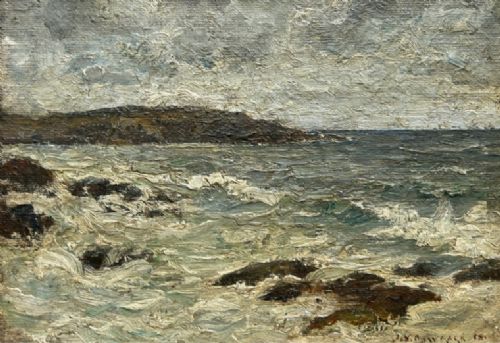
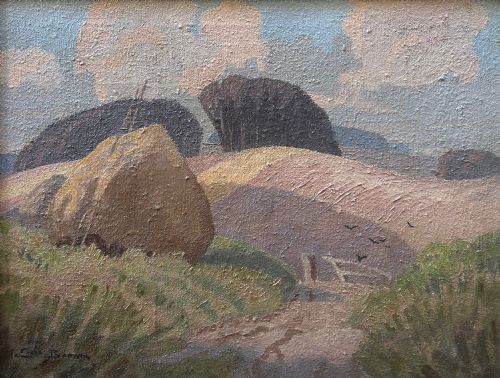
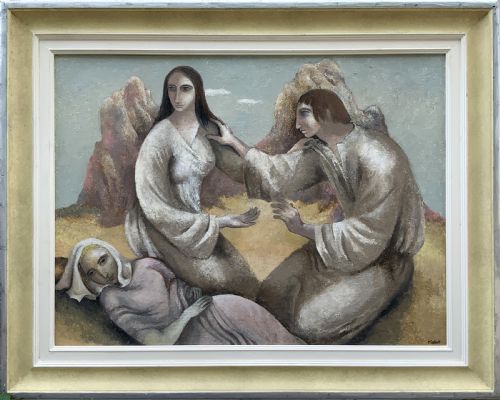
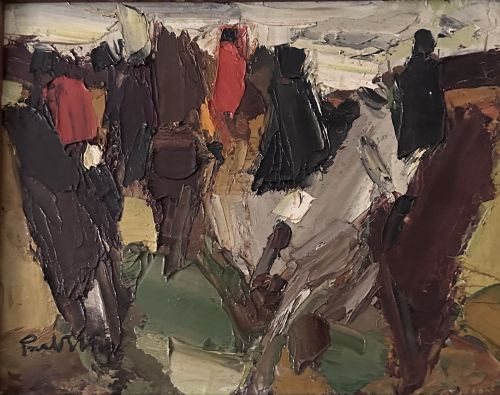
A textured impasto oil painting brings physical depth and dimension to the canvas through heavy layers of pigment. When you search for a textured impasto oil painting, you encounter works spanning from the 1920s through the 1960s, capturing subjects from coastal seascapes to mid-century abstract cityscapes.
The pieces listed here showcase distinct periods including the 1920s, 1930s, 1940s, 1950s, and 1960s. Common forms on this page include framed marine scenes, still lifes, portraits, and expressionist compositions executed by various artists.
Materials and technique
Artists apply oil paint thickly onto supports such as canvas, wood, board, or oil on board. This heavy application leaves visible brush marks and knife strokes that dry with considerable physical relief.
Many of these works are housed within wood frames that complement the substantial depth of the paint layers. The combination of dense oil paint and sturdy wooden supports ensures the textured surface remains stable over decades.
Several canvases capture maritime adventures, including sailing yachts bravely navigating ocean waves alongside landlocked scenes of birds and rabbits.
Evaluating quality and execution
Quality in a textured impasto oil painting rests on the confidence and purpose behind the pigment application. Superior pieces demonstrate deliberate handling where the thick paint builds form and light rather than mere bulk.
The relationship between the heavy surface texture and the underlying composition dictates the strength of the artwork. Stronger examples maintain structural integrity across the canvas while preserving the vibrant immediacy of the brushwork.
Eric Brown·Christine Nesbit·Elisabeth Bardon·Helen Layfield Bradley·Leon Kossoff·Jeffrey Pratt·Ernst Louizor·William Ernst Burwell
The Textured Impasto Oil Painting Glossary
- Impasto
- A technique where oil paint is laid thickly on a canvas, leaving brush or palette knife strokes standing proud of the surface. This creates tangible depth and catches light across the composition.
- Expressionism
- An artistic style where the artist seeks to express emotional experience rather than physical reality. Works in this manner often utilise distorted forms and vigorous paint application.
- Mid-Century Modern
- A design and art movement spanning roughly the middle decades of the twentieth century. Paintings from this period frequently embrace abstract or simplified forms with bold texturing.
- Post-Impressionism
- An extension of impressionism that rejects its limitations while retaining its use of vivid colours and thick paint. It prioritises emotional resonance and structural definition.
Textured Impasto Oil Painting: Frequently Asked Questions
What is a textured impasto oil painting?
A textured impasto oil painting is a work where oil pigment is applied in thick, raised layers onto canvas, wood, or board. The resulting surface retains visible marks from brushes or knives, creating physical depth.
These pieces capture light across their raised contours, adding a sculptural quality to traditional two-dimensional wall art.
How do I care for impasto paintings?
Care involves keeping the heavy paint surface free from dust using a soft, dry brush very gently. Avoid touching the raised pigment ridges directly, as dried oil paint can remain somewhat brittle over decades.
Ensure the artwork hangs away from direct sunlight and excessive humidity to protect both the wooden frames and the oil on canvas or board.
What periods do these paintings come from?
The pieces available span the twentieth century, with examples originating from the 1920s, 1930s, 1940s, 1950s, and 1960s. Mid-century and earlier modernist movements heavily influence these dates.
Stylistic shifts across these decades move from early marine and landscape scenes toward expressive abstracts and cityscapes.
How can I identify different art styles?
Styles range from impressionism and post-impressionism to mid-century modernism and expressionism. Look at how the subject matter is rendered and whether the focus is on light, emotion, or abstraction.
Artists working in these styles use the thick impasto medium differently, some building architectural cityscapes while others construct organic landscapes or portraits.