
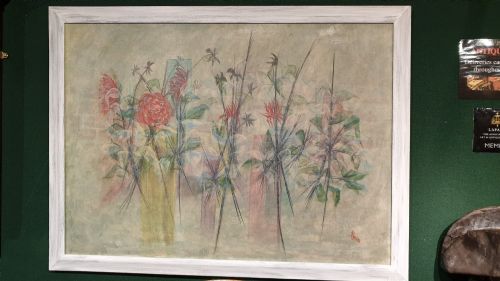
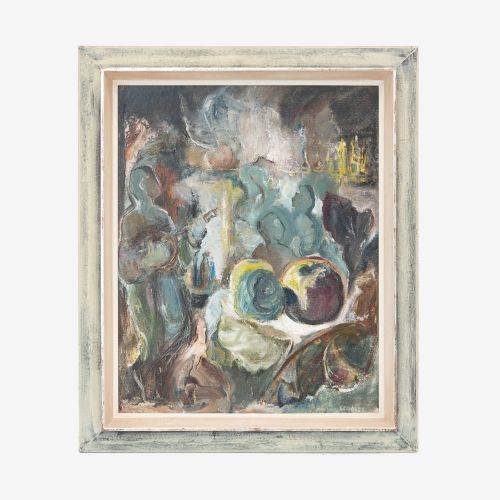


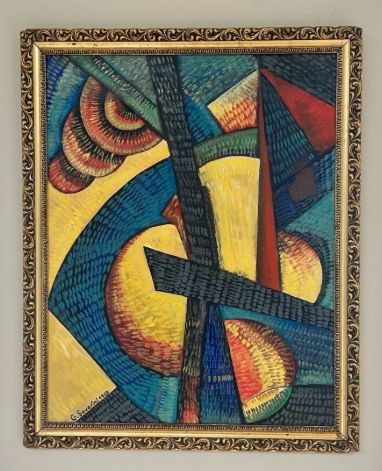


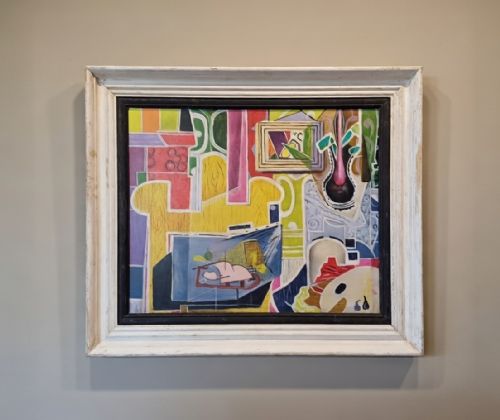

Framed Abstract Oil Artwork
Framed abstract oil artwork brings mid-century modernism into a room, offering tactile brushwork and striking compositions from the 1940s to the 1960s.
Framed Abstract Oil Artwork
A framed abstract oil artwork represents a mid-century painting created between 1940 and 1960, encompassing styles such as modernism, abstract expressionism, and mid-century expressionism. Buyers searching for framed abstract oil artwork encounter canvases and boards housed in wooden enclosures, sometimes protected by glass.
The selections span British and European hands, featuring still lifes, cityscapes, interiors, and pure abstractions. Mid-century modernism dominates the offerings, capturing the experimental spirit of post-war painting.
Works originate from named artists associated with regional movements like the St Ives School alongside unattributed studio pieces. Each item brings a distinct period aesthetic centred on non-naturalistic colour and form.
How they were made
Artists applied oil paint to stretched canvas or rigid boards, occasionally building up thick impasto textures or adding relief elements to the surface. Pigments were manipulated using brushes and palette knives to create expressive, non-representational planes.
Finished paintings were secured within wooden frames, occasionally complemented by glass glazing to protect the delicate oil pigments and textured surfaces from environmental wear.
Listings span the 1940s, 1950s, and 1960s, focusing on canvas and board supports housed in wooden frames.
What varies in quality
Quality rests in the confidence of the brushwork and the structural integrity of the composition, distinguishing accomplished studio pieces from more tentative exercises. The handling of oil paint, whether through fluid glazing or heavy impasto, dictates the visual depth of the surface.
The provenance and attribution to documented mid-century painters elevate certain pieces above anonymous works, while the harmony between the painting and its original wooden frame influences the overall integrity of the object.
Lilian Colbourn·Tony Giles·Denis Mitchell·Raymond Picque·Gino Severini·William Littlejohn·Mary Fedden·Leon Kossoff·Richards Rubin·William Ernst Burwell
The Framed Abstract Oil Artwork Glossary
- Impasto
- Paint applied thickly to a canvas or board, standing out in relief so that the marks of the brush or palette knife remain visible. This technique adds tactile dimension to mid-century abstract compositions.
- St Ives School
- An association of artists based in Cornwall during the mid-twentieth century, known for pioneering British abstract art. Painters connected to this group focused on landscape and non-figurative modernism.
- Mid-Century Modern
- A design and art movement spanning roughly from 1945 to 1969, characterised by clean lines and abstract forms. In painting, it manifests as a departure from strict realism towards simplified colour and shape.
- Oil on Board
- A painting executed on a rigid wooden or composite panel rather than a flexible woven fabric. This support provides a firm surface often favoured for smaller modernist studies and cityscapes.
- Abstract Expressionism
- A post-Second World War art movement focusing on spontaneous, emotional creation and non-geometric marks. The style relies on the physical action of painting to convey inner states.
Framed Abstract Oil Artwork: Frequently Asked Questions
How do I hang a heavy framed oil painting?
Secure fixings directly into wall studs or utilise appropriate masonry plugs to bear the substantial weight of wood and canvas.
Ensure the hanging wire or brackets on the wooden frame match the weight distribution to keep the artwork level.
What periods do these abstract paintings come from?
The available works date from the 1940s, 1950s, and 1960s, capturing the height of post-war modernist experimentation.
Each decade brings subtle shifts in palette and texture, moving from muted wartime tones to vibrant mid-century hues.
Are all the paintings signed by the artist?
Many pieces bear signatures, dates, or artist attributions, while others remain anonymous studio works from the period.
Signatures often appear in the lower corners or on the reverse of the board or canvas.
How should I clean a vintage oil painting?
Dust the surface gently with a soft, dry brush, avoiding any moisture or chemical cleaning agents that could damage the oil paint.
Consult a professional conservator if the canvas requires deeper cleaning or removal of accumulated grime.