




Original Abstract Wall Art
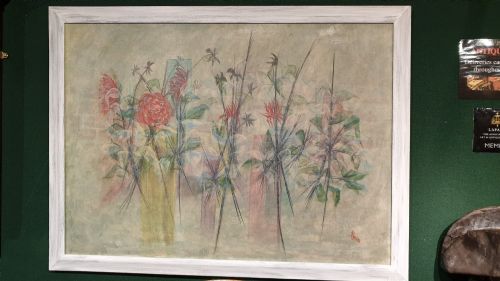
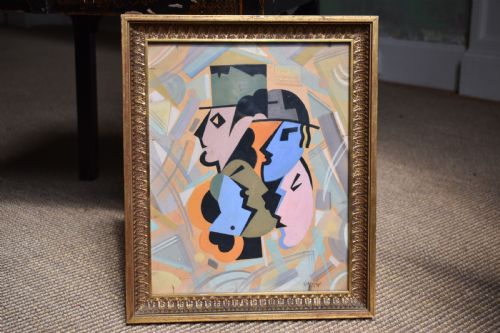
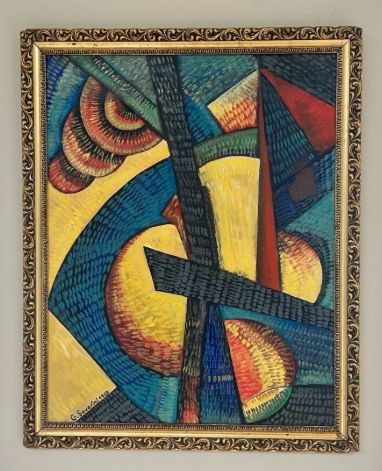
Original abstract wall art brings mid-century expressionism and bold twentieth-century modernism straight onto the wall.
Original Abstract Wall Art
Original abstract wall art encompasses mid-century paintings, watercolours, gouaches, and prints spanning the decades from the nineteen-thirties to the nineteen-sixties. Buyers encounter compositions ranging from cubist landscapes and expressionist cityscapes to pure geometric abstraction.
The selections on this page draw heavily from the nineteen-fifties and nineteen-sixties, reflecting mid-century modern and abstract expressionist movements. These pieces utilise canvas, board, and paper as primary supports for oil, acrylic, ink, and gouache.
How They Were Made
Artists built these compositions primarily using oil paint, gouache, and ink applied to stretched canvas, wooden board, or heavyweight paper. Impasto techniques often add tactile depth to the surface.
Makers integrated mixed media and woodcut printing alongside traditional painting methods during the mid-century decades. Supports frequently show period framing suited to canvas or paper works.
The listings feature works created across four distinct decades, spanning from the nineteen-thirties through to the nineteen-sixties.
What Varies in Quality
Quality rests upon the strength of the composition and the surety of the brushwork across the surface. Works displaying confident handling of colour and form command greater visual presence.
The integrity of the original support, whether canvas, board, or paper, influences the piece. Well-preserved surfaces retain their pigment vibrancy without undue fading or structural disruption.
Denis Mitchell·Barbara Hepworth·William Littlejohn·Derek Latimer Sayer·William McCance·Peter Jackson·Adrian Heath·Lester Epstein·Antonio Ferri·Burr Singer·Richards Rubin·William Ernst Burwell
The Original Abstract Wall Art Glossary
- Gouache
- An opaque watercolour paint that dries to a matte finish. It allows artists to build flat, vibrant areas of colour.
- Impasto
- Paint laid on an area of the surface in thick layers, usually thick enough that the brush or painting-knife strokes are visible.
- Mid-Century Modern
- A stylistic design movement spanning roughly from the nineteen-thirties to the nineteen-sixties characterised by clean lines and abstract forms.
- Woodcut
- A relief printing technique where an artist carves an image into the face of a block of wood. Ink is applied to the surface and transferred to paper.
- Cubist
- A style of art that shows subjects from multiple angles at once. Forms are broken up and reassembled in an abstracted-geometric fashion.
Original Abstract Wall Art: Frequently Asked Questions
How do I hang heavy canvas pieces?
Sturdy picture wire secured to original wooden stretcher frames provides stable support. Wall fixings must match the weight of the canvas and the construction of the wall.
Professional framing hardware keeps the piece secure and prevents shifting over time.
Are these works painted on canvas or board?
The pieces utilise both stretched canvas and wooden board as supports for oil and acrylic paints. Paper is also common for watercolours and gouaches.
Each material dictates how the artwork is framed and displayed on the wall.
How do I identify mid-century abstract art?
Mid-century abstract works typically feature characteristic colour palettes, expressive brushwork, and forms influenced by modernism and cubism. Dates and signatures often appear on the front or reverse.
Stylistic cues link these compositions to the nineteen-fifties and nineteen-sixties aesthetic.
Should works on paper be framed behind glass?
Watercolours, gouaches, and ink drawings require glass protection to shield fragile paper and water-soluble pigments from atmospheric moisture and dust. Acid-free mounts prevent direct contact with the glass.
Proper glazing preserves the integrity of mid-century paper works.