


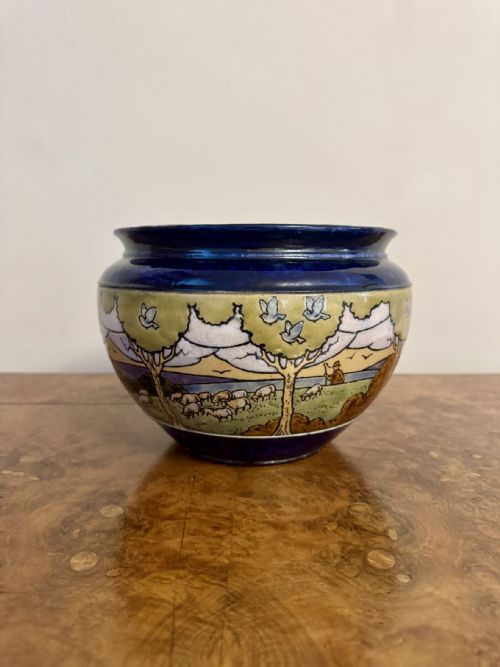


Lambeth Ceramic Planter
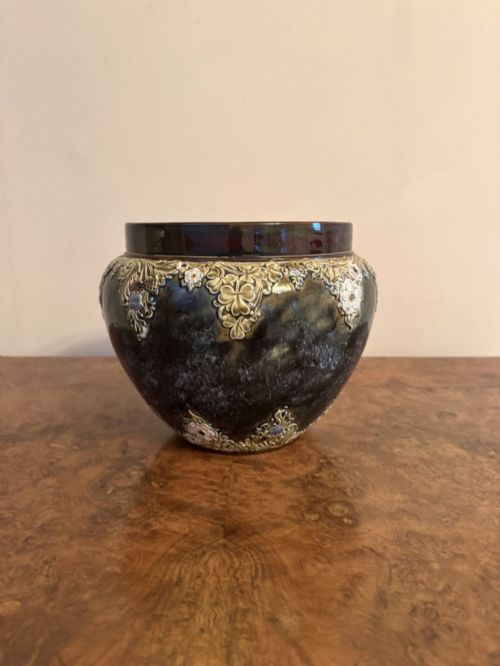
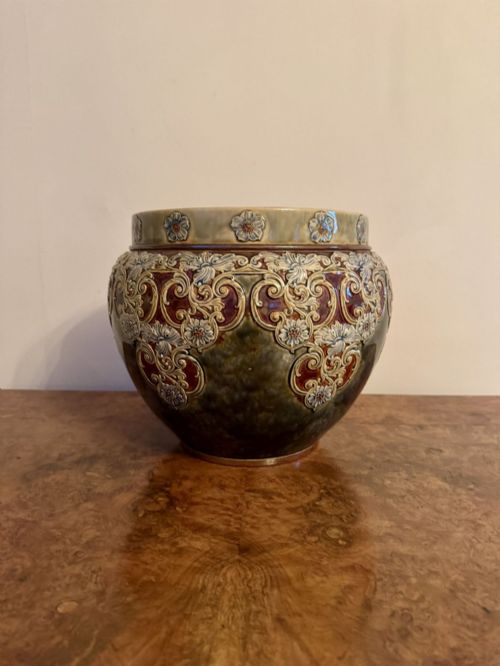
These lambeth ceramic planter pieces are robust Victorian vessels created for indoor greenery, and collectors prize them for their rich hand-finished glazes.
Lambeth Ceramic Planter
When searching for a lambeth ceramic planter, you encounter robust Victorian vessels designed to house indoor palms and flowering plants. The examples meeting you on this page span from the late nineteenth century into the early twentieth century, showing periods like 1880, 1900, 1910, 1920, and the broader Victorian era.
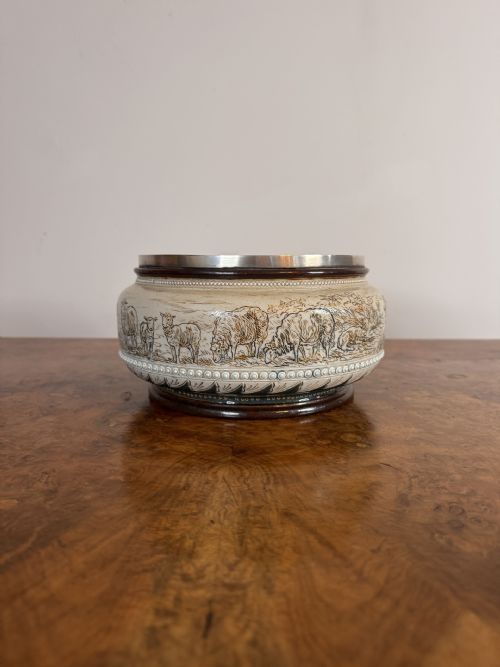
These items primarily take the form of jardiniere vessels, decorative bowls, and jardinieres with matching stands. Stylistically, they draw heavily from the Arts and Crafts and Art Nouveau movements, reflecting the distinct aesthetic shifts of their makers.
How they were made
The construction relies heavily on durable stoneware and glazed ceramic bodies that could withstand the moisture of indoor planting. Makers applied detailed surface treatments, including textured ceramic glaze, patterned enamel highlights, and occasionally fitted silver rims.
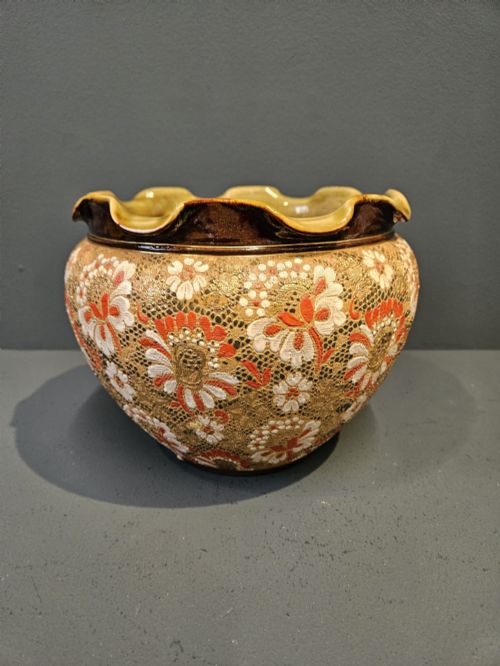
Techniques range from standard throwing and moulding to specialised Slaterware texturing, where lace or fabric was pressed into the damp clay before firing. This created a distinctive canvas for subsequent coloured glazes and incised decoration.
Lambeth Ceramic Planter Retail Price Guide 2026
Typical asking prices for lambeth ceramic planter among the pieces listed under this phrase on Sellingantiques today, from the lower quarter to the upper quarter. They describe what is for sale here now, not the wider market.
Listings feature items primarily from the Victorian, 1880, 1900, 1910, and 1920 periods, utilising stoneware, glaze, and silver.
What varies in quality
Quality in these vessels rests upon the depth of the glaze, the crispness of any incised or moulded ornament, and the presence of artist signatures. Pieces featuring hand-drawn animal or figural panels stand apart from standard production items.
The inclusion of original matching stands and integrated silver rims elevates a piece within its category. Heavier, more substantial stoneware bodies with even, lustrous surface finishes demonstrate superior workshop execution.
Doulton Lambeth·Royal Doulton·Hannah Barlow
The Lambeth Ceramic Planter Glossary
- Jardiniere
- A large ornamental pot or stand designed to hold a plant or flower arrangement. These pieces often serve as focal points in period interiors.
- Slaterware
- A ceramic technique involving pressing lace or textiles into damp clay to create a textured surface. This method was widely utilised during the late nineteenth century.
- Stoneware
- A dense, vitreous ceramic fired at high temperatures until non-porous. It provides the heavy, durable foundation characteristic of these planters.
- Art Nouveau
- A decorative style prevalent around the turn of the twentieth century, characterised by fluid, organic plant-inspired lines. It heavily influenced many of the floral motifs seen on these vessels.
Lambeth Ceramic Planter: Frequently Asked Questions
What is a lambeth ceramic planter?
A lambeth ceramic planter is a heavy stoneware or glazed ceramic vessel created during the Victorian and Edwardian periods to house indoor plants.
Most examples take the form of round jardinieres or decorative bowls decorated with incised patterns, textured Slaterware, or distinct art pottery glazes.
How were they used originally?
In Victorian and Edwardian interiors, these vessels held large potted palms, ferns, or flowering plants displayed in parlours and drawing rooms.
They often sat on matching ceramic pedestals or directly on tables and plant stands to bring greenery into domestic spaces.
How do I date these pieces?
Dating relies on identifying workshop marks stamped into the stoneware base, alongside stylistic clues such as Art Nouveau motifs or Arts and Crafts lettering.
Earlier nineteenth-century examples often bear specific Doulton Lambeth factory stamps, while twentieth-century pieces reflect the Royal Doulton transition.