


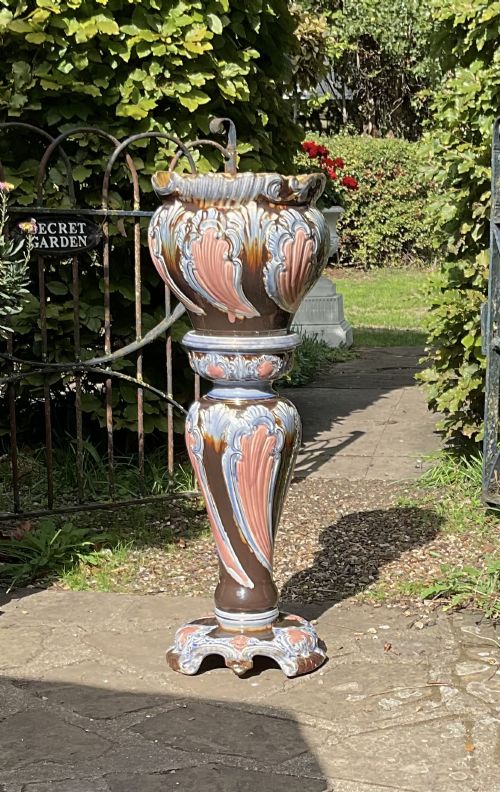


Vintage Pottery Jardiniere
These vintage pottery jardiniere pieces are substantial indoor plant vessels that bring structured character and deep colour to a room.
Vintage Pottery Jardiniere
A vintage pottery jardiniere is a decorative plant pot designed to hold potted greenery without a drainage hole at the base, serving as a display vessel for interior spaces. Buyers searching this phrase encounter substantial earthenware and stoneware pots intended to sit directly on furniture or floor pedestals.
The selections span from the late nineteenth century into the twentieth century, encompassing Victorian interpretations and later Art Nouveau or Art Deco designs. Many examples originate from English potteries or continental workshops, occasionally accompanied by matching stands.
Common forms range from simple naturalistic planters to elaborate majolica centrepiece bowls and large glazed cachepots. These items function primarily as decorative containers that elevate standard house plants into formal interior displays.
How They Were Made
Potters shaped these vessels primarily from earthenware, ceramic, and stoneware, utilising heavy clay bodies to support large plants. The greenware was typically fired before receiving a coat of glaze.
Glazing methods varied from glossy monochromatic surfaces to complex metallic lustre and hand-painted majolica decoration. Firing took place in traditional kilns, which often imparted unique surface variations to the finished ceramic.
Vintage Pottery Jardiniere Retail Price Guide 2026
Typical asking prices for vintage pottery jardiniere among the pieces listed under this phrase on Sellingantiques today, from the lower quarter to the upper quarter. They describe what is for sale here now, not the wider market.
Some nineteenth-century potters sculpted planters to look like tree trunks, complete with convincing ceramic bark.
What Varies in Quality
The standard of a vintage pottery jardiniere rests upon the crispness of the moulded relief and the depth of the glaze application. Pieces executed with sharp botanical detailing or intricate hand-painted majolica show superior workshop output.
Weight and structural balance distinguish robust utilitarian examples from finer decorative studio pieces. The richness of the colour palette and the complexity of the surface finish dictate the aesthetic standing of each vessel.
Doulton Lambeth·Enoch Wood And Sons·Julius Dressler·Makuzu Kozan II·Woodlesford Art Pottery
The Vintage Pottery Jardiniere Glossary
- Jardiniere
- A large decorative pot or stand used for holding flowers or indoor plants. These vessels are typically manufactured from ceramic, earthenware, or stoneware.
- Majolica
- A type of earthenware coated with an opaque tin-lead glaze and decorated with coloured metal oxides. This technique produces vivid colour and a high gloss finish.
- Cachepot
- An ornamental container designed to hide an ordinary flowerpot that has drainage holes. It functions to catch water runoff while improving interior display.
- Stoneware
- A robust ceramic fired at high temperatures until vitrified and rendered impermeable to liquids. This material allows for durable vessels suitable for heavy use.
- Earthenware
- Porous pottery fired at lower temperatures than stoneware, requiring a glaze to hold water. It forms the base body for much nineteenth-century decorative ware.
Vintage Pottery Jardiniere: Frequently Asked Questions
How do I use a jardiniere indoors?
Place a plastic nursery pot containing your plant directly inside the jardiniere, ensuring the pot has a saucer to catch any excess water. This method protects the interior ceramic glaze from prolonged moisture contact.
Position larger vessels on sturdy side tables or plant stands, while smaller cachepots sit comfortably on windowsills and mantelpieces.
Can these pots hold soil directly?
Most vintage pieces lack drainage holes and were originally designed to house potted plants rather than raw soil. Adding damp compost directly to the unglazed interior can trap moisture against the ceramic body and cause damage over time.
Utilising a separate inner container preserves the vessel and makes watering considerably simpler.
How do I clean a glazed ceramic jardiniere?
Wash the surface gently using lukewarm water and a soft cloth to remove dust and accumulated plant debris. Avoid harsh scouring pads or abrasive chemical cleaners that might scratch the glaze.
Dry the vessel thoroughly with a lint-free cloth after washing to maintain the lustre of the finish.