

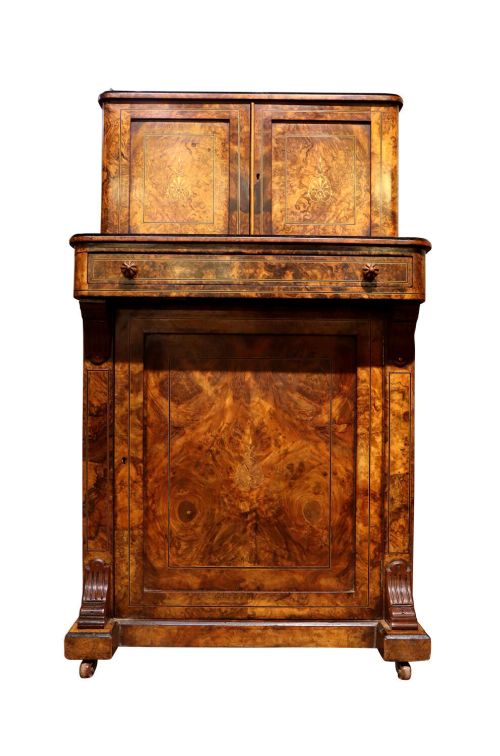
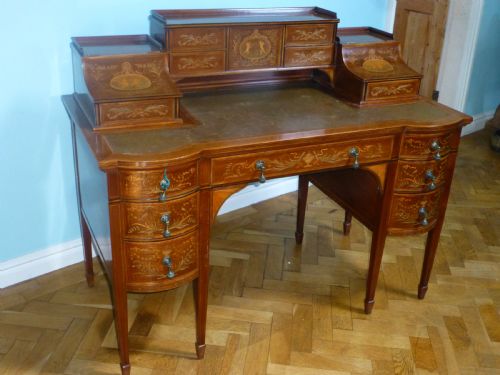
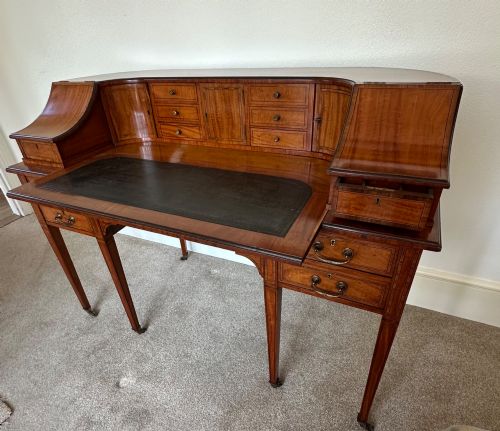
Ladies Inlaid Writing Desk
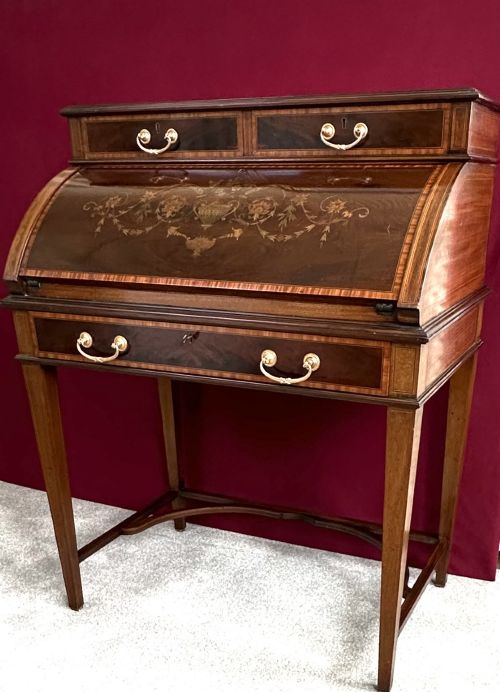
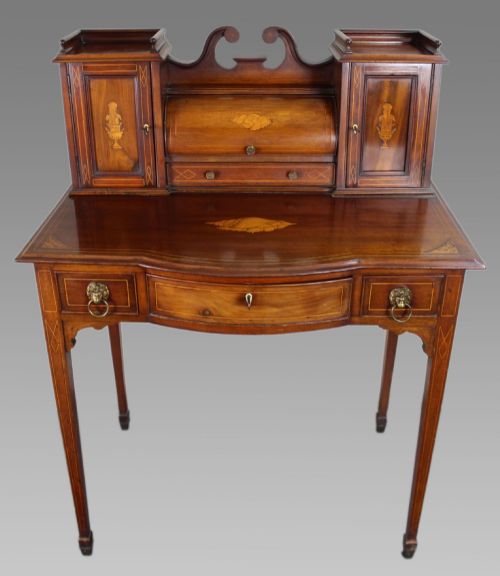
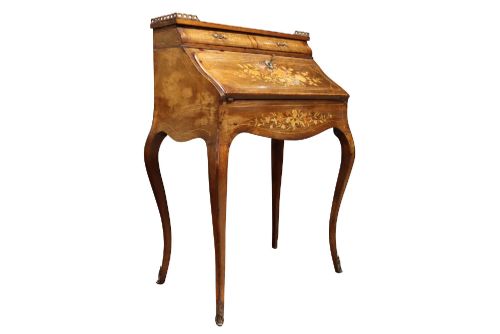
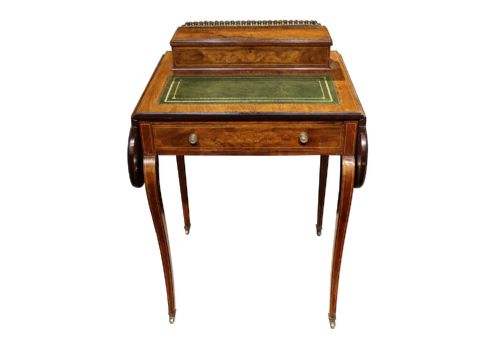
A ladies inlaid writing desk combines refined proportions with intricate decorative woodwork, offering a compact and elegant writing surface for domestic use.
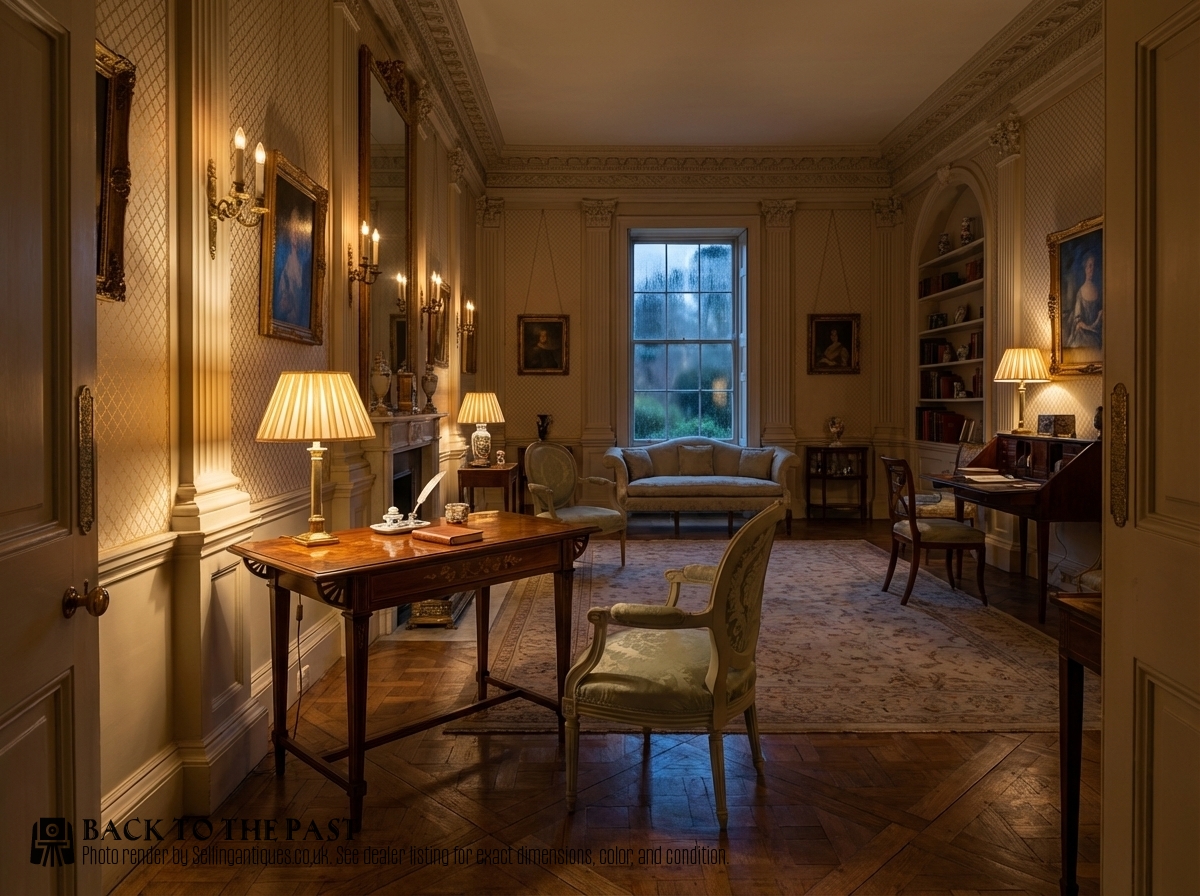
Ladies Inlaid Writing Desk
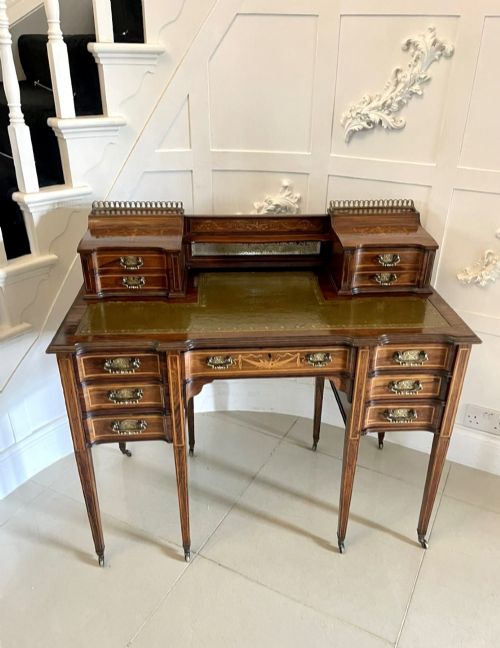
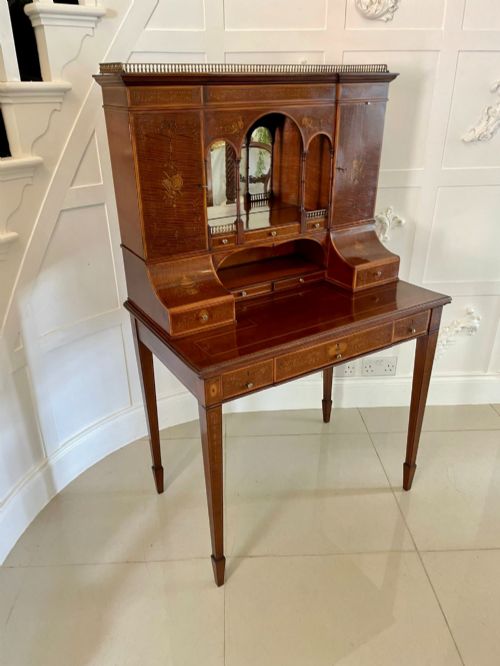
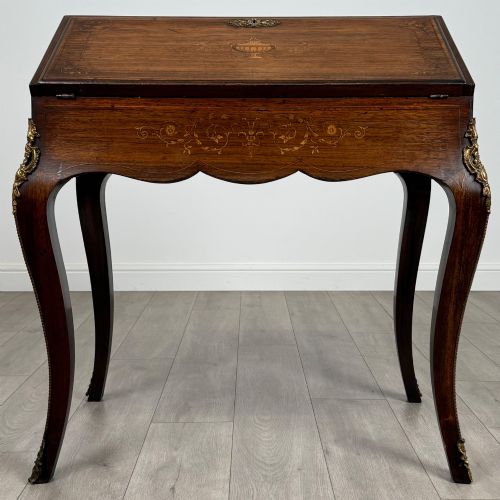
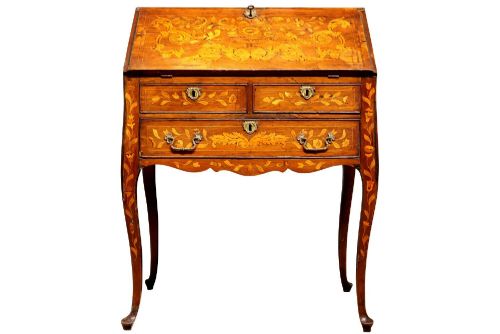
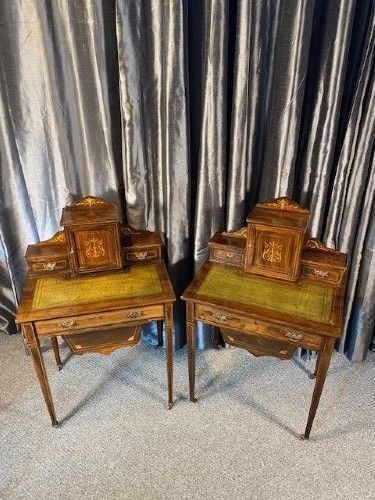
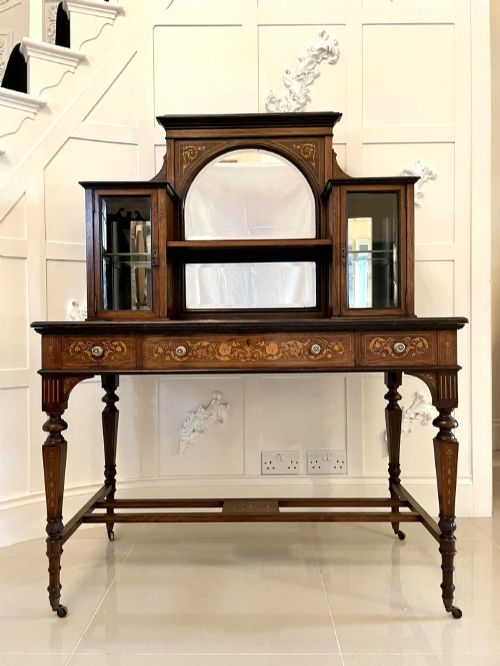
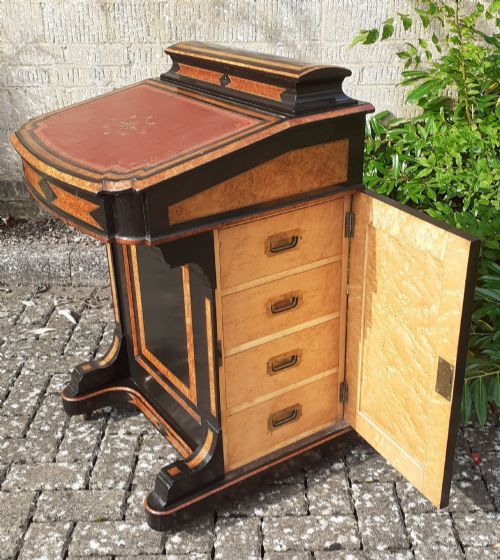
When searching for a ladies inlaid writing desk, collectors encounter elegant compact writing furniture dating principally from the Victorian and Edwardian periods. These pieces include writing tables, bonheur-du-jour cabinets, Davenport desks, and Carlton House desks designed for domestic correspondence.
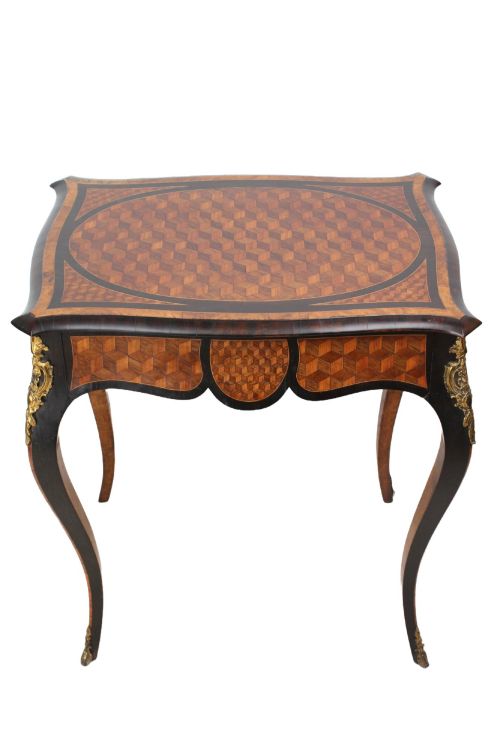
The versions met most frequently on this page originate from the late nineteenth century and the early twentieth century. Many reflect revivals of earlier Sheraton or Louis XV styles, incorporating delicate proportions suited to smaller reception rooms or boudoirs.
Makers utilised various compact forms featuring fitted interiors, pigeonholes, and small drawers. These tables and cabinets demonstrate the shift towards lighter, ornamental furniture intended specifically for private writing tasks.
What varies in quality
Quality depends upon the precision of the marquetry inlay and the choice of cabinet timbers. Superior examples display tightly cut veneers, balanced timber grains, and finely hand-engraved brass or ormolu mounts.
The sophistication of the internal fittings defines the tier of the piece. Desks featuring secret compartments, fitted stationery racks, and drawers constructed with hand-cut dovetails represent higher standards of workshop execution.
Many desks conceal tiny stationery drawers behind decorative tambour doors, keeping love letters safe.
Maple and Co·JAS Shoolbred·Edwards and Roberts·S and H Jewell
The Ladies Inlaid Writing Desk Glossary
- Marquetry
- Decorative veneer work forming pictorial or floral patterns. Craftsmen fitted different coloured wood veneers together to create elaborate designs on the desktop or fall front.
- Bonheur-du-jour
- A small light lady's writing desk featuring a tiered superstructure with shelves or small drawers above the writing surface. This French form gained popularity during the nineteenth century.
- Carlton House desk
- A form of writing desk featuring a curved superstructure fitted with small drawers and pigeonholes enclosing the writing area. It typically incorporates a leather-lined writing slope.
- Davenport
- A compact small desk featuring a sloping writing surface above a pedestal of drawers. The drawers often open to the side while a pen box sits on top.
- Parquetry
- Geometric mosaic woodwork formed by small pieces of veneer arranged in patterns. It creates repeating shapes such as cubes or chequers across the surface.
- Stringing
- Inlay of thin contrasting strips of wood used to outline panels, drawers, and borders. It defines the structural lines of the furniture.
Ladies Inlaid Writing Desk: Frequently Asked Questions
How do I identify a ladies writing desk?
These desks are characterised by smaller dimensions, lighter construction, and decorative woodwork designed for domestic boudoirs rather than grand libraries. They frequently incorporate integrated stationery compartments and ornamental inlay.
Many examples date from the Victorian and Edwardian eras, reflecting revivals of eighteenth-century furniture styles with a focus on refined aesthetic appeal.
What is a bonheur-du-jour?
A bonheur-du-jour is a French-inspired writing cabinet featuring an upper section with small drawers and shelves positioned above a flat writing surface. The form translates from French as day-time happiness.
These pieces were intended for light correspondence and display in private sitting rooms rather than heavy administrative duties.
How should I care for an inlaid desk?
Keep wooden surfaces away from direct sunlight and steady temperature fluctuations to prevent the delicate veneers and stringing from lifting. Regular dusting with a dry cloth maintains the finish.
Apply occasional appropriate wax polish sparingly to nourish the timber without harming the antique polish or the inlaid details.
Are these desks suitable for daily work?
While these desks provide functional writing surfaces, their historic dimensions are often lower and shallower than modern office furniture. They accommodate laptops or correspondence well when paired with a matching low chair.
Care should be taken with leather writing inserts and antique veneer surfaces during routine contemporary use.