

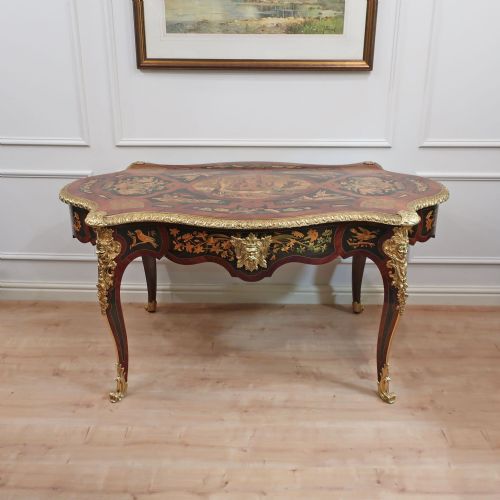
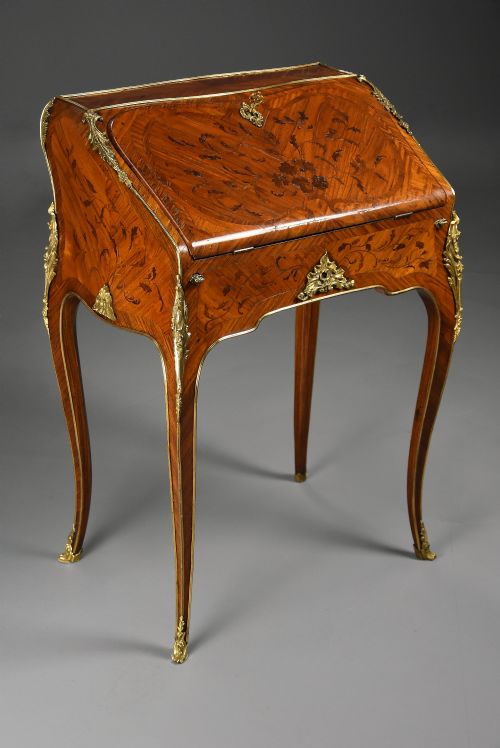

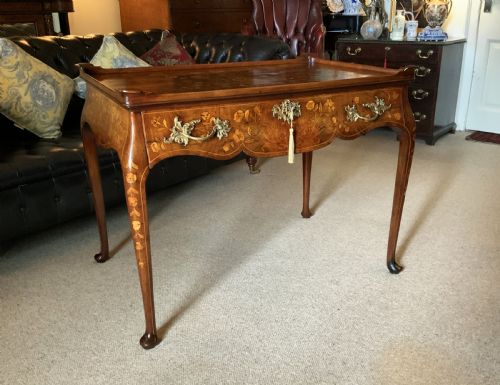


Floral Marquetry Desk Table
A floral marquetry desk table brings together intricate floral wood-inlay and practical writing or display surfaces, offering a striking centrepiece for a traditional room.
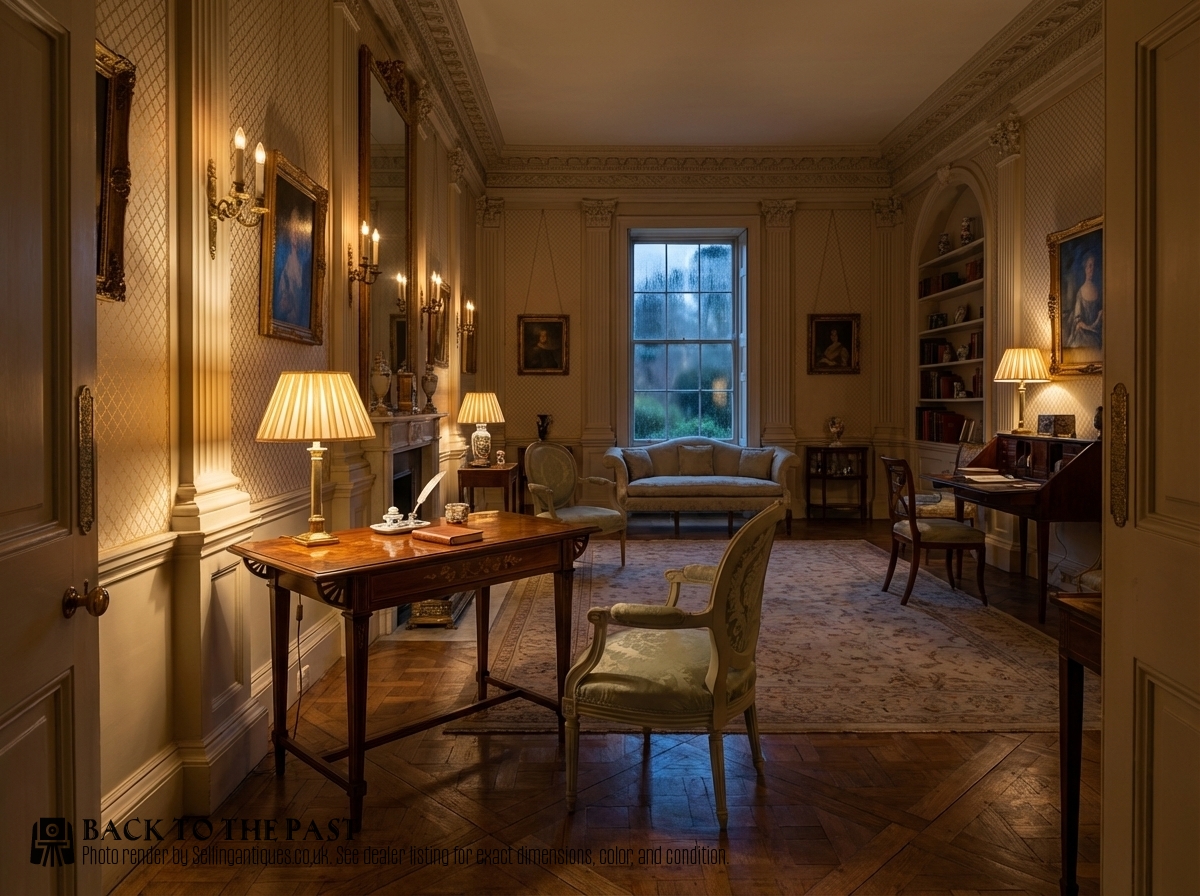
Floral Marquetry Desk Table
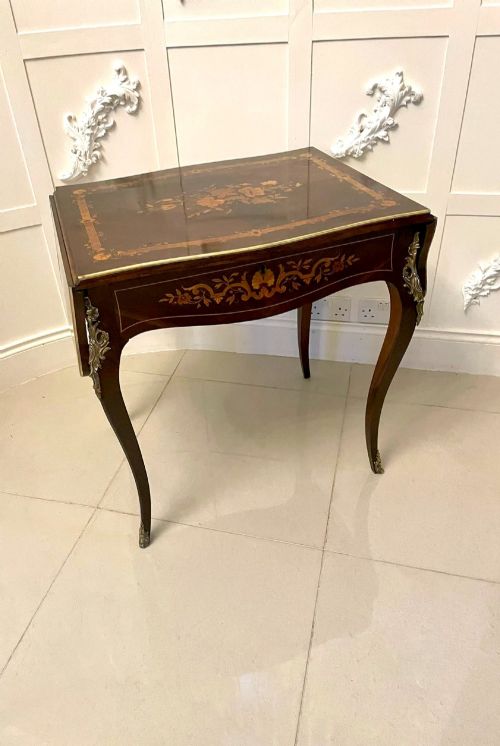
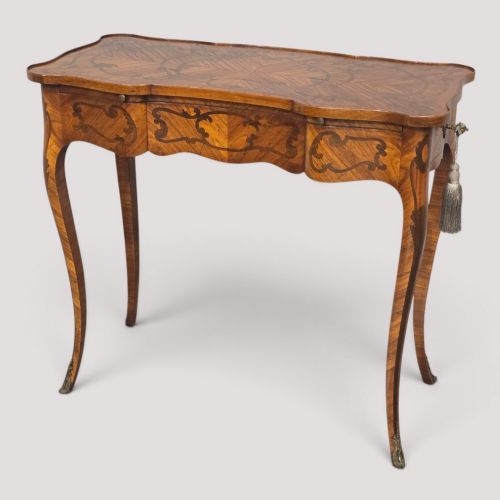
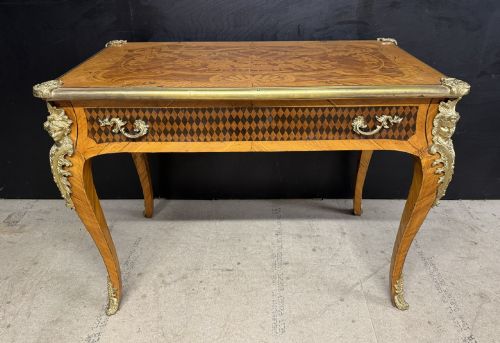
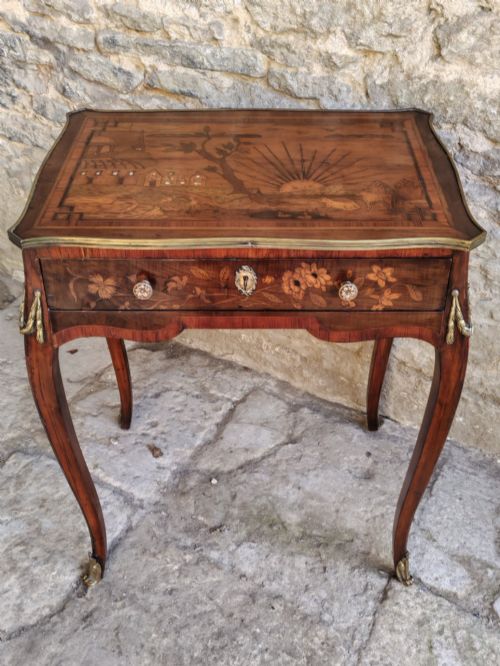
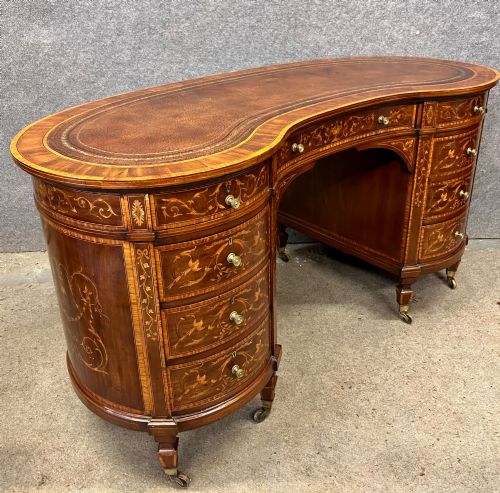
A floral marquetry desk table combines the functions of a writing surface and a display table, decorated with detailed wood-inlaid floral patterns. When searching for a floral marquetry desk table, buyers encounter various forms including writing desks, bureau plats, centre tables, and dressing tables.
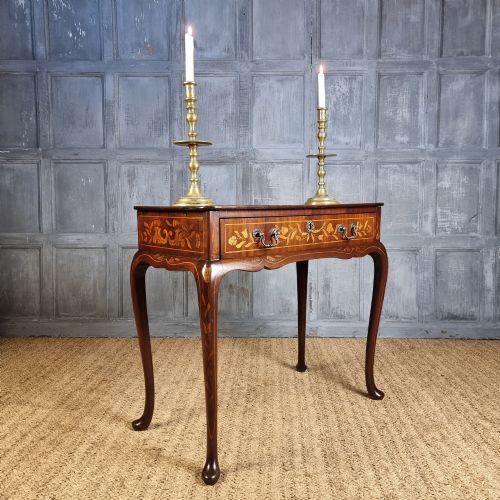
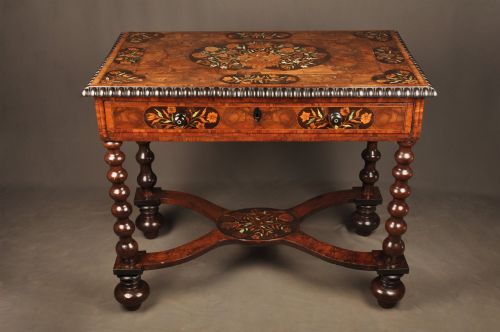
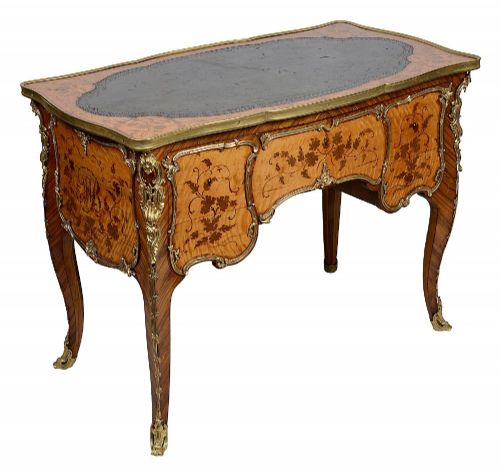
The pieces span multiple periods, with nineteenth-century Victorian and eighteenth-century examples appearing frequently. French Louis XV Revival styles and Dutch Baroque or Rococo designs dominate the available selection, often featuring serpentine outlines or kidney-shaped tops.
Materials and Construction
Makers utilised a foundation of solid timbers such as walnut or fruitwood, overlaid with figured veneers including rosewood, kingwood, and satinwood. Floral motifs were created by cutting thin pieces of various dyed and natural woods to fit together precisely into the veneer ground.
Many examples incorporate cast or chased ormolu mounts to accent the curves of the legs and framing. Additional decorative elements include bone inlay, silver wire, and fitted leather writing inserts.
An eighteenth-century Dutch table on this site pairs floral marquetry with dog-eared corners for playing cards.
Assessing the Craftsmanship
The refinement of the floral marquetry determines the distinction between standard and exceptional pieces. Superior examples display subtle shading in the petals and leaves, achieved by scorching the wood edges in hot sand before assembly.
The choice of secondary woods and the weight of the cast ormolu mounts reveal the original maker's investment in the piece. Well-balanced proportions and seamless veneer application separate finer workshop output from simpler commercial production.
BVRB·Henry Marc
The Floral Marquetry Desk Table Glossary
- Marquetry
- The art of forming decorative patterns by fitting together thin slices of wood and other materials onto a structural carcass. This technique differs from inlay by covering the entire surface rather than set-in recesses.
- Bureau Plat
- A flat-topped writing table, typically with drawers along the frieze, standing on cabriole or tapered legs. These tables are finished on all sides to allow placement in the centre of a room.
- Ormolu
- Gilded bronze mounts applied to furniture edges and corners. The metal is cast and chased to produce crisp decorative relief details.
- Kingwood
- A dense, heavily figured Brazilian timber with dark violet-brown and golden stripes, frequently used in high-status eighteenth and nineteenth-century veneer work.
- Bureau de Dame
- A small ladies writing desk, often fitted with a sloping lid or a superstructure of small drawers and pigeonholes.
Floral Marquetry Desk Table: Frequently Asked Questions
Where should I place a floral marquetry desk table?
These tables work well as freestanding centre pieces in a study or drawing room where the decorated top and sides remain visible from all angles. Many examples also function effectively against a wall or beneath a window as a writing surface.
Because prolonged direct sunlight can fade dyed wood veneers and dry out rosewood or walnut surfaces, position the table away from intense light sources.
How do I clean and maintain the wood surface?
Dust the table regularly with a soft, dry cloth to prevent dirt accumulation in the grain and veneer joints. Apply a quality microcrystalline wax periodically to nourish the wood and protect the polish.
Avoid using modern silicone sprays or household wet wipes, as these products penetrate open veneer seams and damage historic finishes.
How do I tell French and Dutch pieces apart?
French pieces, particularly those in the Louis XV Revival style, often feature delicate ormolu mounts, curved cabriole legs, and naturalistic floral sprays executed in rosewood and kingwood. Dutch examples from the eighteenth century frequently display broader floral and bird marquetry in contrasting fruitwoods on walnut or ebonised grounds.
Dutch tables also tend to incorporate bone or ivory inlay elements within the floral arrangements more frequently than their French counterparts.
Were these tables used for writing or display?
Most pieces served multiple domestic functions depending on their specific form. Bureau plats and writing desks provided a stable surface for correspondence, while centre tables and side tables accommodated decorative objects, lamps, or books.
Lesser variations include dressing tables and work tables fitted with compartments for sewing supplies and cosmetics.