
Rosewood Side Desk
These rosewood side desk options bring rich timber grain and period utility to a study, drawing on Regency, Victorian and Edwardian forms.
Rosewood Side Desk
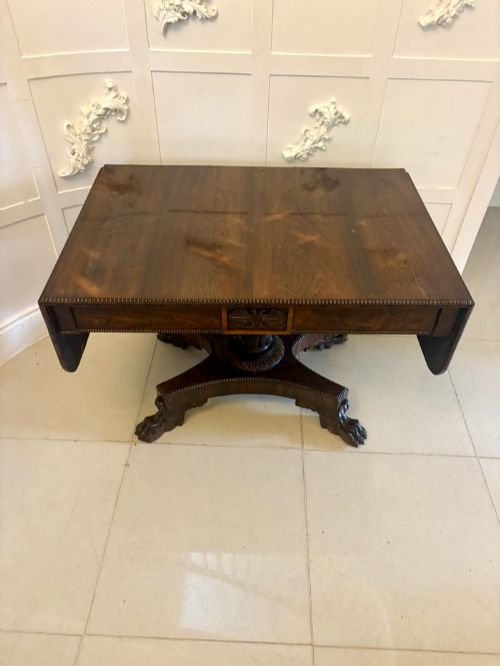
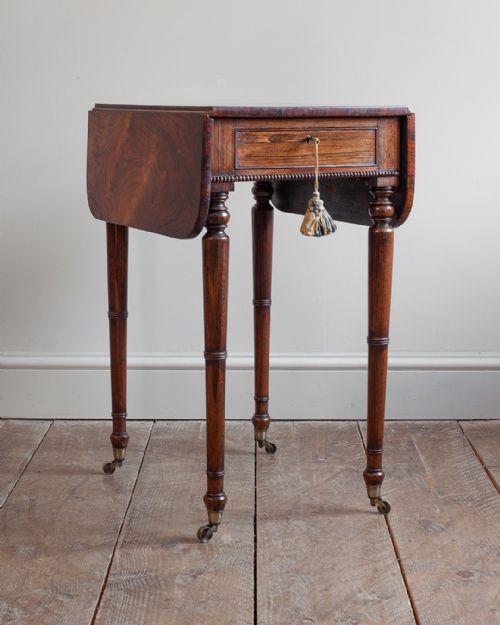
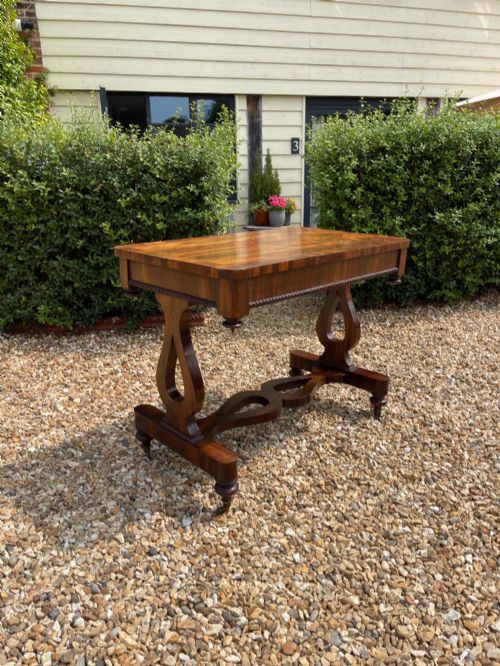
When you search for a rosewood side desk, you encounter a selection spanning the Regency, Victorian, and Edwardian periods. The forms range from compact Davenport desks and bureau plats to versatile sofa tables, writing tables and side tables.
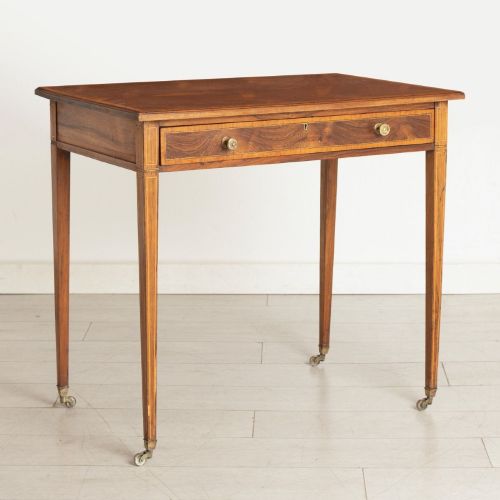
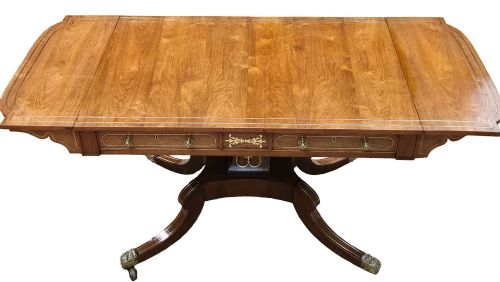
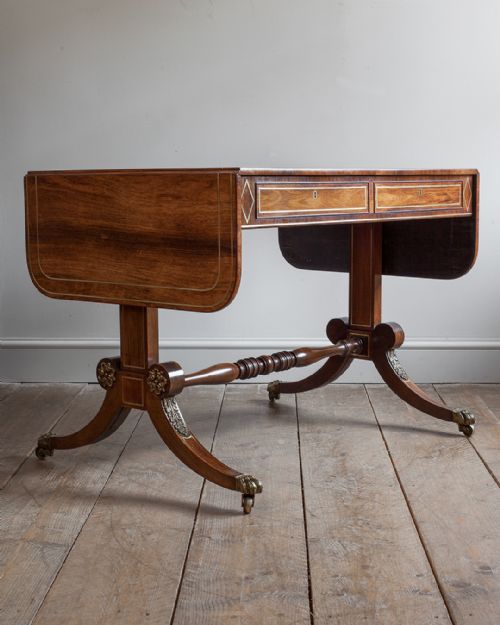
You are most likely to meet mid-19th century and Regency examples on this page, often featuring rich timber surfaces combined with drawers or drop leaves. These items served functional writing and display roles in period homes, frequently designed to stand freely within a room.
How they were made
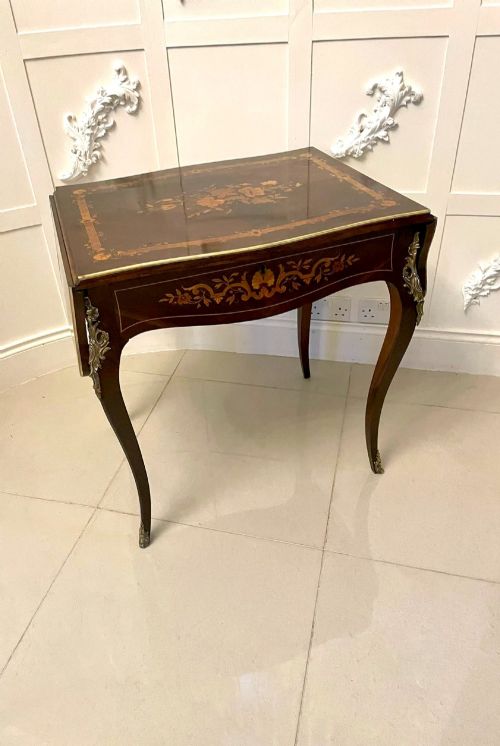
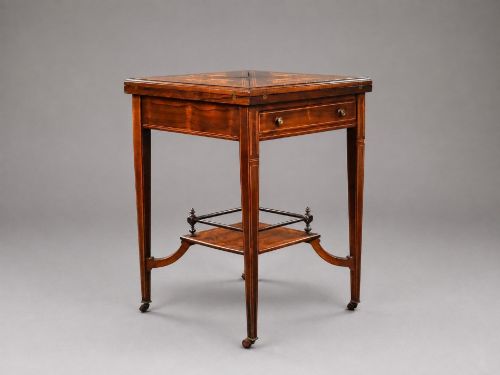
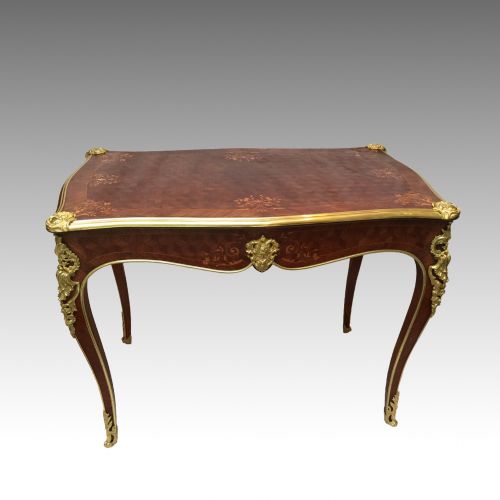
Cabinet makers utilised dense rosewood timbers, often applying veneers over secondary woods to create striking grain patterns on table tops and desk fronts. Parquetry and marquetry inlays added decorative geometric or floral motifs, while brass fittings and ormolu mounts reinforced structural joints and edges.
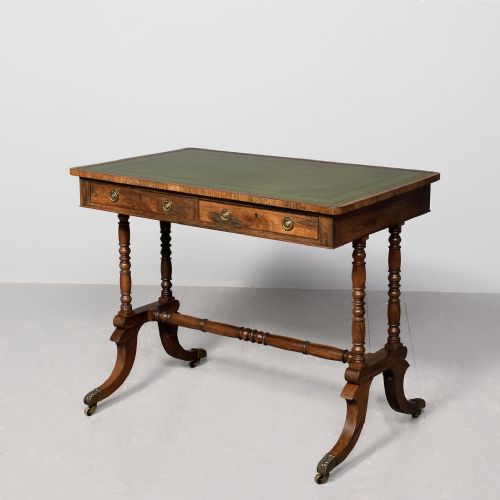
Surfaces were frequently fitted with leather or fabric inserts for writing, and structural framing utilised sturdy hardwoods to support drawers, drop flaps and fold-over mechanisms.
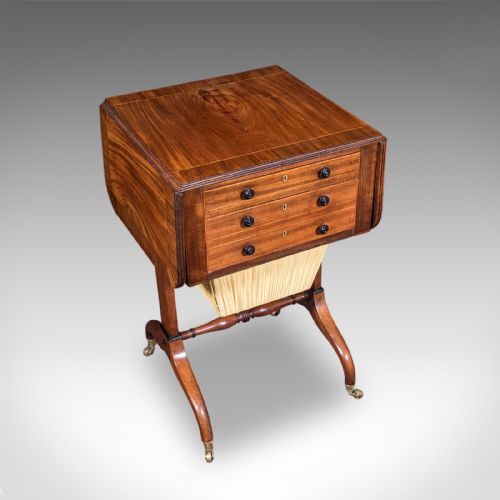
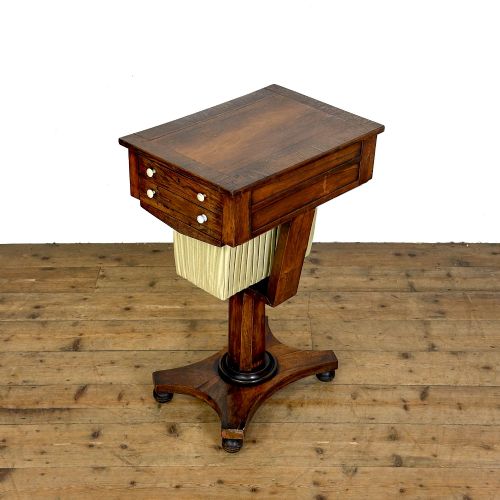
Some work tables cleverly hide sewing compartments beneath writing slopes, keeping needlework out of sight during polite conversation.
What varies in quality
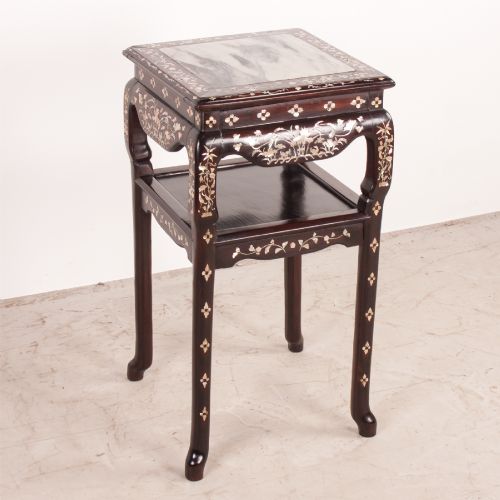
The standard of a piece depends heavily on the precision of its timber selection and the crispness of its carved or inlaid details. Finer examples display continuous grain matching across drawer fronts and tabletops, alongside meticulously cut brass or mother of pearl inlay.
Construction methods also separate standard production from superior craftsmanship, visible in the snug fit of dovetailed drawer joints and the fluid movement of drop leaves or revolving writing surfaces.
Gillows
The Rosewood Side Desk Glossary
- Rosewood
- A dense, heavily figured timber prized for its dark grain and reddish-brown coloration. It was widely utilised across Regency and Victorian cabinet making.
- Ormolu
- Gilded bronze mounts applied to furniture for decorative enrichment. These mounts are typical of French pieces from the nineteenth century.
- Marquetry
- The art of applying thin veneers of different woods, metals or shells to form decorative patterns. It appears frequently on French and late nineteenth-century tables.
- Davenport
- A compact pedestal desk featuring a sloping writing surface and side drawers. These items became popular during the Victorian era for domestic studies.
Rosewood Side Desk: Frequently Asked Questions
What is a rosewood side desk?
A rosewood side desk is a compact writing or work table constructed from dense rosewood timber, often dating from the Regency or Victorian periods. These tables typically feature drawers, drop leaves or leather-lined writing surfaces designed for domestic study or parlour use.
They combine decorative cabinet work with practical utility, serving as functional writing spaces that can stand freestanding within a room.
How do I identify a Regency period desk?
Regency desks and tables are characterised by classical restraint, clean lines, and architectural proportions often influenced by ancient Greek and Roman designs. They frequently incorporate brass stringing, sabre legs, and rich rosewood veneers.
Examining the construction methods, such as hand-cut dovetails and traditional timber framing, helps confirm this early nineteenth-century origin.
Where were these desks placed?
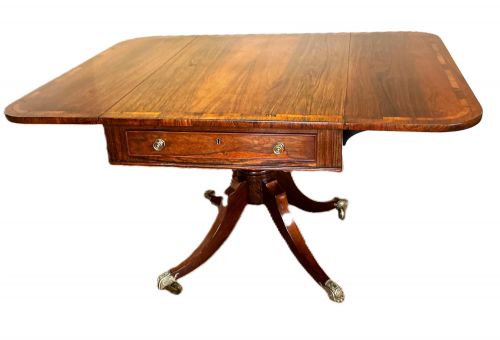
In period interiors, these desks and tables were positioned against walls, beside seating areas, or freestanding in the centre of libraries and studies. Drop-leaf and sofa table variants allowed furniture to be easily moved or expanded depending on daily requirements.
Their finished backs made them suitable for placement in the middle of a room rather than strictly against a wall.
How should I care for rosewood furniture?
Rosewood surfaces benefit from regular dusting with a soft, dry cloth to prevent grit accumulation. Avoiding direct sunlight and maintaining stable room humidity protects the timber and delicate veneers from splitting or fading.
Applying a traditional beeswax polish occasionally helps nourish the wood grain and preserve the historic finish without building up heavy residues.