




Small Rosewood Writing Table
A small rosewood writing table is a compact, beautifully figured piece designed for correspondence, bringing both utility and warmth to a room.
Small Rosewood Writing Table
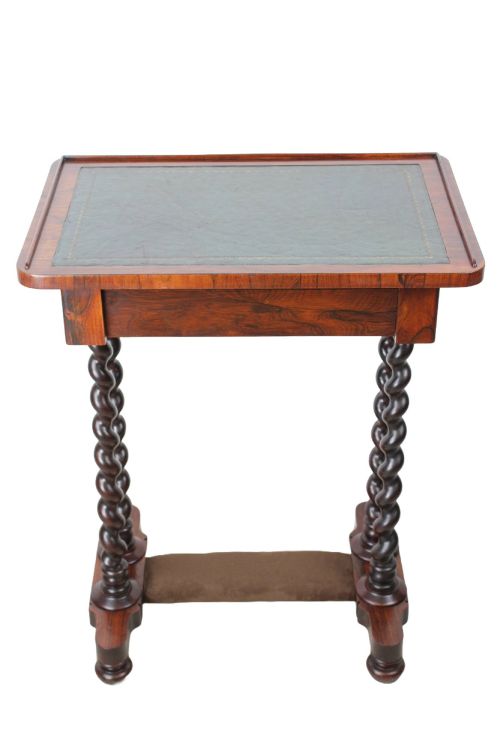
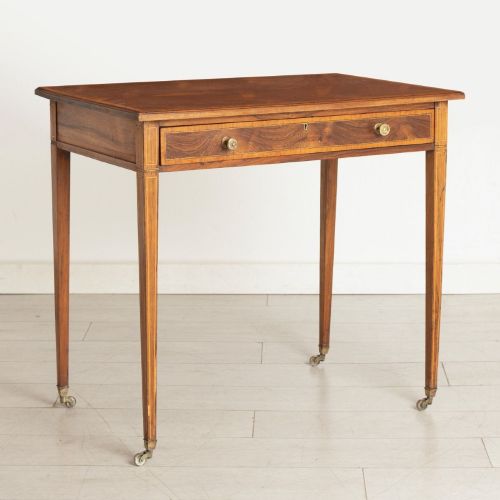
A small rosewood writing table serves as a functional writing surface while offering the rich grain and deep colour characteristic of the timber. These pieces appear across several periods, most notably the Regency era and the late nineteenth century, alongside Edwardian examples.
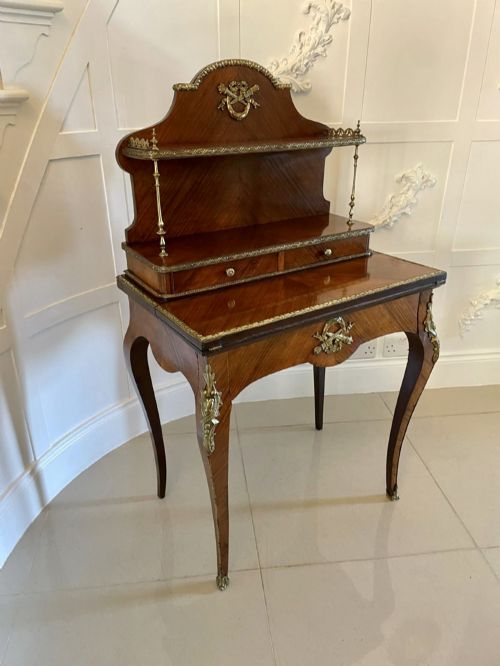
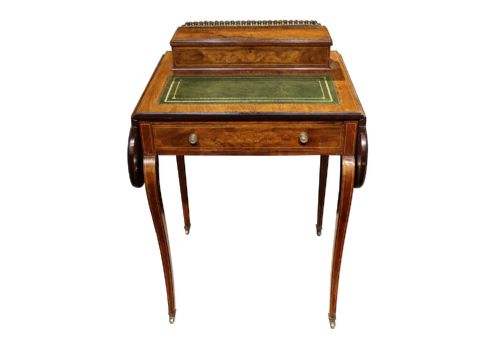
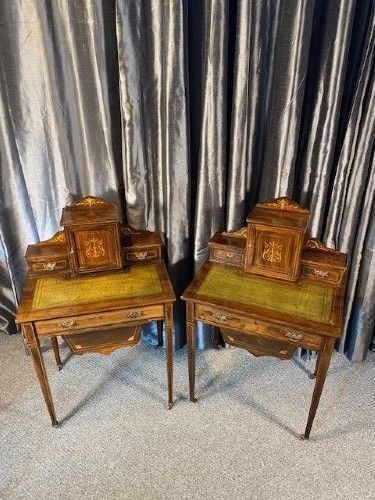
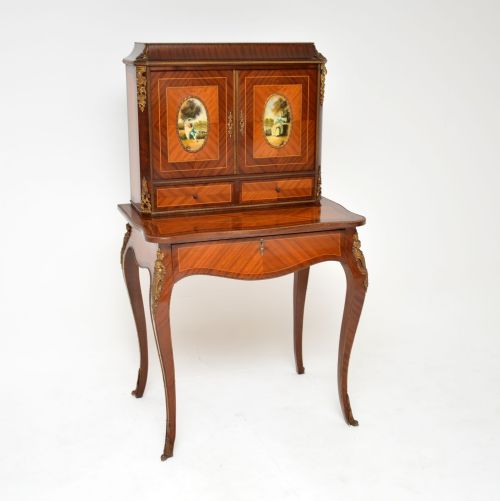
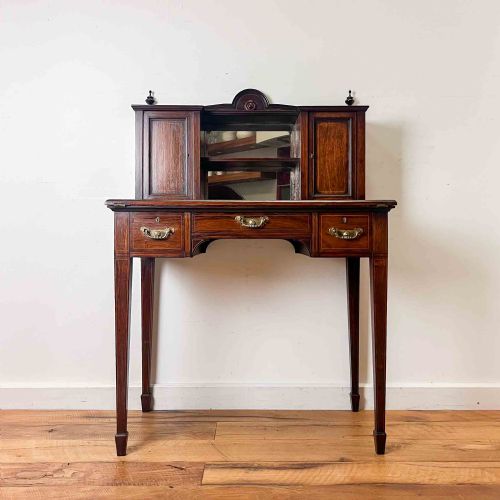
The form varies from freestanding writing tables and side tables to refined bonheur du jour desks featuring fitted interiors and compartments. Most examples found on this page lean towards ladies' desks and compact writing tables suited for domestic spaces.
What Varies in Quality
The depth of figure in the rosewood veneer and the precision of any inlay set into the timber dictate the visual distinction of the piece. Superior examples exhibit balanced proportions and seamless integration of secondary materials like brass or ormolu mounts.
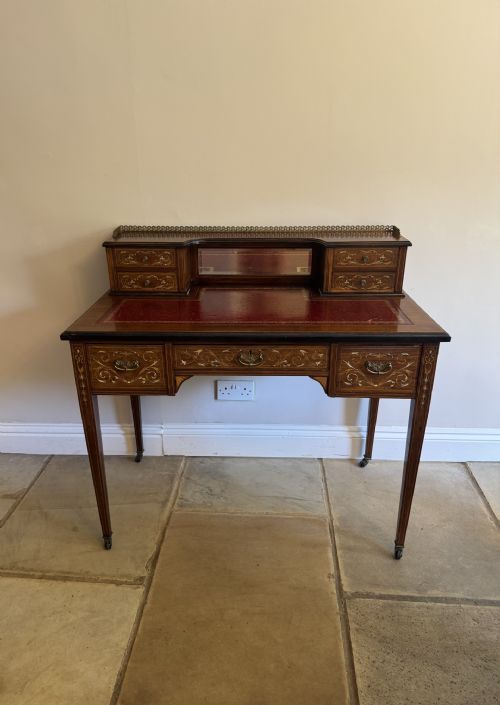
The interior fitments, including the cleverness of small drawers and the quality of the leather writing surface, separate standard pieces from the finest workshops. Structural integrity, particularly in the legs and joints of freestanding tables, marks the difference in craftsmanship.
Some ladies' desks include concealed compartments for secret notes, proving that Victorians loved a hidden drawer as much as anyone.
Edwards and Roberts·John McLean
The Small Rosewood Writing Table Glossary
- Bonheur du jour
- A light-standing ladies' writing desk featuring a small cabinet or set of shelves and drawers upon the upper surface. This French form gained popularity during the eighteenth century and continued through later revival periods.
- Ormolu
- Gilded bronze used for decorative mounts and accents on furniture. The technique involves applying a mercury and gold amalgam to bronze before heating.
- Marquetry
- Decorative patterns formed by the insertion of different coloured veneers into a solid background. Makers used various woods to create floral or geometric motifs.
- Regency
- A British architectural and decorative style spanning roughly from the late eighteenth century to the reign of George IV. Pieces from this period often display classical restraint and clean lines.
Small Rosewood Writing Table: Frequently Asked Questions
Where should I place a small writing table?
These compact tables fit comfortably in a living room, study, or bedroom where a full-sized desk would overwhelm the floor plan. Freestanding versions look particularly striking when positioned away from walls to display the finished grain on all sides.
Ensure the surface receives adequate natural light from a side window if you intend to use it for writing or reading daily correspondence.
How do I care for rosewood furniture?
Protect the polished surface by keeping the table away from direct sunlight and radiator heat, which can dry out the timber and veneer over time. Dust gently with a dry, soft cloth and avoid commercial silicone sprays.
Treat the leather writing insert with care by keeping moisture away from the edges where it meets the surrounding wood.
What is a bonheur du jour?
A bonheur du jour is a small, elegant writing desk that incorporates a superstructure of small drawers, pigeonholes, or a cabinet on top of the writing surface. These pieces were traditionally designed for ladies to write letters and keep personal stationery.
Many examples feature lockable compartments and intricate marquetry or ormolu mounts.
How can I tell a Regency table from a Victorian one?
Regency tables typically display classical restraint, architectural proportions, and clean lines inspired by ancient Roman and Greek forms. The rosewood used during this earlier period often exhibits a rich, dark patina.
Victorian and later nineteenth-century pieces frequently incorporate heavier ornamentation, such as elaborate marquetry, brass gallery rails, and French revival influences.