



Kyoto Satsuma Pottery
Kyoto satsuma pottery brings together earthenware bodies, intricate enamels and gold leaf, offering collectors finely detailed Meiji period forms.
Kyoto Satsuma Pottery
Kyoto satsuma pottery consists of earthenware items decorated during the 19th century and the Meiji period. Buyers examining this page encounter diverse objects ranging from small bowls and miniature vases to monumental vessels and incense burners.
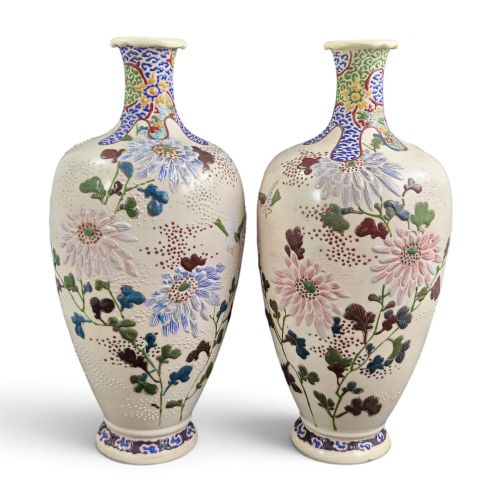
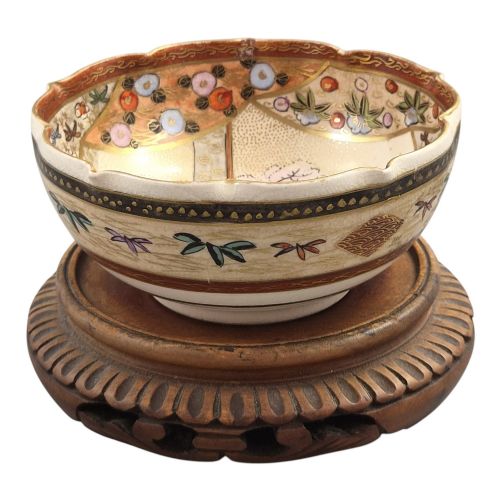
The selection includes specific forms such as decorative bowls, tripods, koro, and sugar bowls. Many pieces exhibit distinct regional styles associated with the Kyoto origin, featuring hand-painted motifs like landscapes, figures, and floral arrangements.
How they were made
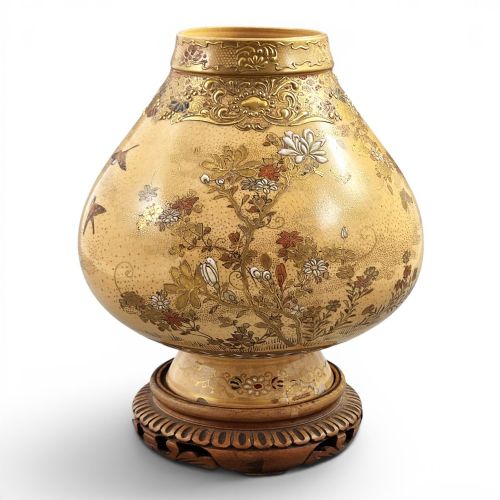
Maker workshops shaped these items from earthenware, applying glaze and finishing the surfaces with meticulous enamel work. Artisans incorporated gold leaf, gilding, and gold gilt to highlight intricate details across panels and motifs.
Techniques such as moriage built up raised enamel designs to create tactile surface textures on vases and bowls. Wood components occasionally accompany specific items like lids or bases.
Kyoto Satsuma Pottery Retail Price Guide 2026
Typical asking prices for kyoto satsuma pottery among the pieces listed under this phrase on Sellingantiques today, from the lower quarter to the upper quarter. They describe what is for sale here now, not the wider market.
Shi-Shi lions sit atop incense burners, keeping watch over miniature gardens and samurai battles.
What varies in quality
Quality differences rest upon the precision of the hand-painted brushwork and the complexity of the figural or landscape scenes. Denser application of gold leaf and detailed moriage relief separate standard vessels from works bearing artist signatures.
The refinement of the earthenware body and the clarity of the cobalt blue accents alongside the gilding determine the visual hierarchy across these Kyoto creations.
Kinkōzan Workshop·Chosei·Kinkozan·Seiko-en Chokei·Choshuzan·Jissei·Yoshisada·Hakusan·Tagawa·Kotobuki-do·Shozan·Hayakawa
The Kyoto Satsuma Pottery Glossary
- Moriage
- A ceramic technique where clay or thick enamel is piped onto the surface in raised dots or lines. This creates a tangible relief effect that catches light beneath the gilding.
- Koro
- A traditional Japanese incense burner fitted with a lid. These pieces often feature tripod legs and sculptural elements like Shi-Shi lions on top.
- Gilt
- A thin layer of gold applied to the ceramic surface. It highlights specific design borders and panel backgrounds.
- Shimazu mon
- The heraldic crest of the Shimazu clan, frequently appearing on Satsuma wares as a symbol of regional patronage. It takes the form of a cross within a circle.
- Earthenware
- Porous pottery fired at lower temperatures than porcelain. It serves as the primary ceramic body for Kyoto Satsuma production.
Kyoto Satsuma Pottery: Frequently Asked Questions
How are Kyoto Satsuma items used?
These pieces serve primarily as decorative objects for display within a room, including vases, bowls, and lidded incense burners.
Collectors house them on tabletops or within cabinets to showcase the intricate enamel panels and gold detailing.
What periods do these pieces date from?
The inventory concentrates heavily on the 19th century and the Meiji period, with specific dates spanning from the 1880s to the Edwardian era.
Production methods shifted slightly across these decades, introducing heavier gilding and complex landscape scenes near the turn of the century.
How do you identify a Kyoto Satsuma piece?
Identification relies on observing the earthenware body combined with intricate enamel painting, gold leaf, and specific motifs like figures or wisteria gardens.
Many pieces also feature artist signatures or studio marks from makers based in Kyoto.
What is moriage decoration?
Moriage is a decorative technique where enamel or liquid clay is built up in raised dots and lines on the ceramic surface.
This method adds physical texture and depth to floral patterns and borders.