
Kingwood Inlaid Table
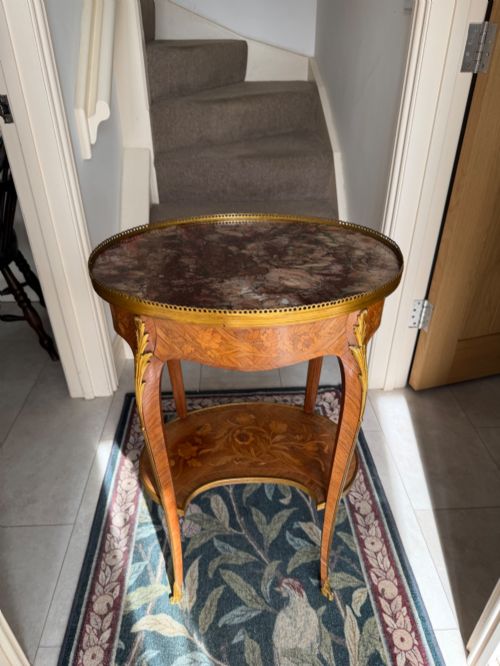
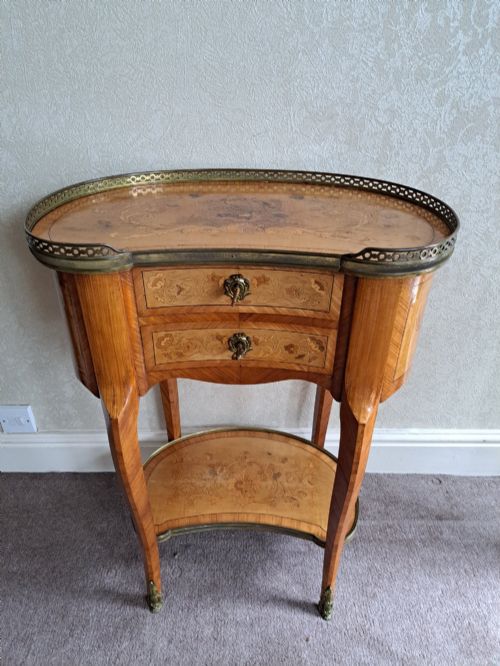
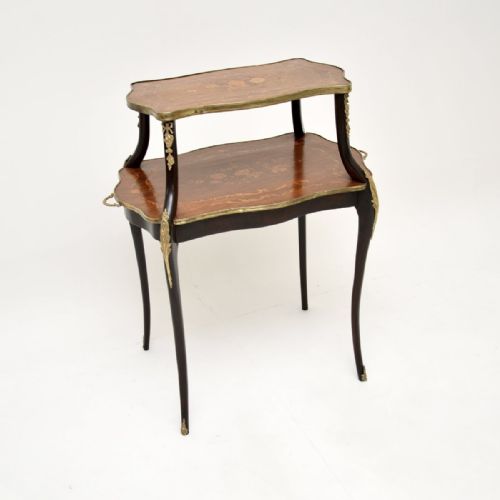
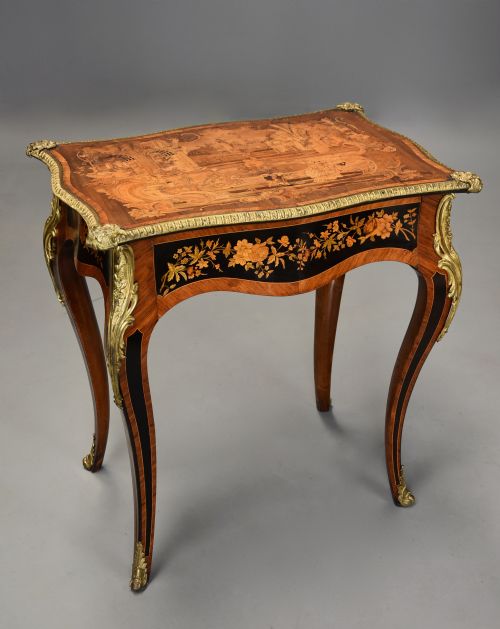
A kingwood inlaid table brings rich, violet-brown timber and intricate floral wood-work into a room, offering both practical surface space and decorative French revival elegance.
Kingwood Inlaid Table
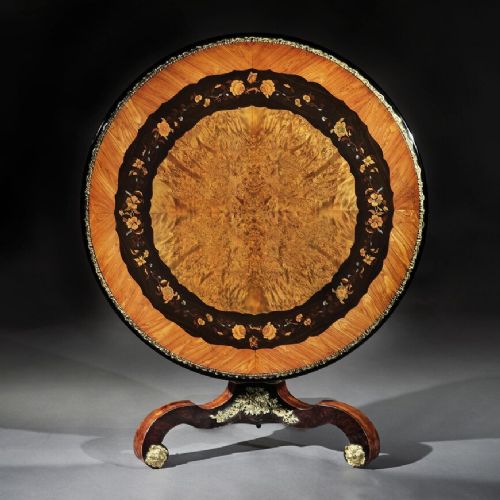
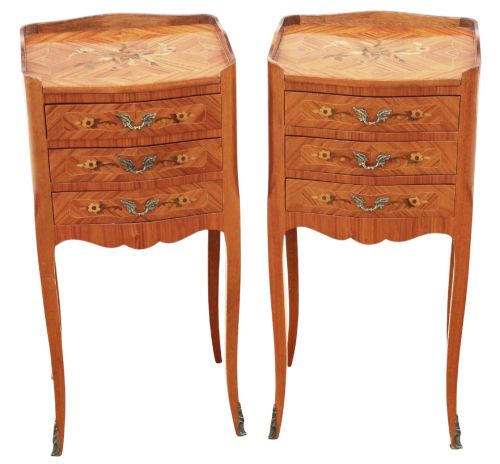
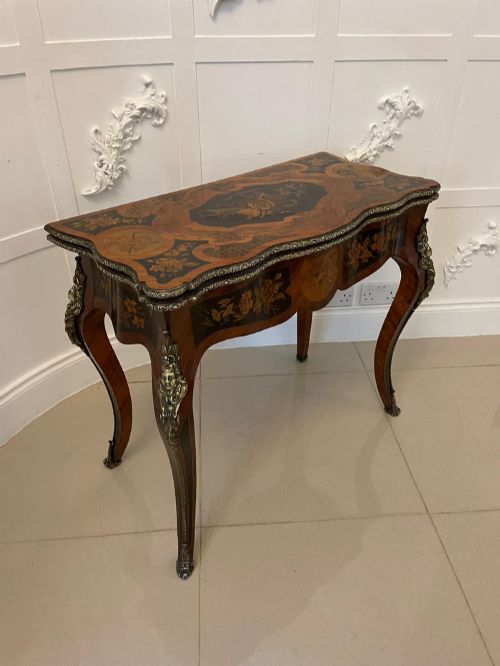
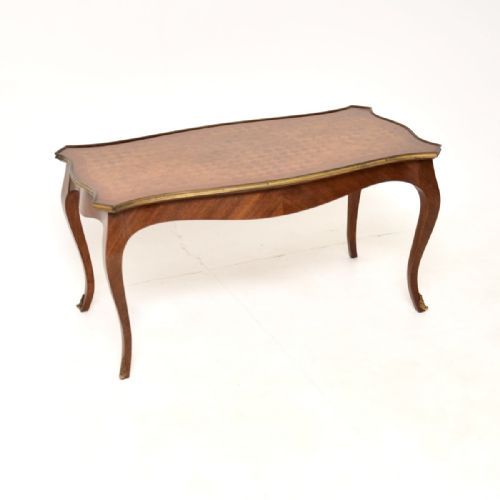
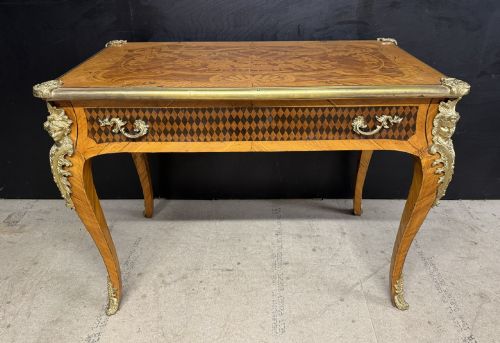
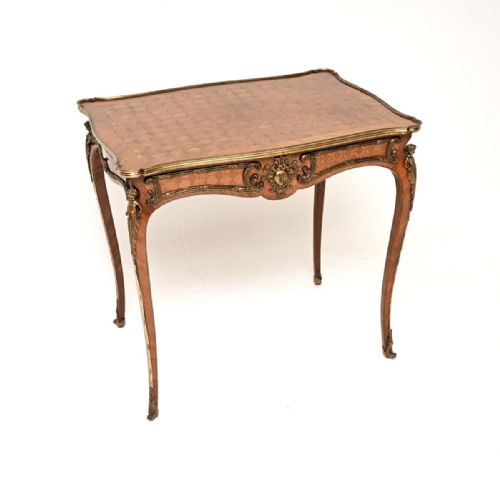
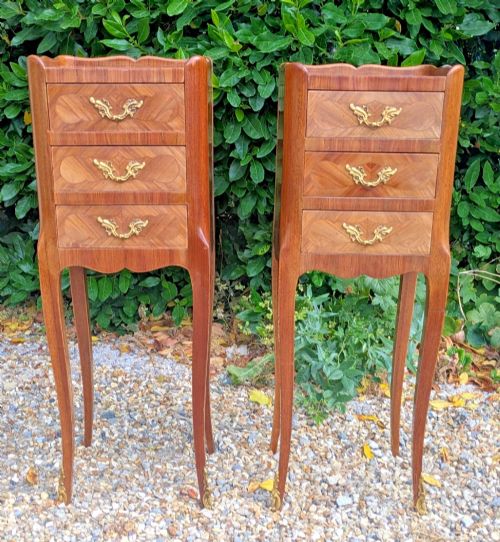
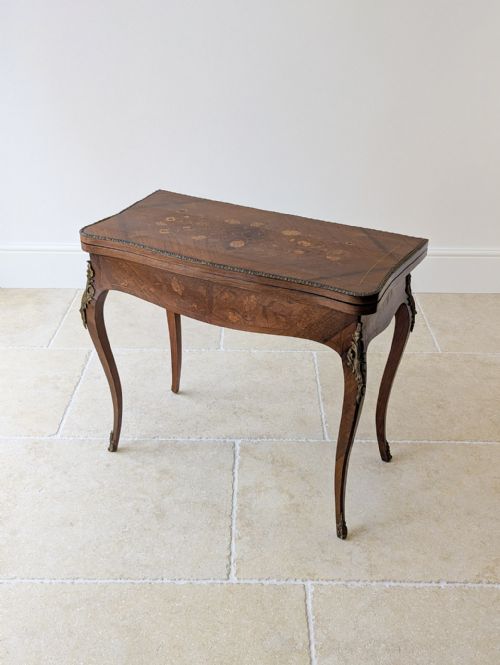
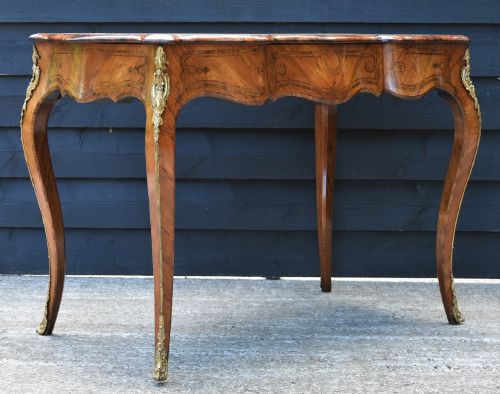
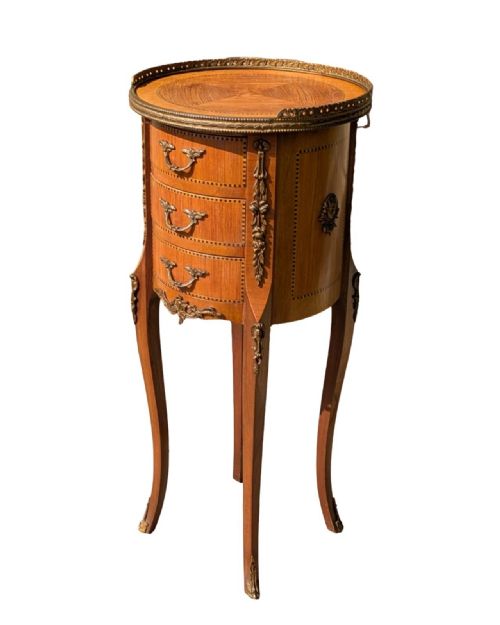
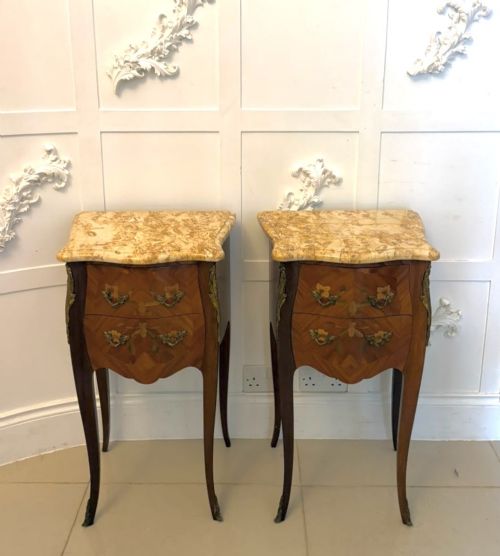
When you search for a kingwood inlaid table, you encounter a variety of forms designed for nineteenth-century and early twentieth-century drawing rooms and chambers. The selection ranges widely from grand centre tables and bureau plat desks to neat bedside cabinets and card tables.
Most examples hail from French workshops following Louis styles, though English and Georgian pieces also appear with crossbanded borders. The surviving pieces demonstrate how cabinetmakers utilised figured veneers to create sophisticated surfaces for everyday domestic use.
How they were made
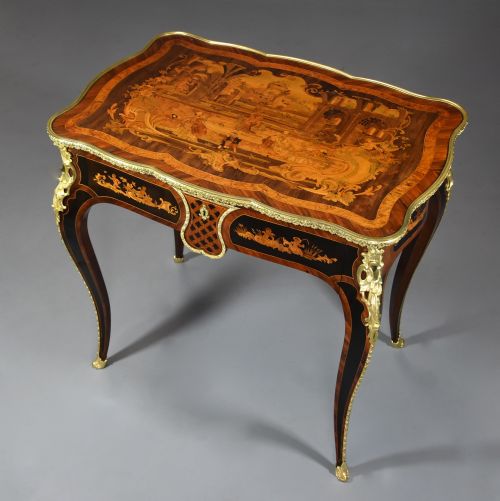
Cabinetmakers constructed these tables using dense tropical kingwood veneers applied to supportive carcase timbers such as oak, walnut, or mahogany. Artisans cut contrasting woods like satinwood, rosewood, and tulipwood into floral or geometric marquetry and parquetry patterns.
Gilders and bronze-workers added ormolu mounts, sabot feet, and brass gallery edges to accentuate the curved serpentine outlines. Many pieces incorporate marble tops inset into the wooden frame, requiring precise joinery to support the heavy stone safely.
Listings feature pieces from the Victorian era alongside 1920 and 1930 production, utilising materials like marble, ormolu, and satinwood.
What varies in quality
The distinction between standard commercial output and exhibition pieces lies in the crispness of the marquetry cutting and the depth of the timber grain. Finer examples display meticulous hand-cut floral details with varied natural shading, whereas simpler tables rely on repetitive geometric parquetry.
Quality also shows in the weight and chasing of the ormolu mounts, alongside the selection of secondary timbers inside the drawers. Tables bearing workshop signatures demonstrate superior structural harmony between the bronze mounts and the veneered surfaces.
Edward Holmes Baldock·Sormani·Millet
The Kingwood Inlaid Table Glossary
- Kingwood
- A dense, heavy South American timber showing rich violet-brown colouring with darker streaks. It was prized by European cabinetmakers for decorative veneering.
- Marquetry
- A decorative technique where thin veneers of different coloured woods are assembled into pictorial designs like floral sprays. It requires immense skill to cut and fit the pieces tightly.
- Ormolu
- Gilded bronze used for decorative mounts, handles, and feet on furniture. High-quality mounts were hand-chased after casting to sharpen the details.
- Parquetry
- Geometric wood-mosaic work used for floors and furniture tops. It forms repeating patterns such as cubes, diamonds, or chequers.
- Crossbanding
- A border veneer applied around the edges of a tabletop where the grain runs perpendicular to the central panel. This frames the primary design.
Kingwood Inlaid Table: Frequently Asked Questions
How do I care for kingwood?
Keep these tables away from direct sunlight and strong heat sources to prevent the delicate veneer from drying and lifting. Dust gently with a dry cloth and apply a quality wax polish sparingly to maintain the sheen.
Avoid using liquid cleaners or silicone sprays, as moisture can seep into hairline cracks in the old polish. Professional restoration is recommended if any veneer starts to blister.
Were these tables used for writing?
Many specific forms like bureau plat desks and bonheur du jour tables served for correspondence and record-keeping. Other types, such as occasional tables and centre pieces, were intended to hold lamps, books, or decorative objects.
Card tables feature fold-over tops lined with baize or leather for evening games. Bedside cabinets provided concealed storage for night-time essentials.
How do I tell nineteenth century pieces apart?
Examine the construction methods and secondary woods inside the drawers or beneath the top. Nineteenth-century revival pieces often display machine-sawn drawer linings and crisply cast ormolu mounts that reflect earlier Louis styles.
Earlier Georgian examples utilise solid mahogany or oak carcases with simpler banding rather than elaborate floral marquetry. Look closely at the wear patterns on the feet and handles to understand age.
What is the difference between marquetry and parquetry?
Marquetry involves cutting diverse veneers to create pictorial motifs such as flowers, urns, and scrolling foliage. It requires intricate hand-sawing and shading with hot sand.
Parquetry uses geometric shapes like squares, cubes, and triangles to form repeating patterns across the surface. Both techniques often appear together on the same piece of furniture.