




Karabagh Tribal Carpet
Karabagh tribal carpet weaves bring bold Caucasian geometry and rich village character into a room.
Karabagh Tribal Carpet
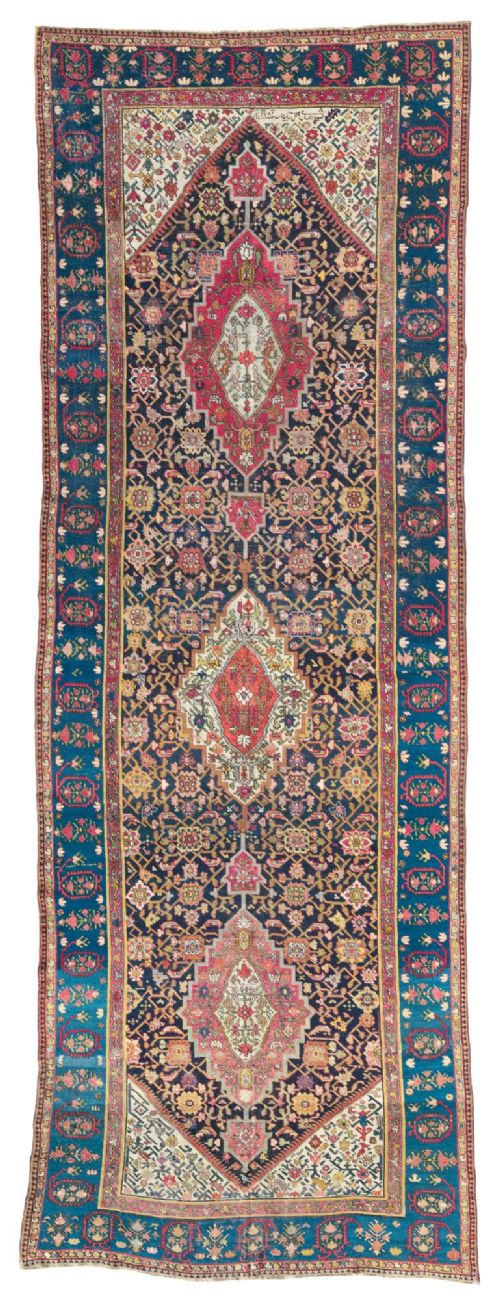
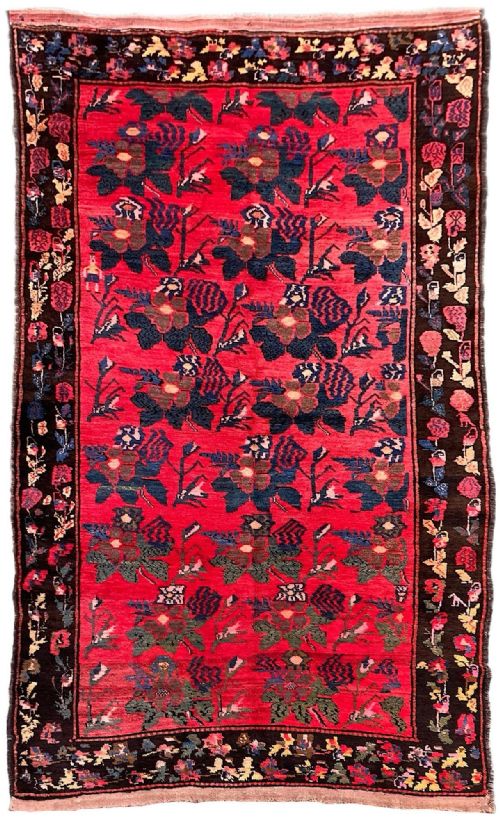
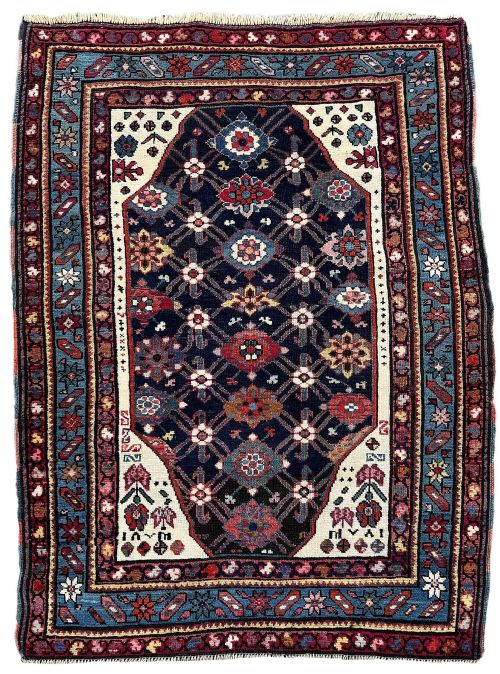
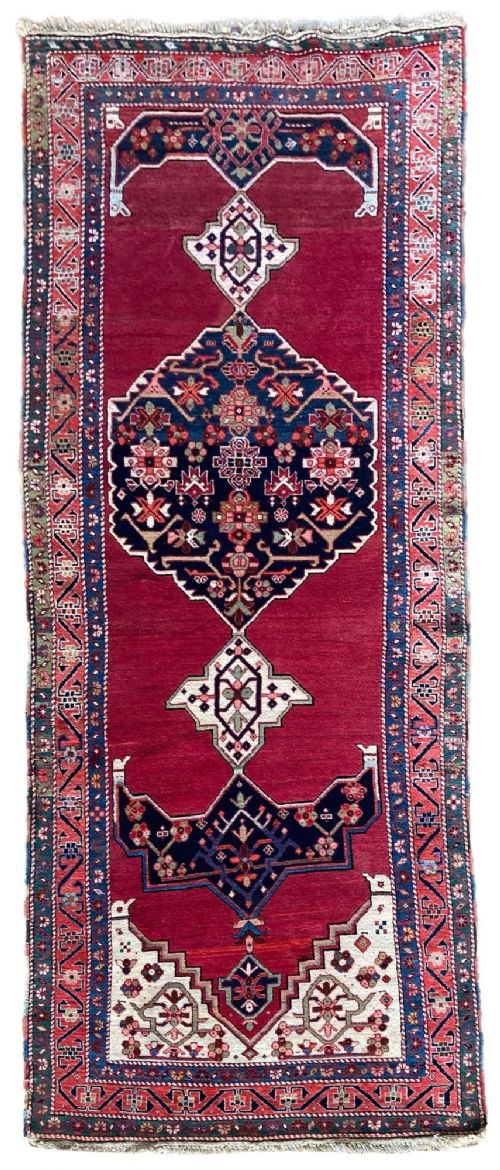
A karabagh tribal carpet represents the traditional weaving of the Caucasian region, spanning formats from square area rugs to long runners and grand kellehs. These pieces emerge from village and regional workshops, carrying distinct cultural markers such as medallions, boteh motifs, and cloud band designs.
Buyers browsing this selection will most frequently encounter Karabagh rugs dating from the late nineteenth century through to the early decades of the twentieth century. The formats range widely, including narrow hallway runners and large carpets featuring characteristic village or Armenian motifs.
The aesthetic bridges traditional Caucasian styling with individual weaver expressions, often incorporating geometric repeats, striped boteh patterns, or figurative elements depicting people and animals. Each piece functions as a durable floor covering imbued with regional history.
How they were made
Makers constructed these floor coverings utilising wool for the pile and foundation elements, frequently supported by cotton structures in various regional formats. The interplay of these natural fibres provides the dense, resilient texture characteristic of Caucasian village weaving.
Weavers knotted the wool by hand onto the foundation, employing traditional techniques passed down through generations to secure the intricate geometric and medallion patterns. Natural dye methods yielded the deep, enduring hues seen across the surviving nineteenth and early twentieth-century examples.
Karabagh Tribal Carpet Retail Price Guide 2026
Typical asking prices for karabagh tribal carpet among the pieces listed under this phrase on Sellingantiques today, from the lower quarter to the upper quarter. They describe what is for sale here now, not the wider market.
Materials across these listings are strictly limited to wool and cotton constructions.
What varies in quality
The visual impact of a piece depends heavily on the clarity of the design and the saturation of the wool pile. Stronger examples display crisp medallion outlines and balanced proportions across the field.
Knot density and the precision of the village weaving influence the structural integrity of each rug over time. Finer execution in traditional motifs such as the cloud band or striped boteh separates standard utility pieces from exceptional village artistry.
The Karabagh Tribal Carpet Glossary
- Kelleh
- A large format rectangular carpet, typically longer than a standard room-size rug, used for extended spaces.
- Boteh
- A stylised almond or pear-shaped motif representing a floral shoot or cypress tree, frequently repeated across Caucasian fields.
- Chondoresk
- A specific Caucasian rug sub-type distinguished by large cloud band medallions and bold geometric framing.
- Kilim
- A flat-woven carpet or rug made without a pile, produced using a slit-weave technique across various regional traditions.
- Runner
- A long, narrow carpet format designed specifically for hallways and corridors.
Karabagh Tribal Carpet: Frequently Asked Questions
Where were these carpets made?
These pieces originate from the Karabagh region in the Caucasus, drawing on local village and regional weaving traditions.
The production reflects diverse cultural influences within the area, including Caucasian and Armenian heritage expressed through traditional motifs.
How do I care for a vintage rug?
Vacuum gently without a rotating brush roll to protect the wool pile and foundation threads from unnecessary friction.
Keep the textile out of direct, harsh sunlight to preserve the natural dyed colours over years of daily enjoyment.
What is a runner used for?
Runners provide a long, narrow format suited for hallways, corridors, and narrow passageways within a home.
They add warmth and character to transit spaces while protecting underlying wooden floors from heavy foot traffic.
How can I tell the age of a piece?
Age is assessed by examining the natural wear patterns, the composition of the wool, and the characteristics of the regional dyes used.
Stylistic elements like specific medallion structures and structural materials such as cotton foundations also point towards production dates from the nineteenth and early twentieth centuries.