



Joined Oak Panelled Coffer
A joined oak panelled coffer is a sturdy domestic storage piece built from solid timber, prized for its longevity and rich period character.
Joined Oak Panelled Coffer
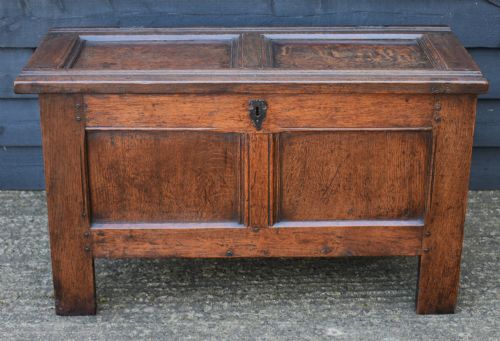
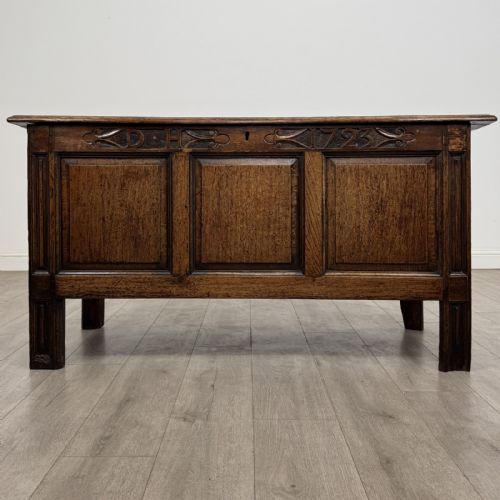
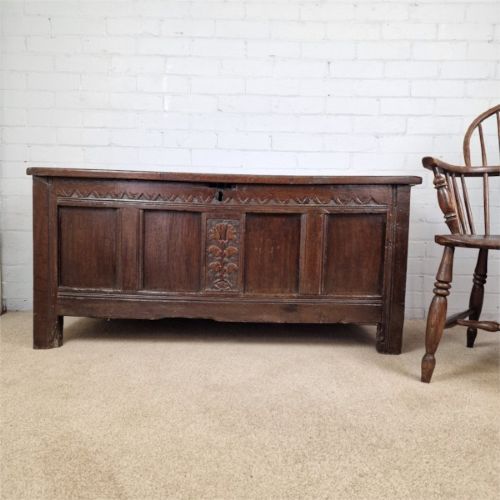
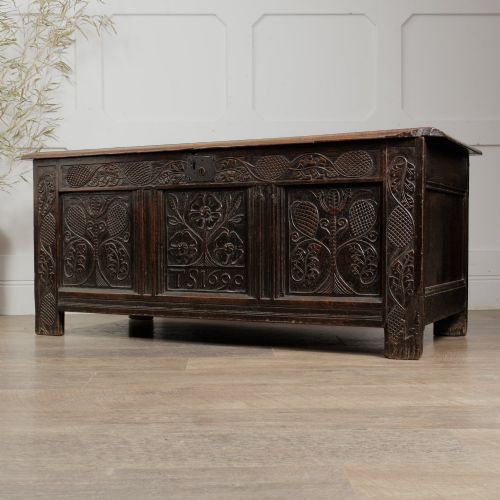
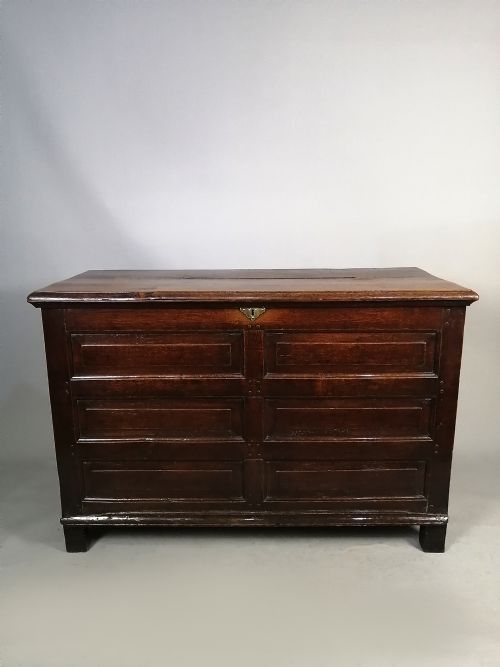
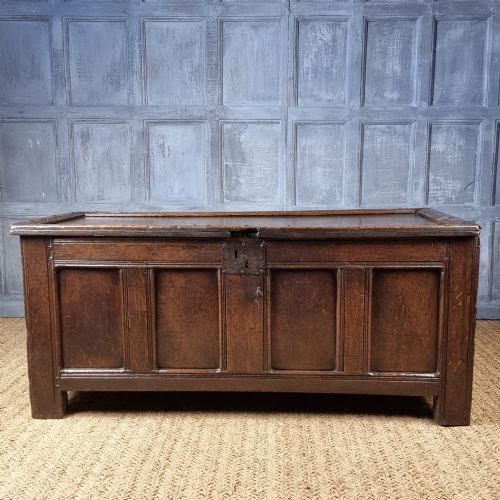
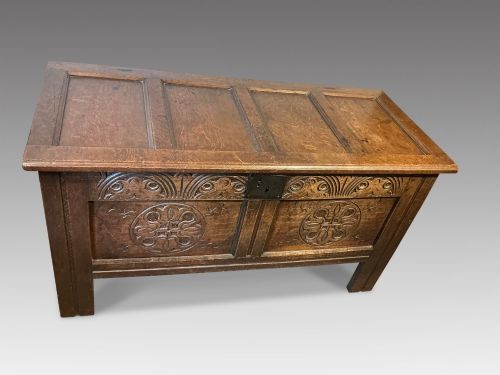
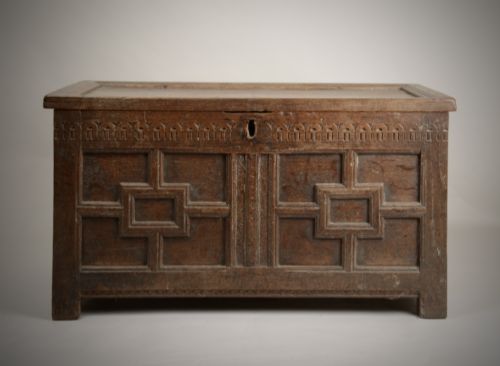
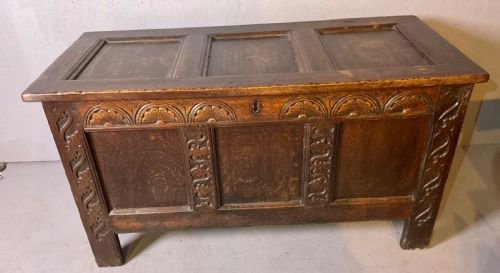
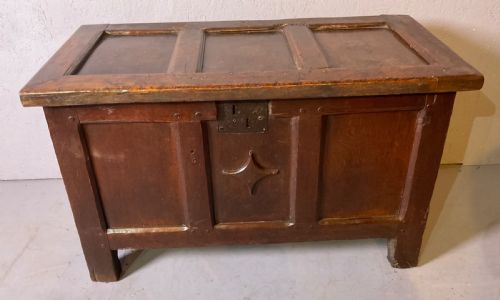
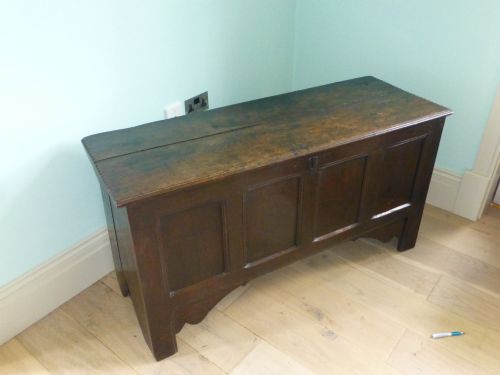
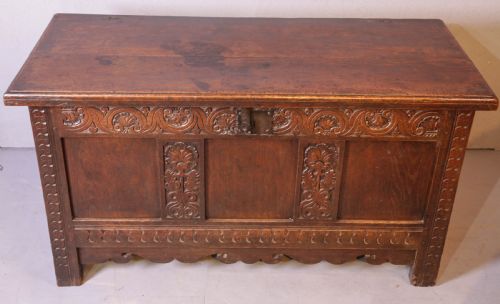
A joined oak panelled coffer serves as a robust storage box constructed from framed timbers rather than simple board chests. When exploring a joined oak panelled coffer on this page, the visitor encounters predominantly seventeenth-century English and Welsh examples alongside sixteenth-century and eighteenth-century pieces.
The construction relies on pegged mortise and tenon joints holding panels tightly within a structural frame. Regional variations emerge across listings, including pieces originating from Wales, Lancashire, Lakeland, and South Gloucestershire.
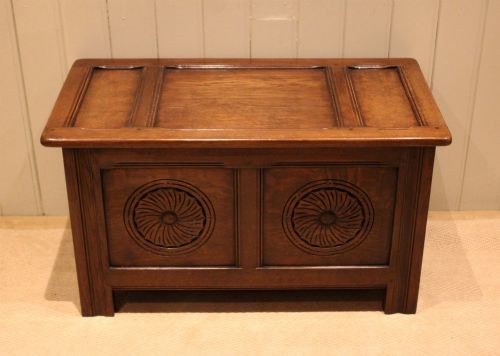
Beyond the standard chest form, related storage items such as mule chests, court cupboards, and blanket boxes appear alongside the core joined oak panelled coffer selection.
Materials and construction techniques
Makers utilised solid oak timber for its durability, framing panels within structural stiles and rails secured by wooden pegs. Iron and brass fittings, including wrought iron hinges and locks, often reinforce the heavy structural work.
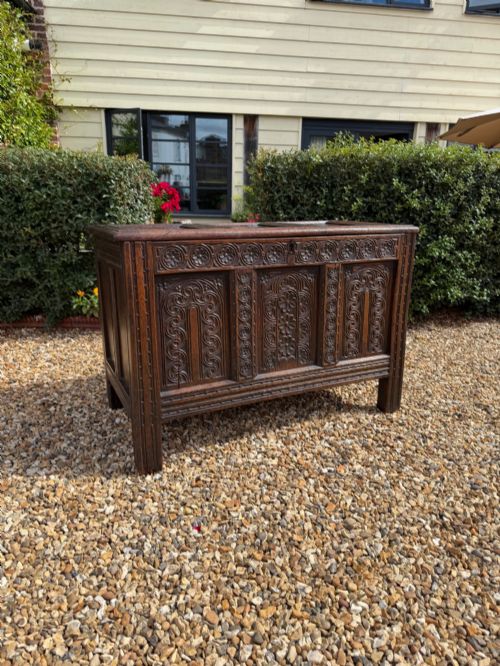
Surface ornamentation on a joined oak panelled coffer ranges from plain geometric moulding and linenfold carving to intricate seventeenth-century carved details. Workshops shaped these domestic chests using hand tools to joint the timber frames around floating panels.
Joined Oak Panelled Coffer Retail Price Guide 2026
Typical asking prices for joined oak panelled coffer among the pieces listed under this phrase on Sellingantiques today, from the lower quarter to the upper quarter. They describe what is for sale here now, not the wider market.
Early makers occasionally hid carved initials inside the framing, leaving a quiet signature for future hands to find centuries later.
Distinctions in quality and survival
Quality rests upon the integrity of the original joined frame and the depth of the timber's surface patina. Pieces retaining original boards, peg fastenings, and minimal timber replacement command greater attention.
The refinement of carved motifs, geometric mouldings, and regional framing characteristics separate standard storage trunks from finer workshop pieces.
Thomas Dennis
The Joined Oak Panelled Coffer Glossary
- Joined coffer
- A chest constructed using framed mortise and tenon joints rather than simple boards nailed together. This method allows the wood to expand and contract naturally.
- Linenfold
- A style of carving resembling folded cloth panels, common on sixteenth-century oak furniture. It creates a textured surface across flat panels.
- Mule chest
- A storage chest featuring one or more drawers beneath the main internal compartment. They bridge the design gap between traditional coffers and modern chests of drawers.
- Patina
- The deep surface sheen developed by timber through decades of handling, waxing, and ageing. A rich patina indicates long-term survival in domestic settings.
- Stile and rail
- The vertical stiles and horizontal rails that form the outer structural frame holding a central panel in place. This framework provides stability to early oak furniture.
Joined Oak Panelled Coffer: Frequently Asked Questions
How were these coffers used originally?
Households utilised these sturdy chests primarily for storing household linens, woollens, and precious family documents. Their heavy construction also allowed them to double as seating benches.
In larger estates and merchant homes, they functioned as secure travel trunks and general storage repositories before fitted closets became common.
How do I date an oak coffer?
Dating relies on observing construction methods, timber preparation marks, and decorative styles like linenfold carving or geometric mouldings. Sixteenth-century pieces often display Gothic or Tudor motifs, while seventeenth-century examples feature joined framing and geometric panels.
Regional traits and carved dates inscribed into the timber further assist in establishing an accurate period of origin.
How do I care for antique oak furniture?
Maintaining antique oak involves keeping the timber away from direct heat sources and sudden humidity changes to prevent splitting. Regular application of a traditional beeswax polish helps nourish the wood and preserve its surface sheen.
Avoiding synthetic cleaners ensures the historic surface patina remains undisturbed over time.