





Japanese Satsuma Vase Pair
A Japanese satsuma vase pair brings together finely crackled earthenware, intricate enamel painting and gold leaf work from the Meiji and later periods.

Japanese Satsuma Vase Pair
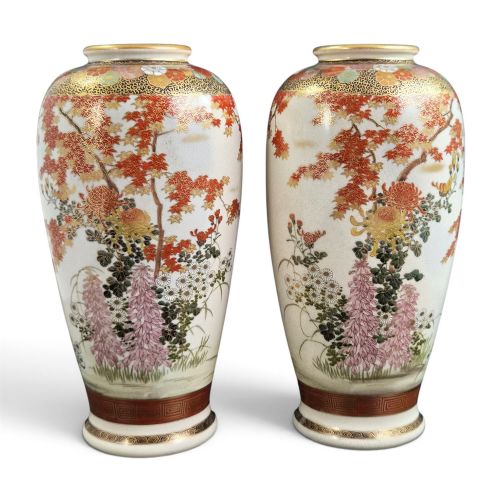
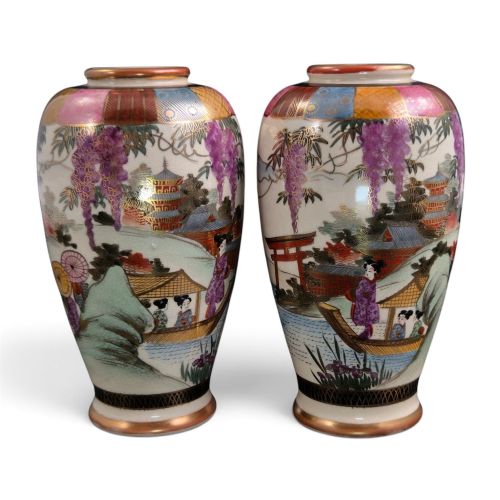
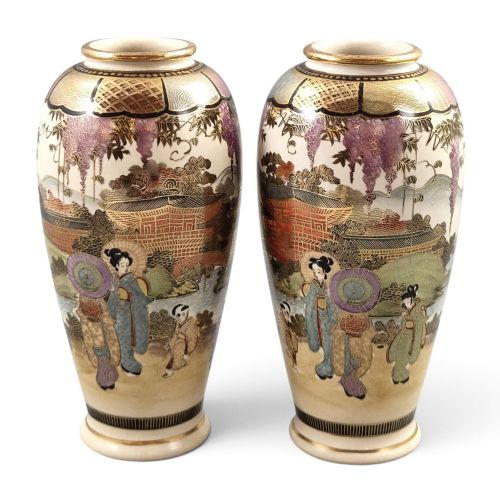
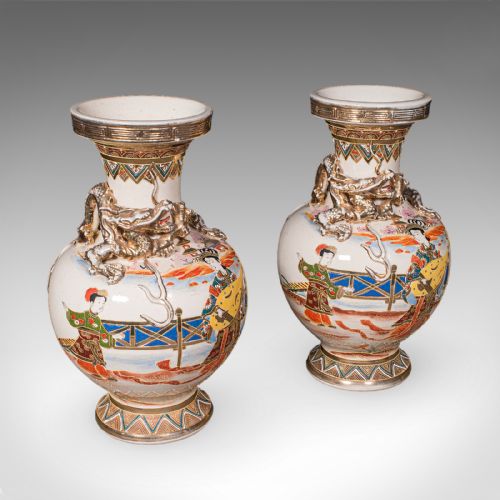
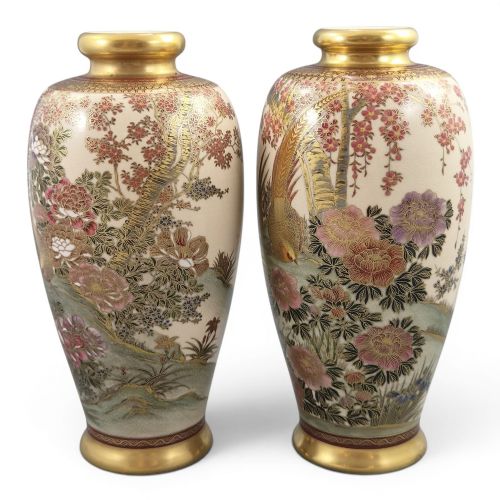
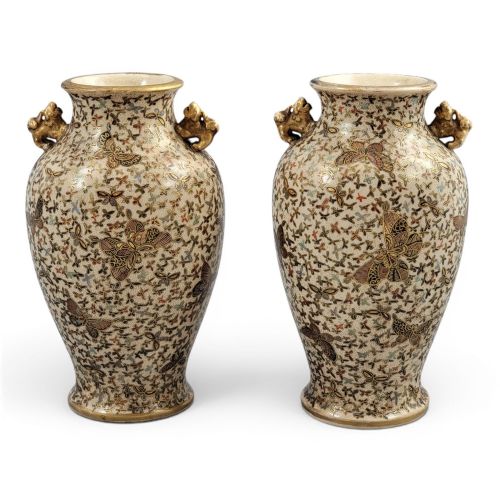
A japanese satsuma vase pair consists of matching decorative vessels created in earthenware and ceramic forms. These coordinated sets emerge frequently from the Meiji period through the Taisho and Showa eras, often featuring baluster shapes or hexagonal profiles.
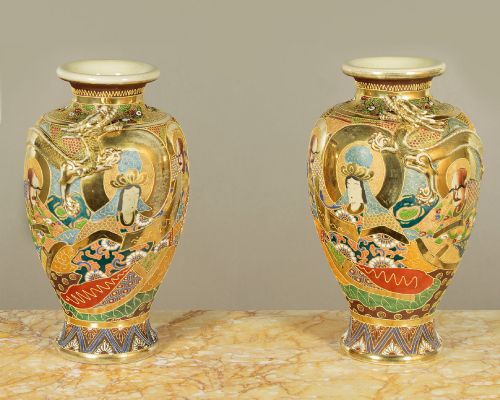
The decorative subjects span traditional landscapes, wisteria gardens, lake views and figurative scenes involving arhats, immortals and children. Many examples retain signature panels or specific workshop marks from Kyoto and Kobe production centres.
How They Were Made
Potters shaped the earthenware bodies before applying a characteristic creamy glaze with a fine network of crackles. Artisans then painted detailed motifs using polychrome enamel pigments combined with raised moriage work.
Extensive gilding and gold leaf highlights were applied to frame the pictorial panels and ornamental borders. Certain workshops produced lidded vessels or incorporated moulded dragon handles and geometric polygon forms into the final ceramic structure.
Listings feature earthenware vessels spanning the nineteenth century through the 1930s, utilising enamel, gold leaf and glaze.
What Varies in Quality
The standard of execution depends heavily on the precision of the brushwork within the figurative and landscape panels. Denser application of heavy gilding and refined enamel detailing distinguishes finer exhibition pieces from standard commercial output.
The complexity of the moulded relief work and the clarity of workshop signatures also indicate the grade of production. Well-preserved original boxes and matching pairs with balanced proportions command particular attention.
Maruni Kobe·Shozan·Manpei·Kinkōzan·Kinzan·Hododa·Hakusan·Tagawa·Tashiro·Taizan
The Japanese Satsuma Vase Pair Glossary
- Earthenware
- Porous ceramic material fired at lower temperatures, forming the structural base for traditional satsuma wares. The buff body requires an opaque glaze to create a smooth painting surface.
- Moriage
- A decorative technique using piped clay slip to build up raised relief patterns before glazing and gilding. This method adds tactile dimension to floral borders and dragon motifs.
- Mon
- A traditional Japanese emblem or crest used to identify noble families or clans. The Shimazu clan crest frequently appears on satsuma pottery associated with the Satsuma Domain.
- Meiji Period
- The historical era spanning from 1868 to 1912, marked by a surge in decorative arts produced for export. Many of the finest matching vessel sets originate from these decades.
- Baluster
- A vase form featuring a rounded body that tapers toward the base and flares at the neck. This silhouette provides a stable canvas for expansive landscape scenes.
Japanese Satsuma Vase Pair: Frequently Asked Questions
How do I identify a Meiji period piece?
Meiji period items typically display dense hand-painted enamel work combined with rich gilding over a finely crackled earthenware body. Many examples from this era feature signatures from notable Kyoto or Kobe studios.
Examination of the base often reveals artist seals or workshop marks associated with late nineteenth and early twentieth century production. The weight of the ceramic and the complexity of the narrative scenes also offer clues to the period.
Can I convert them into table lamps?
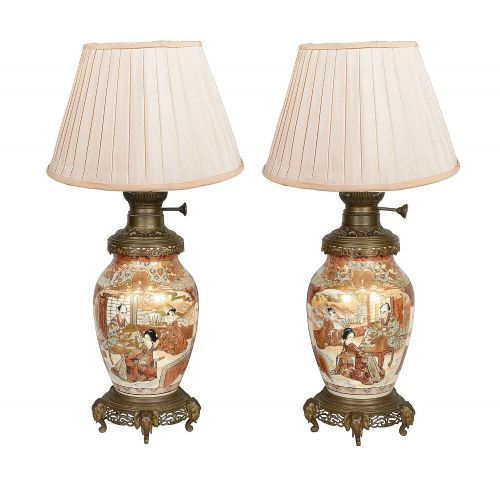
Converting matching ceramic vessels into lighting fixtures has a long history among collectors seeking to adapt antique pieces for modern interiors. Careful wiring methods allow the lamps to function without damaging the underlying earthenware body.
Many surviving examples show evidence of previous conversion work while retaining their original hand-painted enamel decoration. Retaining the balanced proportions of the original pairing ensures a harmonious display as lighting.
What is the Shimazu mon?
The Shimazu mon is a heraldic crest depicting a cross within a circle, representing the ruling clan of the Satsuma Domain. Its presence connects the ceramics to the historical patronage of the region.
Discerning this emblem on a vessel helps confirm regional authenticity and ties the decorative scheme to traditional Satsuma output. The mark frequently appears alongside detailed artist signatures on exhibition-grade items.