




Gilded Satsuma Porcelain Vase
When you search for a gilded satsuma porcelain vase, you seek richly painted earthenware vessels brought from Japan during the nineteenth and early twentieth centuries.
Gilded Satsuma Porcelain Vase
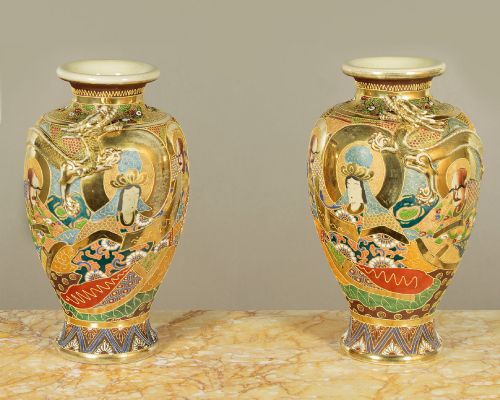
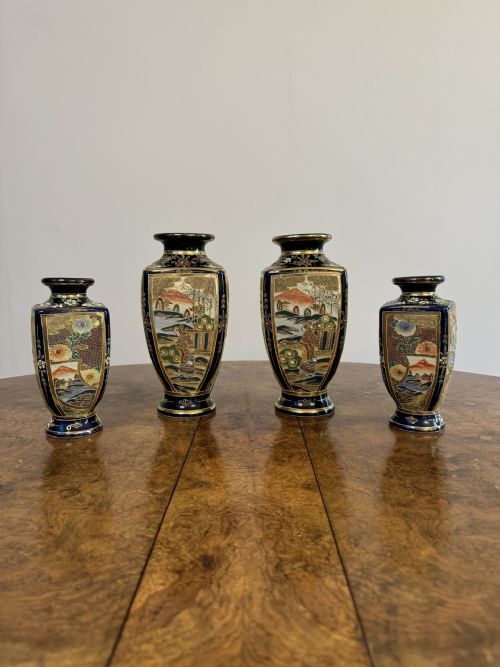
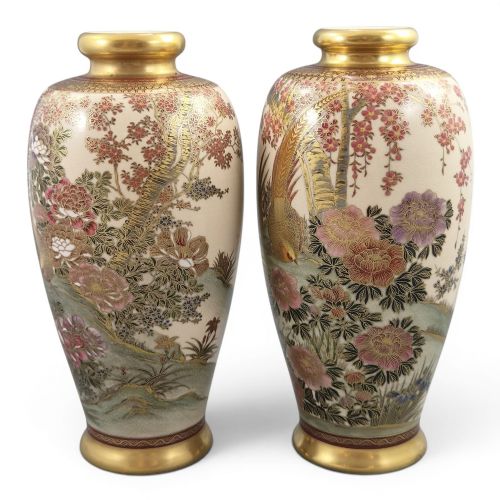
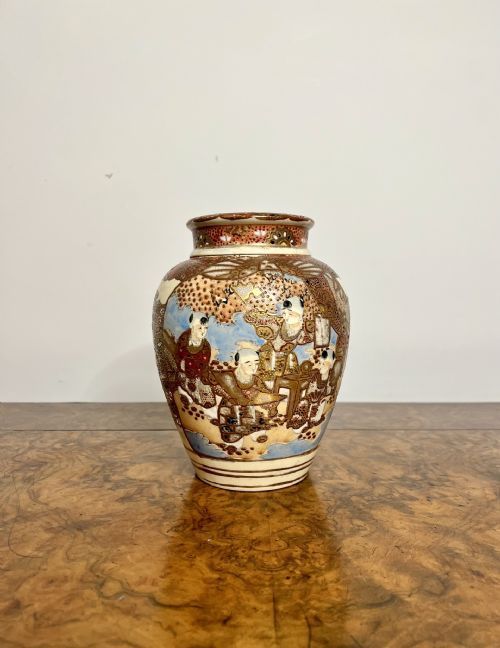
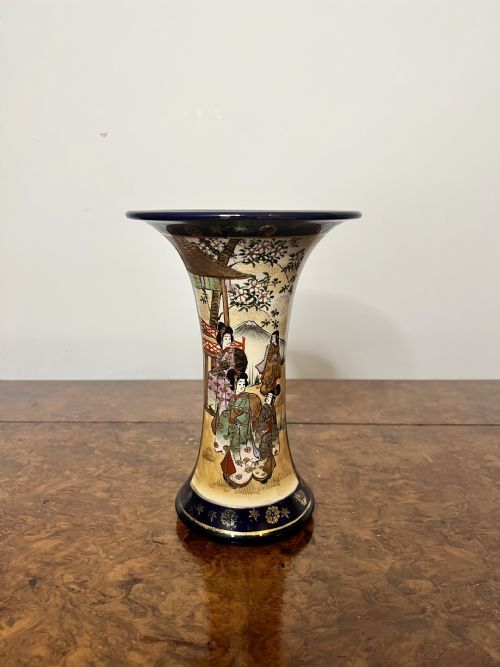
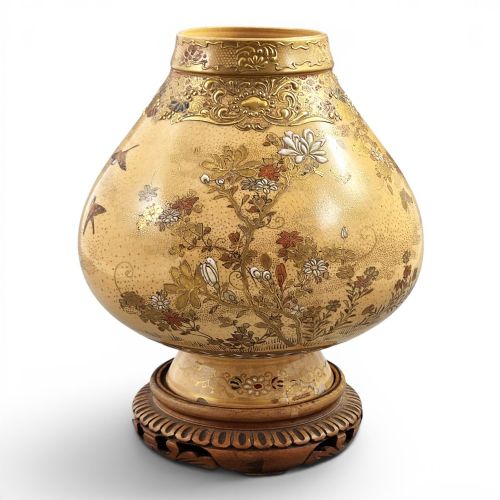
A gilded satsuma porcelain vase typically presents intricate figural or landscape scenes painted in enamel over earthenware bodies, accented extensively with gold leaf. These pieces span periods from the nineteenth century through the early twentieth century, encompassing Meiji, Taisho, and Showa eras.
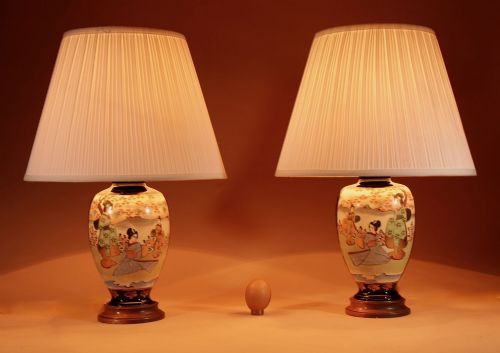
Buyers will encounter various forms on this page, ranging from monumental lidded vessels and ginger jars to pairs of table lamps and miniature cabinet pieces. Many examples originate from Kyoto or Kobe, carrying traditional motifs such as court figures, deities, and mountaintop landscapes.
The aesthetic bridges traditional Japanese ceramic craft with Victorian and Edwardian taste, often incorporating elaborate elephant handles, garlic heads, and geometric borders. Each form serves as a display piece, historically valued for its dense pictorial narrative and metallic lustre.
Materials and technique
Makers formed these vessels using fine earthenware or ceramic bodies, which provided a porous foundation for subsequent layers of glaze and pigment. Artisans applied cream-coloured crackle glazes that created a characteristic network of minute lines across the surface.
Detailed hand-painting utilised dense polychrome enamels alongside gold leaf and gilt work to define figures, garments, and architectural backgrounds. Raised moriage enamel techniques added tactile dimension to robes, flowers, and dragon scales before final firing.
One exceptional vessel depicts one thousand individual arhats alongside a dragon, testing the absolute limits of miniature brushwork.
What separates the finest examples
The distinction between standard commercial output and superior work lies in the precision and density of the hand-painted detail. Master workshops employed exceptionally fine brushwork for facial expressions and multi-layered garments, whereas lesser pieces relied on repetitive stencil patterns and heavier, duller gilding.
Signatures of celebrated makers or specific regional kilns elevate a piece, indicating oversight by premier artists rather than mass production for export markets. The purity of the ceramic body, the stability of the glaze, and the preservation of the delicate gold leaf without rubbing determine the enduring standing of the object.
Manpei Kobe·Kinkozan Kyoto·Hotoda·Chosei·Shuzan·Seiko-en Chokei·Yamashu·Tagawa·Tashiro·Hattori·Hayakawa
The Gilded Satsuma Porcelain Vase Glossary
- Satsuma
- A type of Japanese earthenware traditionally characterised by a pale, ivory-coloured crackle glaze that accepts enamel painting and gilding. Originating in Satsuma Province, production later flourished in urban centres like Kyoto and Kobe.
- Moriage
- A decorative ceramic technique where liquid clay is piped onto the surface in lines or dots to create raised relief patterns. This method gives garments and floral elements a tangible, three-dimensional texture beneath the gilding.
- Meiji Period
- The era of Japanese history lasting from 1868 to 1912, marked by the opening of trade with Western nations. This period produced the most celebrated and intricately decorated export ceramics.
- Gilt
- A thin application of gold leaf or gold paint used to highlight borders, backgrounds, and decorative motifs. It provides the brilliant metallic contrast characteristic of these export wares.
- Garniture
- A set of matching vases or ornamental vessels designed to be displayed together on a mantelpiece or sideboard. These matched groups often share identical hand-painted scenes and signature elements.
Gilded Satsuma Porcelain Vase: Frequently Asked Questions
How do I identify a Meiji period piece?
Meiji period pieces often display dense, meticulous hand-painting depicting court scenes, arhats, or landscapes, frequently accompanied by artist signatures and workshop seals from Kyoto or Kobe.
The quality of the crackle glaze and the brilliance of the gold leaf provide further clues to this era of intense export craftsmanship.
Were these vases made for export?
The vast majority of these decorative vessels were produced specifically for Western export markets during the late nineteenth and early twentieth centuries, catering to Victorian and Edwardian tastes for exotic Japanese goods.
Maker signatures and workshop marks were often adapted to appeal directly to international collectors participating in global exhibitions.
What is the Shimazu mon?
The Shimazu mon is a traditional Japanese crest featuring a cross within a circle, often found painted in gold on the base or body of these ceramic pieces.
It denotes the crest of the Shimazu clan, who ruled the Satsuma domain where this distinctive style of pottery originated.
How should I clean a gilded vase?
Cleaning requires only gentle dusting with a soft, dry brush to prevent accumulation on the textured moriage surfaces and delicate gold leaf.
Moisture and chemical cleaners should be strictly avoided, as water and solvents can damage the vulnerable enamel pigments and lift the historic gilding.