





Meiji Satsuma Pottery Pair
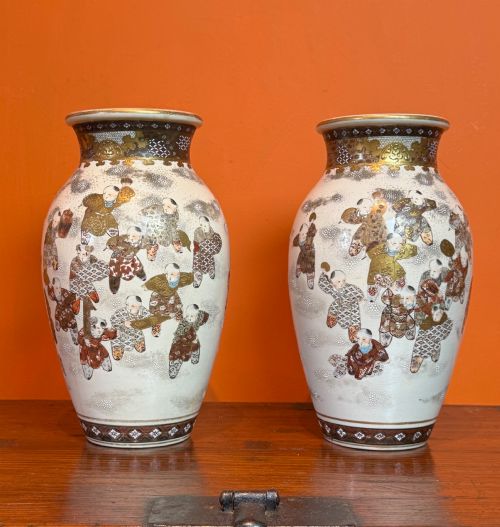
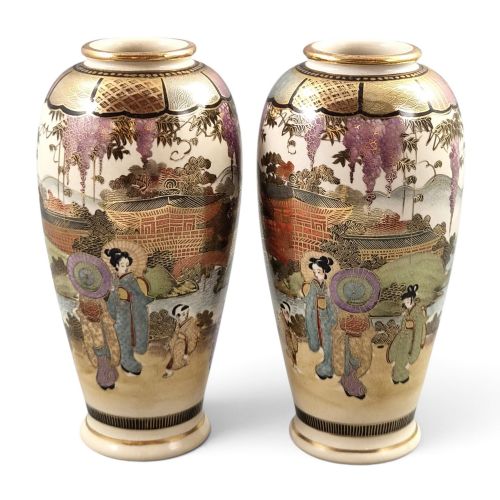
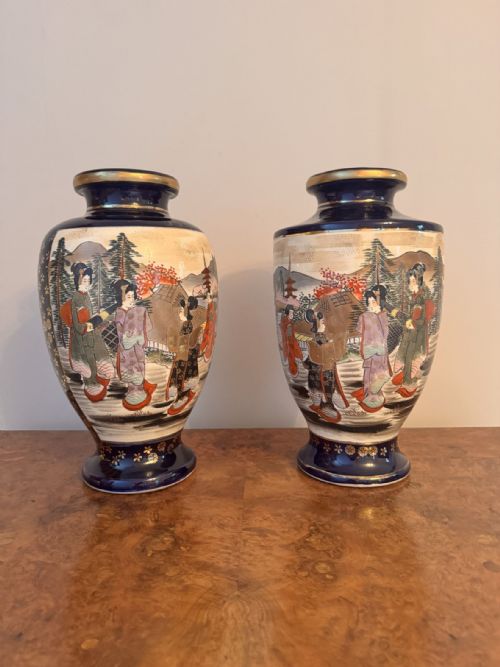
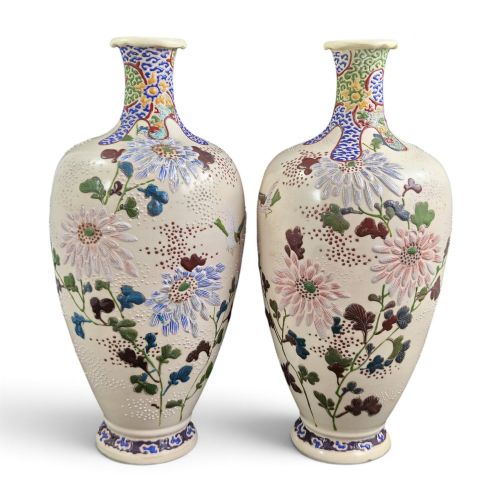
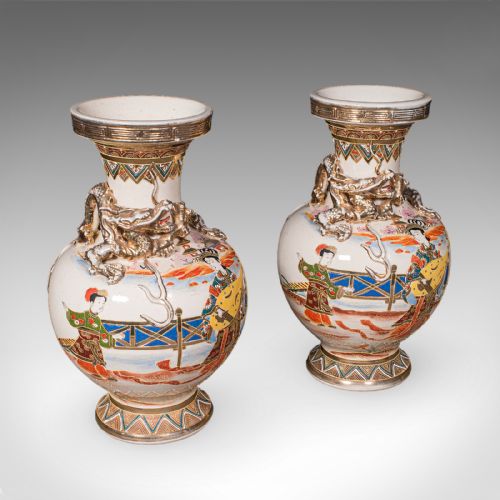
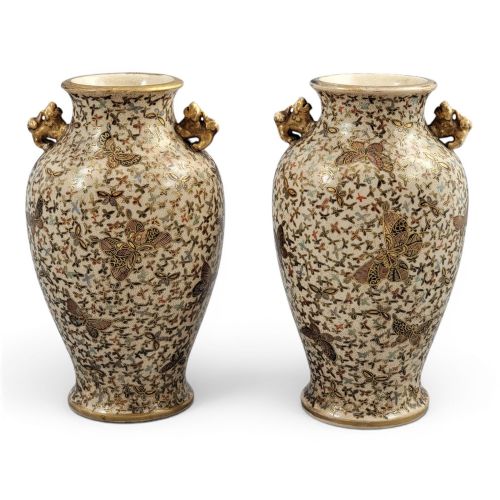
These meiji satsuma pottery pair pieces bring intricate hand-painted detail and rich historical presence into a room.
Meiji Satsuma Pottery Pair
When you search for a meiji satsuma pottery pair, you are looking at matched dual vessels created during the Japanese Meiji period and subsequent eras. The selections on this page commonly take the form of baluster vases, hexagonal vases, and lidded jars designed for decorative display.
Makers produced these dual objects for both domestic and export markets, utilising traditional motifs such as wisteria gardens, thousand butterflies, and figures of arhats and dragons. Most examples date from the late nineteenth century through to the early twentieth century, spanning Victorian and Edwardian periods.
How they were made
Artisans built these pieces using earthenware and ceramic bodies, applying intricate glazes alongside detailed enamel work. Workshops then enhanced the surfaces using rich gold leaf and gilt decoration to highlight pictorial panels and borders.
The technique relies on careful hand-painting across shaped clay forms, incorporating moriage relief details where appropriate. Makers executed these designs on various vessel shapes, including polygonal structures and floor-standing sizes.
Meiji Satsuma Pottery Pair Retail Price Guide 2026
Typical asking prices for meiji satsuma pottery pair among the pieces listed under this phrase on Sellingantiques today, from the lower quarter to the upper quarter. They describe what is for sale here now, not the wider market.
Listings feature earthenware vessels created during the Meiji and Edwardian periods, utilising enamel, gold leaf, and glaze.
What varies in quality
The refinement of the hand-painted brushwork distinguishes the standard of an individual pair, alongside the density and precision of the gilt and gold leaf application. Finer examples display intricate rendering of facial expressions, robes, and natural scenery across complex figurative panels.
The weight of the ceramic body and the depth of the glaze also indicate the tier of production, with exhibition-quality pieces showing superior control over the moriage relief work and decorative cobalt contrasts.
Maruni Kobe·Shozan·Kinkōzan·Kinzan·Hododa·Makuzu Kozan II·Hakusan·Tagawa·Kizan
The Meiji Satsuma Pottery Pair Glossary
- Baluster
- A vase form with a rounded body that tapers toward the base and swells near the lower portion. This shape provides a stable foundation for expansive painted scenes.
- Moriage
- A type of raised slip decoration applied to ceramics to create textured, tactile patterns. It often outlines floral elements or framing borders on these vessels.
- Meiji Period
- The era in Japanese history spanning from 1868 to 1912, marked by increased cultural exchange with the West. Many export ceramics were produced during this time.
- Arhat
- A perfected person who has attained Nirvana, frequently depicted in traditional Japanese art. These religious figures appear alongside dragons on several Satsuma vase panels.
- Shimazu Mon
- The heraldic crest of the Shimazu clan, featuring a cross within a circle. This mark commonly identifies authentic Satsuma ware originating from the Satsuma domain.
Meiji Satsuma Pottery Pair: Frequently Asked Questions
What is Satsuma pottery?
Satsuma pottery is a type of Japanese earthenware originating from the Satsuma province, traditionally recognised by its ivory-coloured, crackle-glazed surface.
Artisans decorated these pieces with intricate enamels and heavy gilding, producing items primarily for export during the late nineteenth and early twentieth centuries.
How do I date a Satsuma pair?
Dating relies on stylistic markers, signature panels, and historical context such as Meiji or Taisho period characteristics. Artisans often inscribed their workshop names or used specific regional seals on the base.
Examining the complexity of the enamel work and the presence of cobalt or gold leaf details also helps narrow the production window.
Where were these pairs displayed?
These pieces were created as ornamental items for interior display in both Japanese homes and Western drawing rooms during the export boom. Large floor vases stood in hallways, while smaller baluster vessels and lidded jars rested on tables and mantelpieces.
Their decorative subjects, including landscapes and religious figures, made them prominent focal points in a room.
How do I care for Satsuma ceramics?
Keep these items out of direct sunlight to protect the stability of the enamel colours and gold leaf over time. Dust them gently with a soft, dry cloth rather than using liquid cleaners.
Handle the pieces carefully by the body rather than relying on delicate applied handles or rims.