



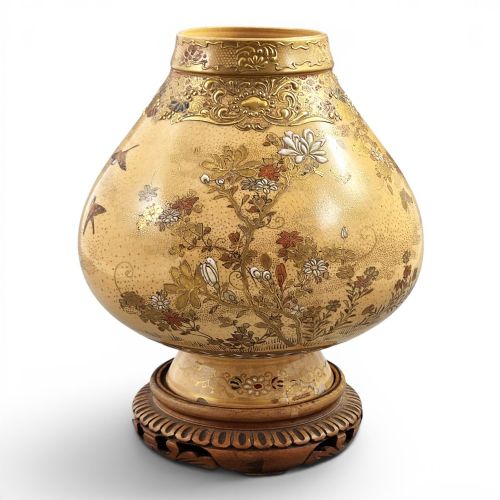
Japanese Satsuma Ceramic Vases
These Japanese satsuma ceramic vases combine earthenware bodies with detailed enamel and gold leaf decoration from the Meiji, Taisho, and Showa periods.
Japanese Satsuma Ceramic Vases
Japanese satsuma ceramic vases form a distinct category of earthenware vessels decorated with enamel and gold leaf, appearing in various forms from miniature pieces to monumental jars. Buyers searching for japanese satsuma ceramic vases encounter items spanning the nineteenth century through the Taisho and Showa periods, reflecting changing artistic output.
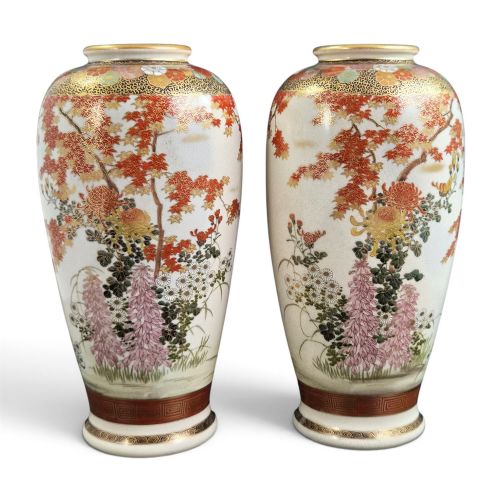
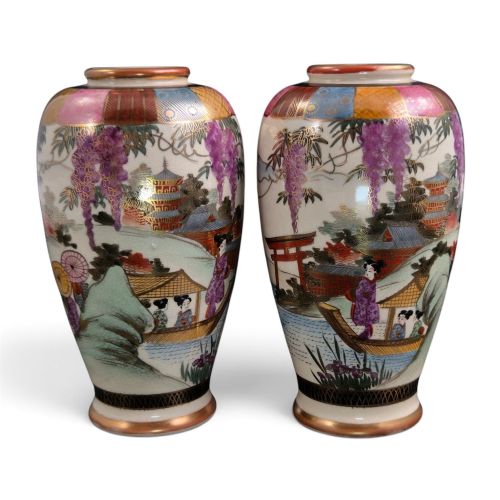
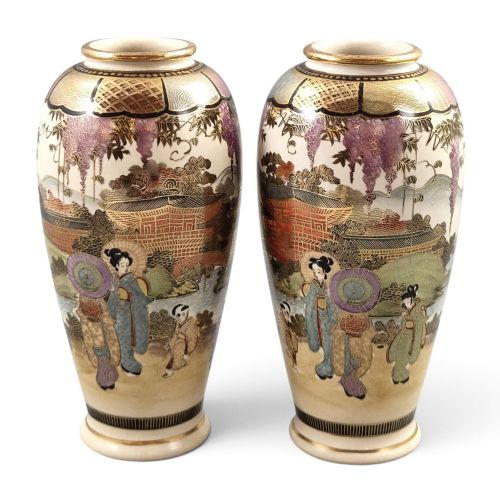
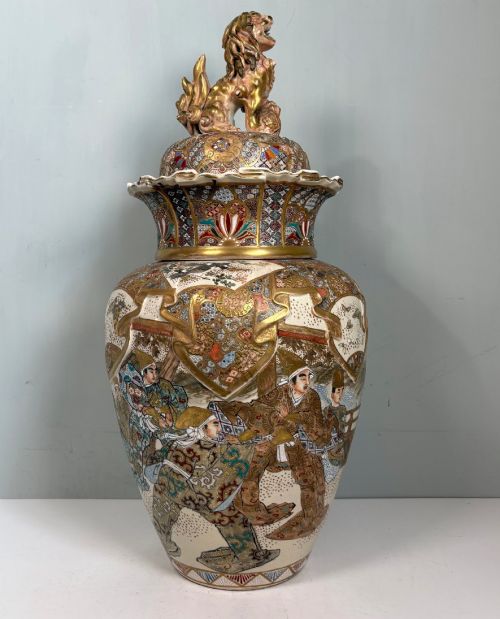
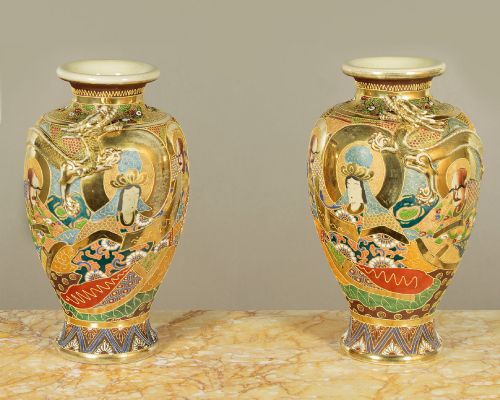
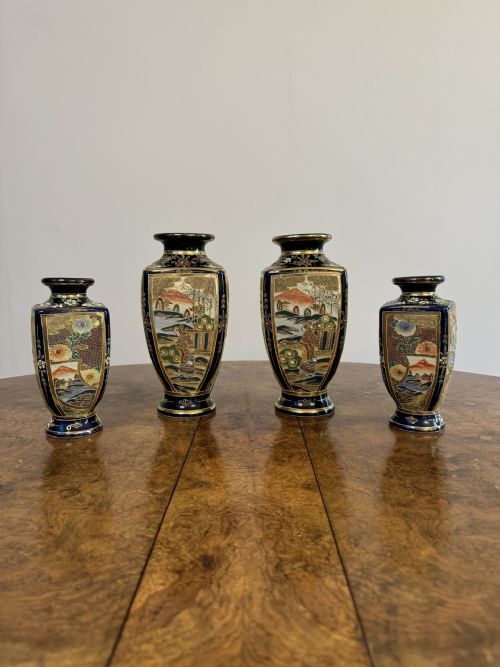
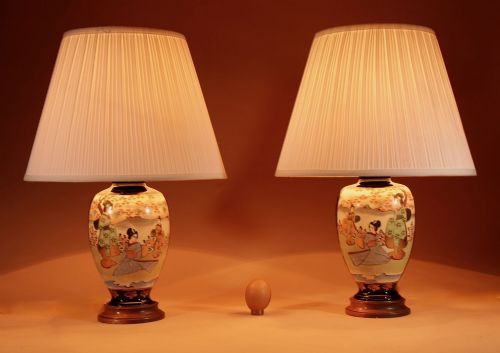
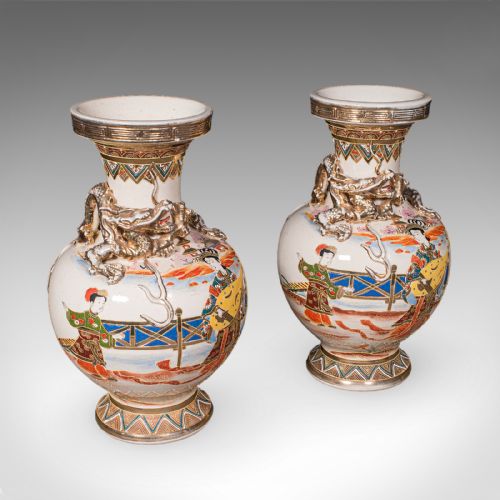
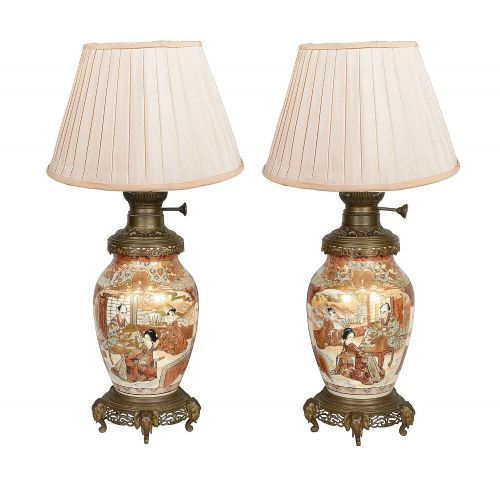
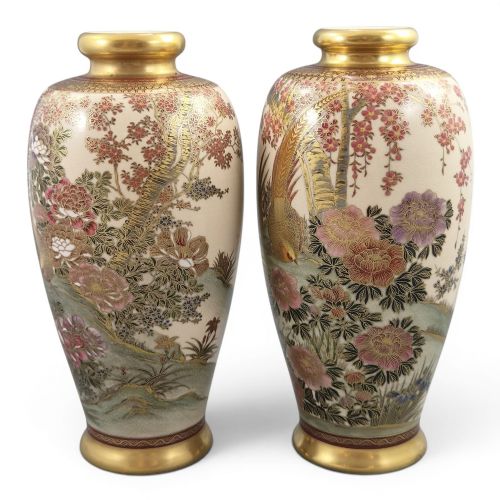
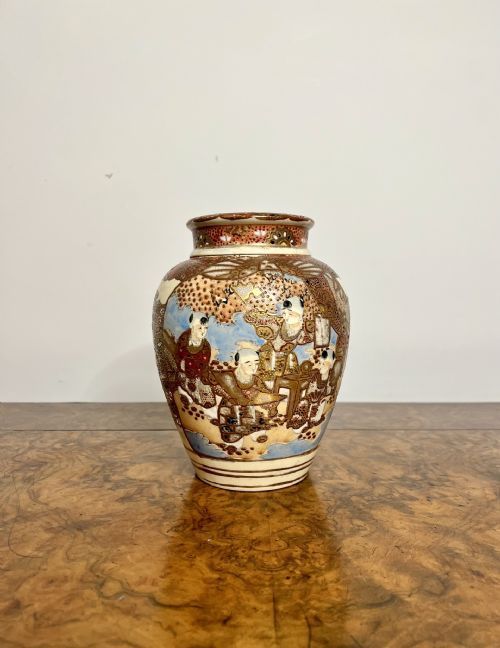
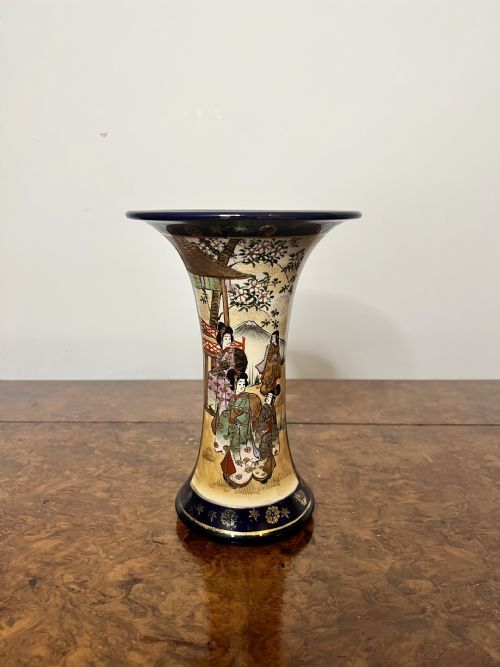
The most common formats on this page include pairs of baluster vases, ginger jars, and decorative vessels adapted into table lamps. These pieces frequently feature hand-painted scenes of court figures, landscapes, wisteria, or thousand butterflies and arhats, often marked by notable Kyoto and Kobe workshops.
How They Were Made
The foundation of these objects is a ceramic earthenware body, glazed and finished to receive intricate hand-painted enamel designs. Artisans built up relief work known as moriage, applying slip to create textured surfaces before adding detailed brushwork.
Gold leaf and gilt accents highlight the painted panels, depicting figures, dragons, and floral motifs. Workshops in Kyoto and Kobe utilised these refined techniques across miniature vessels and large exhibition pieces alike.
Several pieces squeeze one thousand butterflies onto miniature surfaces, proving that insects make very patient companions.
What Varies in Quality
The distinction between standard items and exceptional pieces rests upon the precision of the enamel work and the density of the gilding. Master workshops such as Kinkōzan produced finely potted bodies with disciplined, complex figural scenes.
Signature panels and maker marks from recognised Kyoto and Kobe artists elevate the standing of a piece. Larger monumental forms and balanced pairs demonstrate greater technical ambition than standard domestic wares.
Maruni Kobe·Shozan·Manpei·Kinkōzan·Hotoda·Chosei·Nanzan·Yamashu
The Japanese Satsuma Ceramic Vases Glossary
- Moriage
- Raised enamel decoration applied in dots or lines to create a tactile surface. This technique adds depth and texture to floral and figural designs.
- Koro
- A traditional incense burner supported on three legs, often finished with a pierced cover. These ceramic pieces frequently feature guardian lion finials.
- Baluster
- A vase shape with a rounded body that tapers towards a narrow neck and flares at the rim. This traditional silhouette provides a wide canvas for narrative scenes.
- Meiji Period
- The era spanning from 1868 to 1912, marked by significant artistic production for export. Many fine Satsuma vessels originate from this time.
- Gilt
- A thin application of gold or gold leaf used to accentuate borders and figures. It catches the light across painted enamel panels.
Japanese Satsuma Ceramic Vases: Frequently Asked Questions
How do I identify a Meiji period piece?
Meiji period vessels typically display dense enamel painting, precise gilding, and specific workshop signatures from centres like Kyoto. The earthenware bodies often show fine craquelure across the glaze.
Examination of the base markings and the fineness of the figural work helps separate late nineteenth-century items from later Taisho or Showa period examples.
Were these vases made for export?
A substantial proportion of Satsuma ceramics was produced specifically for international exhibition and export markets during the late nineteenth and early twentieth centuries. Western tastes influenced the scale and decorative themes of these export wares.
Despite their export destination, many pieces retained traditional Japanese iconography such as arhats, dragons, and court scenes executed by skilled urban workshops.
How should I display table lamps safely?
Vases adapted as table lamps require stable placement away from heavy foot traffic to protect the ceramic body and surface gilding. Wiring should be inspected to ensure it accommodates the weight and form of the vessel without causing stress.
Keeping lamps out of direct sunlight preserves the vibrant enamels and gold leaf from fading over time.
What is the significance of Kyoto and Kobe marks?
Kyoto and Kobe served as primary manufacturing and export hubs for high-grade Satsuma ceramics. Marks from these regions often identify specific family workshops and master decorators.
Locating a clear signature or studio mark assists in tracing the piece to a particular maker active during the Meiji or Taisho eras.