



Gold Satsuma Ceramic Vase
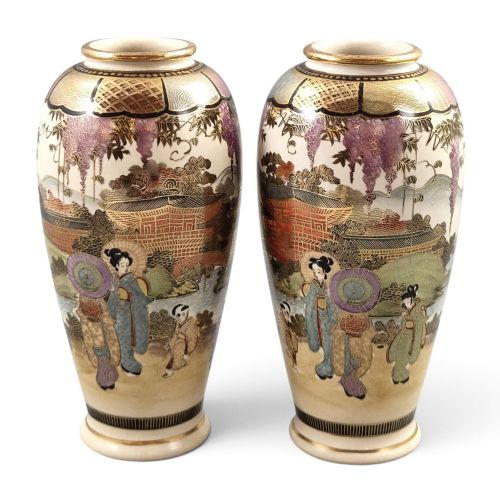
A gold satsuma ceramic vase brings intricate hand-painted detail and heavy gilding into a room, originating primarily from Japanese Meiji workshops.
Gold Satsuma Ceramic Vase
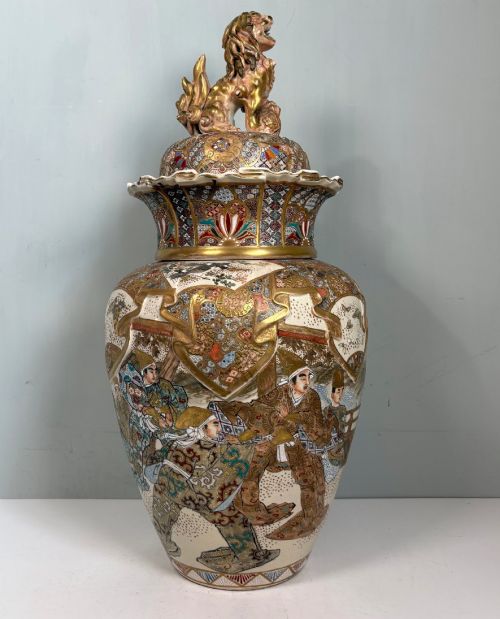
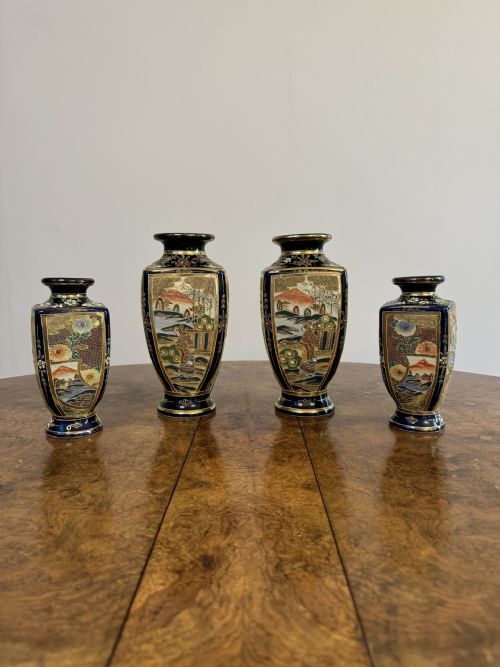
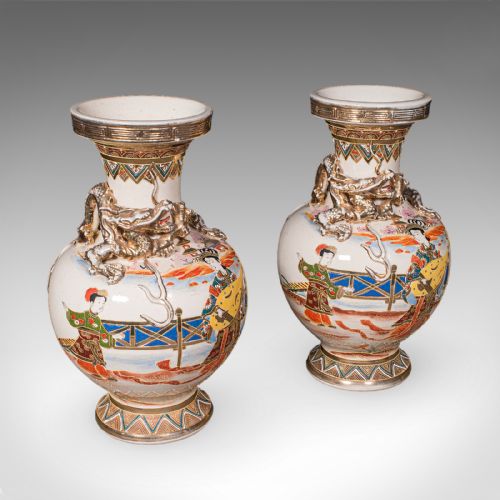
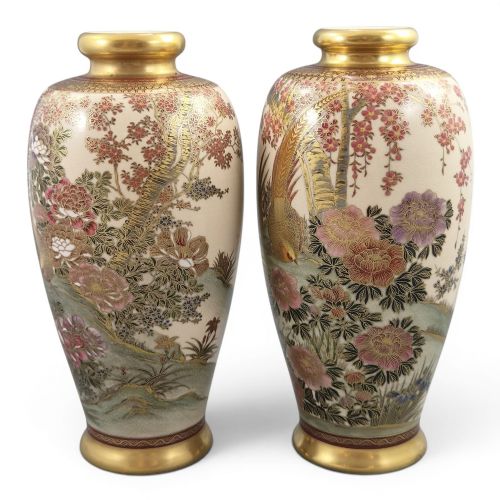
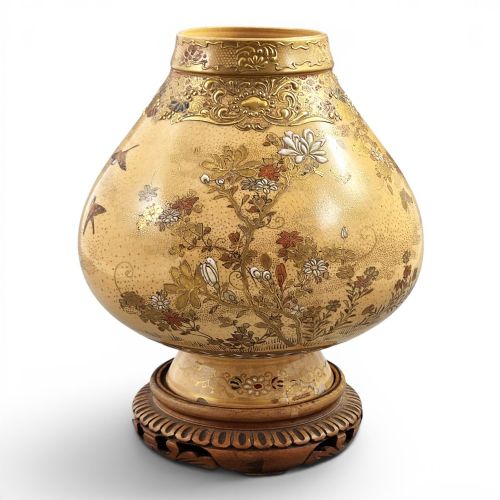
When searching for a gold satsuma ceramic vase, collectors encounter diverse forms ranging from diminutive cabinet pieces to monumental floor-standing vessels and garnitures. The selection spans distinct periods, predominantly the Meiji era alongside later Showa and Taisho examples, reflecting traditional Japanese craftsmanship.
Most items appearing here take the form of baluster vases, hexagonal vessels, or table lamps adapted from earlier bodies. Makers utilised specific regional styles, particularly from Kyoto, producing pieces decorated with figurative scenes, landscapes, and traditional motifs.
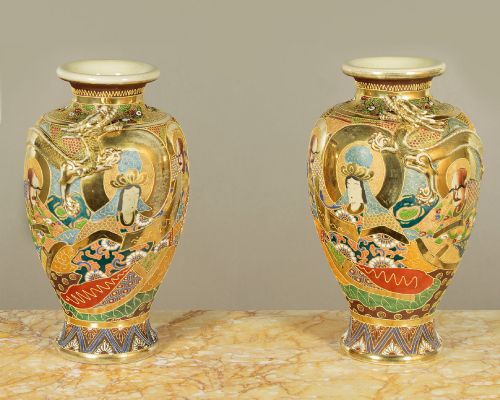
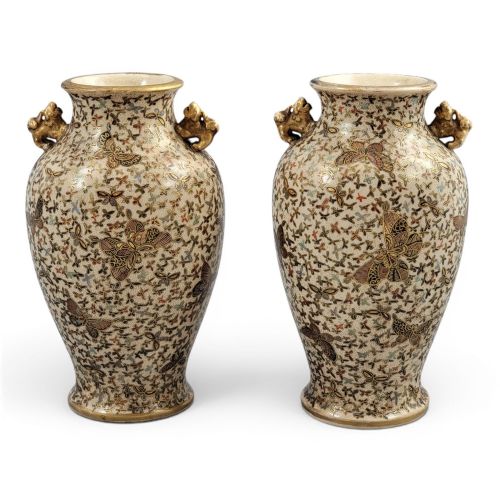
Vessels frequently display specific structural variations, including garlic head shapes, elephant handles, and bamboo-handle forms. Buyers typically find pairs and matched garnitures alongside single statement pieces bearing workshop signatures and family crests.
How they were made
Potters formed these ceramic and earthenware bodies before applying fine glazes that created the characteristic ivory-coloured, crackle-finish ground. This pale, crazed surface provided a stable canvas for subsequent detailed painting.
Artisans layered enamel colours alongside extensive gold leaf and gilt decoration, frequently employing raised moriage techniques to build tactile, dimensional patterns. Workshop painters executed complex figural processions, arhats, and botanical scenes by hand.
Listings feature earthenware and porcelain forms spanning the nineteenth century through the nineteen thirties, including Meiji and Showa periods.
What varies in quality
The degree of artistic execution separates standard export wares from exhibition-quality productions by renowned master workshops. Superior examples display microscopic precision in the facial expressions of figures and the intricate rendering of thousand-butterfly or arhat motifs.
The density and purity of the gold gilt application also define the tier of the piece, with finer vessels featuring heavy, multi-layered gilding that retains its lustre. Additionally, the crispness of the earthenware body and the subtlety of the crackle glaze indicate the level of care taken during firing.
Shozan·Manpei·Kinkōzan·Hotoda·Chosei·Nanzan·Seiko-en Chokei·Hakusan·Hattori
The Gold Satsuma Ceramic Vase Glossary
- Satsuma ware
- A type of Japanese pottery traditionally characterised by a fine earthenware body, an ivory-coloured glaze, and extensive enamel and gilt decoration. These pieces were heavily produced for export during the late nineteenth and early twentieth centuries.
- Moriage
- A decorative ceramic technique using piped clay to create raised, three-dimensional patterns beneath the enamel and gilding. This method adds a distinct tactile quality to the surface of the vessel.
- Baluster
- A vertical architectural form featuring a rounded lower body tapering to a narrow neck, frequently utilised for vase silhouettes. This shape provides balanced proportions for expansive painted panels.
- Garniture
- A matched set of ceramic vases designed to be displayed together on a mantelpiece or sideboard. These groupings typically comprise three or more vessels sharing identical decorative schemes.
- Mon
- A traditional Japanese emblem or crest used to identify families or clans, frequently incorporated into the decorative borders of ceramic vessels. The Shimazu clan crest appears commonly on these items.
Gold Satsuma Ceramic Vase: Frequently Asked Questions
What is satsuma ware?
Satsuma ware refers to a distinct style of Japanese pottery featuring an earthenware body covered in a pale, finely crackled glaze. Artisans then decorate these surfaces using intricate enamel paints and heavy gold leaf.
Originally produced in Kagoshima prefecture, the style evolved significantly during the Meiji period to satisfy international demand for decorative export goods.
How do I identify a Meiji period piece?
Meiji period ceramics generally date between eighteen sixty-eight and nineteen twelve, aligning with the reign of Emperor Meiji. These items often feature exceptionally dense hand-painted compositions and artist signatures.
Many pieces from this timeframe also incorporate prominent gilt decoration and specific workshop marks on the underside.
Where were these vases made?
While the style originated in the Satsuma province, major production centres later established themselves in Kyoto, Kobe, and Tokyo. Kyoto workshops became particularly famous for creating high-end decorative wares.
Master ceramists in these urban centres produced the intricate garnitures and large palace vases found in collections today.
How should I clean a gilt ceramic vase?
Cleaning requires a soft, dry microfibre cloth to gently remove dust from the surface without disturbing the raised enamel or gold leaf. Water and chemical cleaning agents should be avoided entirely to protect the delicate antique glaze.
Displaying the vessel away from direct sunlight preserves the vibrant enamel colours and prevents the earthenware body from drying out.