








Japanese Porcelain Wall Dishes
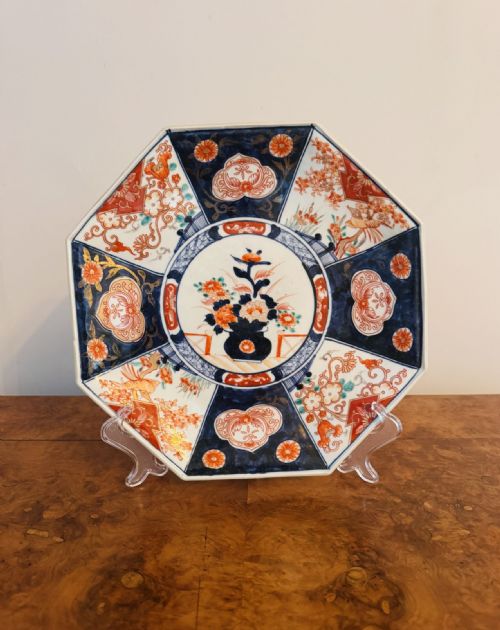
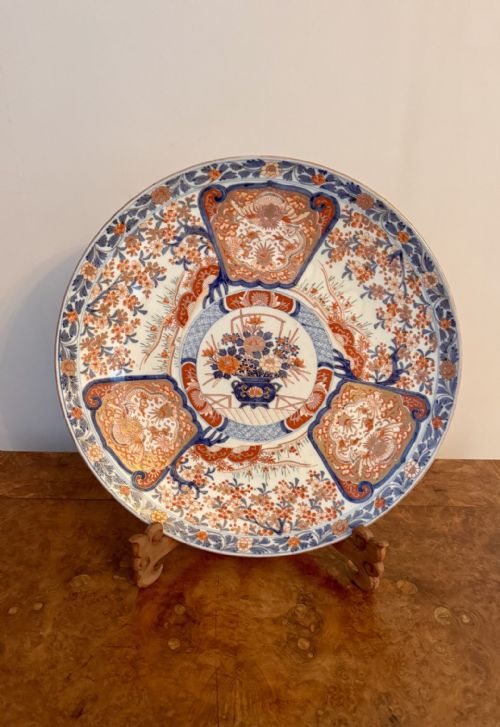
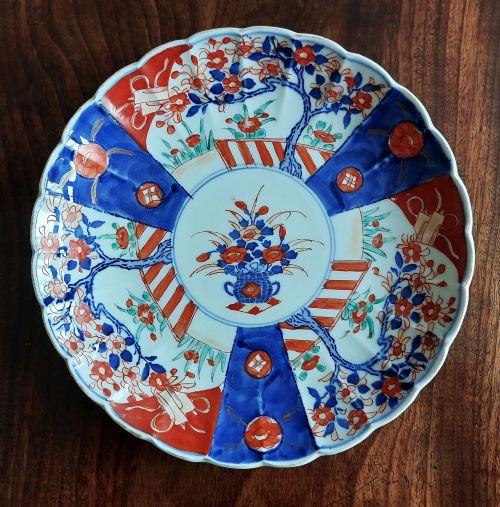
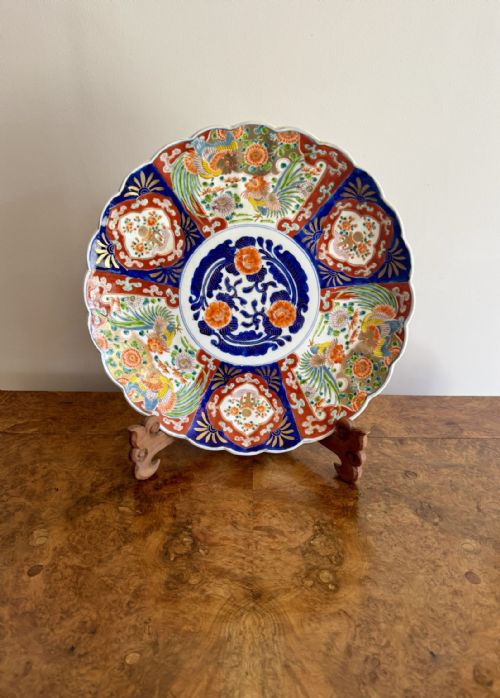
These japanese porcelain wall dishes bring together vibrant cobalt underglaze, enamel, and gilt details from the Meiji period and Victorian eras.
Japanese Porcelain Wall Dishes
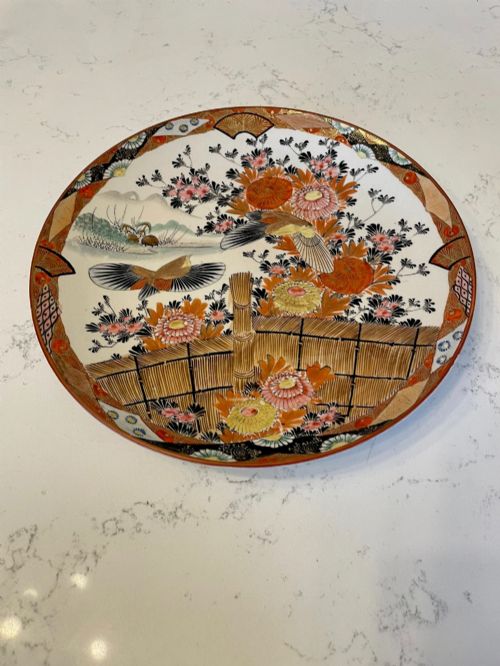
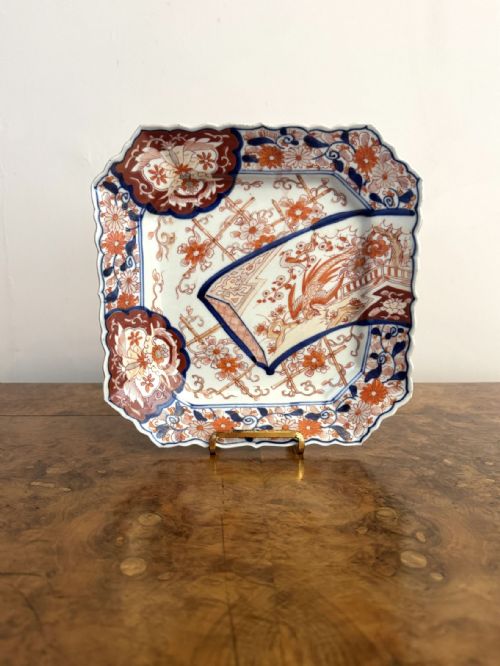
When you search for japanese porcelain wall dishes, you are looking at decorative chargers, cabinet plates, and display dishes created in Japan and exported during the 19th and early 20th centuries. The selection here leans heavily towards Japanese Imari patterns, alongside Satsuma, Kutani, and Arita wares.
These pieces take various forms, from large chargers and oval dishes to square plates and scalloped display pieces. Many originate from the Meiji period, with others dated to the 19th century, Victorian era, and early 20th century.
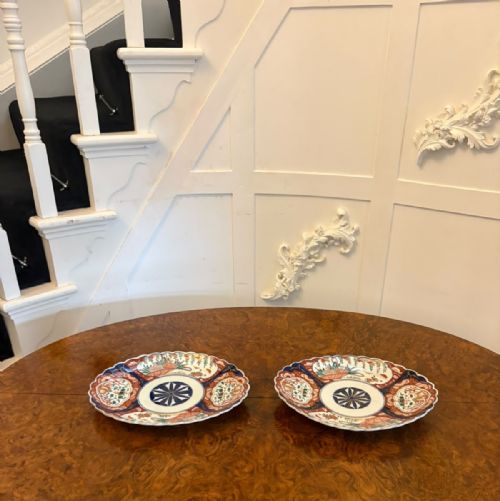
Makers and decorators produced these items primarily for display on walls or in cabinets, utilising porcelain, earthenware, and ceramic bodies. You will frequently find pairs and sets among the listings, alongside singular large chargers depicting traditional subjects like the Seven Lucky Gods, birds, and floral motifs.
How they were made
Makers shaped porcelain and ceramic bodies before applying cobalt underglaze to create the foundational blue designs. Enamel colours and gold leaf or gilt were then added over the glaze to build up rich, complex patterns.
Certain specialised pieces, such as Totai Shippo examples, incorporated cloisonné techniques directly onto a porcelain base to simulate tree bark textures alongside cranes and foliage.
Listings feature porcelain, earthenware, and ceramic bodies decorated with enamel, gold leaf, and cobalt underglaze.
What varies in quality
The distinction between standard export items and the finest examples lies in the precision of the hand painting and the crispness of the cobalt underglaze. Superior pieces display intricate detail in subjects like exotic birds, peacocks, and figures.
The application of enamel and gold leaf also sets tiers of quality, where thickly applied moriage work and well-preserved gilding elevate a charger or plate above simpler production wares.
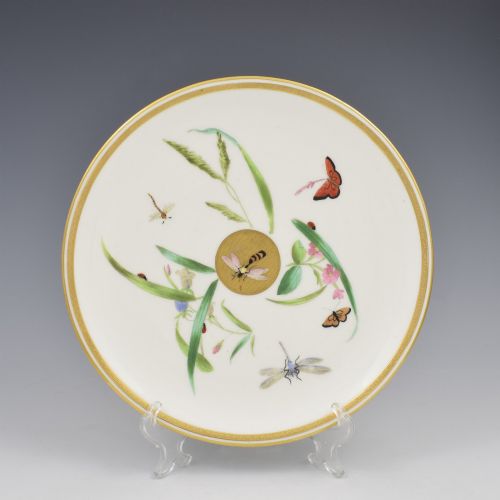
Koshida·Minton
The Japanese Porcelain Wall Dishes Glossary
- Imari
- A style of Japanese porcelain decorated in underglaze blue, iron red, and gold, named after the port from which it was shipped.
- Charger
- A large decorative plate intended for display on a wall or sideboard rather than for practical dining use.
- Cobalt Underglaze
- A blue pigment applied to ceramic pieces before glazing and firing, producing a durable design beneath the glassy surface.
- Moriage
- A type of raised enamel decoration used on Japanese ceramics to create textured, tactile surface designs.
- Totai Shippo
- Cloisonne enamel applied over a porcelain or ceramic body rather than a traditional metal base.
Japanese Porcelain Wall Dishes: Frequently Asked Questions
How do I hang japanese porcelain wall dishes safely?
Most of these chargers and plates require specialised wire spring hangers that grip the rim securely without causing damage to the porcelain body.
Ensure the wall fixing is rated to take the weight of larger ceramic pieces, particularly substantial 19th-century chargers.
What is the difference between Imari and Satsuma wares?
Imari pieces typically feature a distinctive palette of cobalt underglaze blue, iron red, and gilt highlights on a porcelain body.
Satsuma items usually utilise a crackle glaze over an earthenware body, decorated with detailed enamel work and raised gold motifs.
Were these dishes meant for dining?
The larger formats, such as chargers and deep cabinet plates, were designed primarily for decorative display on walls or furniture.
Smaller plates found in sets were sometimes utilised for dessert service, though their survival in quantity suggests many served an ornamental purpose.
How can I tell a Meiji period piece apart?
Meiji period items span from 1868 to 1912, a time when Japanese export ceramics flourished with intricate hand-painted designs and vibrant enamel colours.
Pieces from this era often combine traditional motifs like birds and floral scenes with exceptional technical skill in glazing and gilding.