


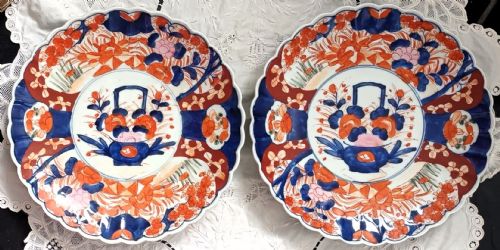


Oriental Ceramic Wall Decor
Oriental ceramic wall decor brings patterned porcelain chargers and plates into a room, offering rich colour and traditional display for a wall.
Oriental Ceramic Wall Decor
When you search for oriental ceramic wall decor, you encounter decorative plates, chargers and wall plates originating from Japanese traditions. These pieces predominantly span the nineteenth century, the Meiji period, and the early twentieth century around nineteen hundred to nineteen twenty.
The forms vary from large chargers and shell-shaped plates to sets of dishes and pairs with exotic bird motifs. They provide a striking visual presence when hung or displayed on vertical surfaces within a room.
How oriental ceramic wall decor was made
Maker workshops utilised porcelain as the primary body, shaping plates and chargers into standard circular forms or specific shapes like shells. Artisans applied cobalt underglaze beneath the surface to create deep blue foundations.
Overglaze enamels and gilt highlights were added on top of the fired ceramic, building up the characteristic layered palette seen in Imari work. These decorative layers required multiple kiln firings to fix the colours and metallic details permanently.
Exotic birds peer out from the painted branches on these plates, watching every room change over the centuries.
What varies in quality in oriental ceramic wall decor
Quality rests upon the crispness of the cobalt underglaze work and the precision of the enamel and gilt painting across the surface. Stronger examples display deeply saturated tones and well-balanced compositions that remain sharp and clear.
The complexity of the form also plays a role, moving from standard circular plates to unusual shapes such as shell-shaped dishes. Pairs and matching collections demand consistency in pattern and colour across every individual piece.
The Oriental Ceramic Wall Decor Glossary
- Imari
- A style of Japanese porcelain originating from the port of Imari, heavily decorated in underglaze blue, iron red, and gold. This palette creates a vibrant contrast across the decorated surface.
- Charger
- A large decorative plate traditionally used for ceremonial display rather than dining. These substantial pieces form the focal point of a wall arrangement.
- Meiji
- A Japanese historical period spanning from eighteen sixty-eight to nineteen twelve, noted for skilled craftsmanship and increased export of porcelain. Pieces from this era show high technical proficiency in enamel application.
- Cobalt Underglaze
- A blue pigment applied to the raw ceramic body before the clear glaze goes on and the piece is fired. This technique protects the pigment beneath a glossy, durable finish.
- Gilt
- Gold applied to the surface of the porcelain as a decorative accent. It catches the light and complements the red and blue enamel sections.
Oriental Ceramic Wall Decor: Frequently Asked Questions
How do I hang oriental ceramic wall decor safely?
Most chargers and plates require a specialised spring-loaded wire hanger that grips the rim securely without damaging the ceramic body. Ensure the wall fixing is anchored properly to support the weight of heavy porcelain.
Check the tension of the wire periodically to maintain a firm hold. Avoid hanging pieces in areas subject to heavy vibrations or direct moisture.
What defines the Imari style?
Imari porcelain is defined by its distinct colour palette, typically combining cobalt blue underglaze with iron red and gilt details over the glaze. The patterns often feature intricate floral and avian motifs.
This aesthetic developed for export and became popular in European interiors for its vibrant decorative impact.
How do I date Meiji period porcelain?
Meiji period pieces date between eighteen sixty-eight and nineteen twelve, aligning with the reign of the Meiji Emperor. You determine this through stylistic markers, traditional potting techniques, and historical export patterns.
Many pieces from this era reflect a high standard of hand-painted detail in the enamels and gilt.
Can I mix different plate sizes on a wall?
Mixing large chargers with smaller plates creates a balanced and dynamic wall display. Grouping them by shared colour palettes, such as the blues and reds of Imari ware, ties different sizes together visually.
Arrange the pieces on a flat surface first to test the composition before fixing any hangers to the wall.