
Japanese Painted Porcelain Urns
Japanese painted porcelain urns bring striking cobalt, iron-red, and gilt pigments into a room, spanning periods from the late seventeenth century through the early twentieth century.
Japanese Painted Porcelain Urns
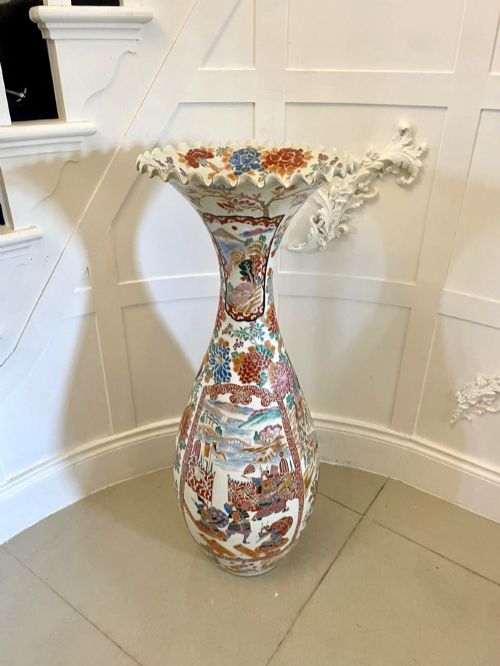
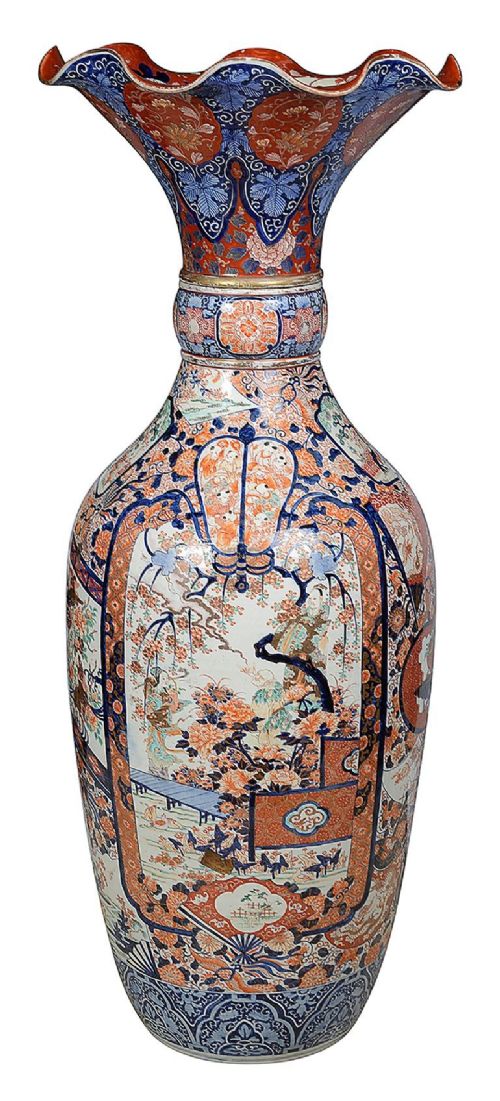
When you search for japanese painted porcelain urns, you encounter a diverse range of large floor-standing vessels, ginger jars, garnitures, and table lamps. These pieces primarily date from the Meiji period and the broader nineteenth century, featuring traditional forms that served both decorative and functional purposes in interiors.
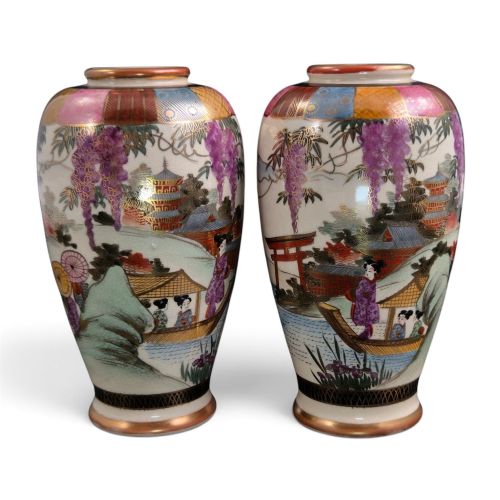
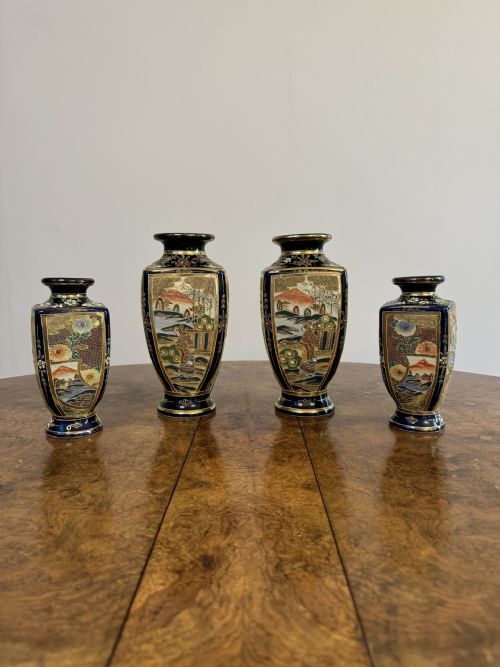
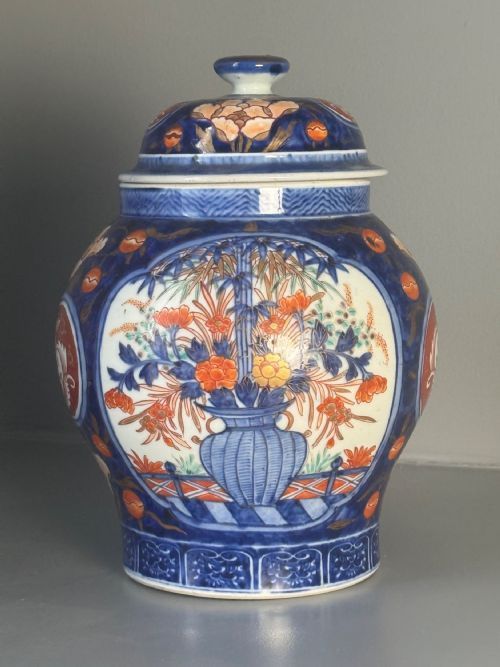
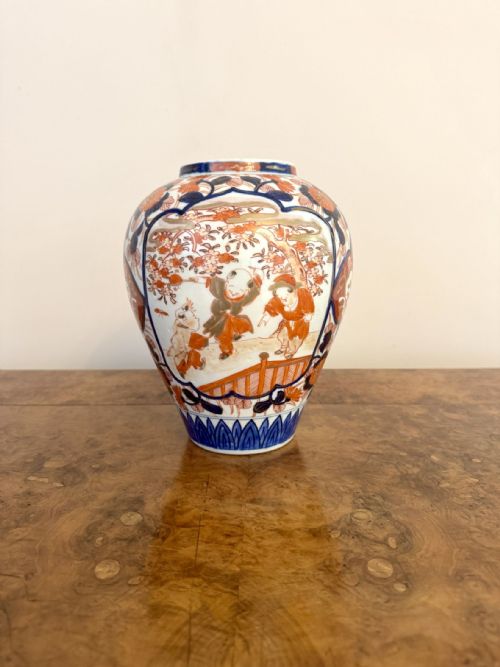
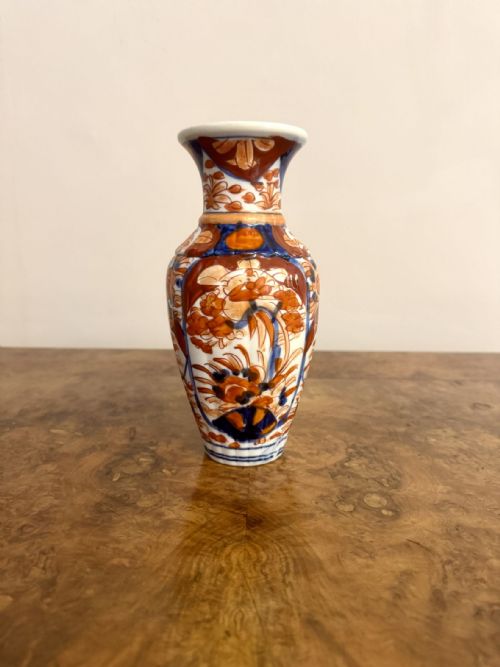
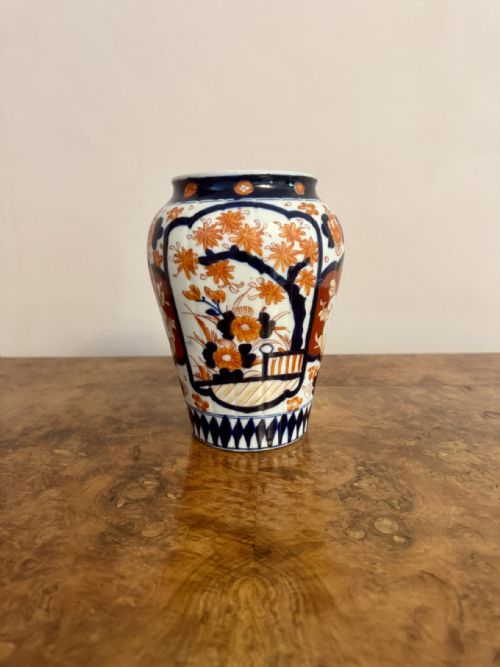
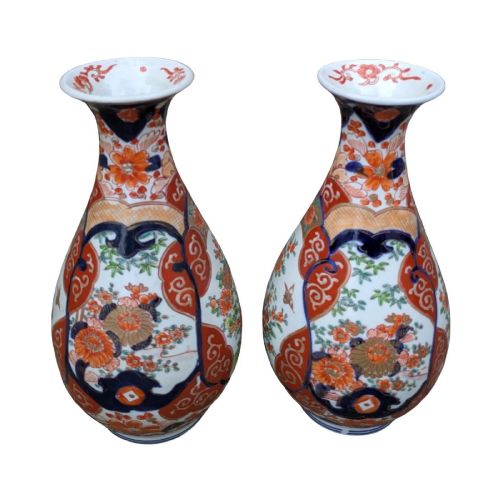
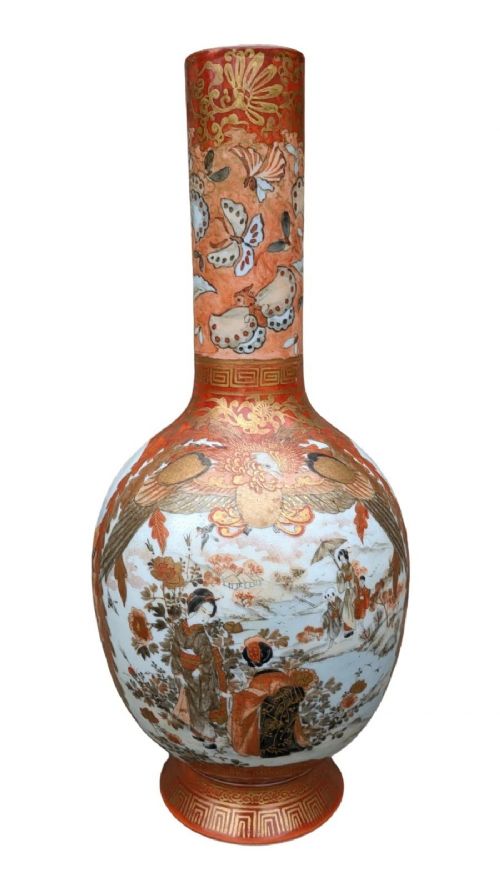
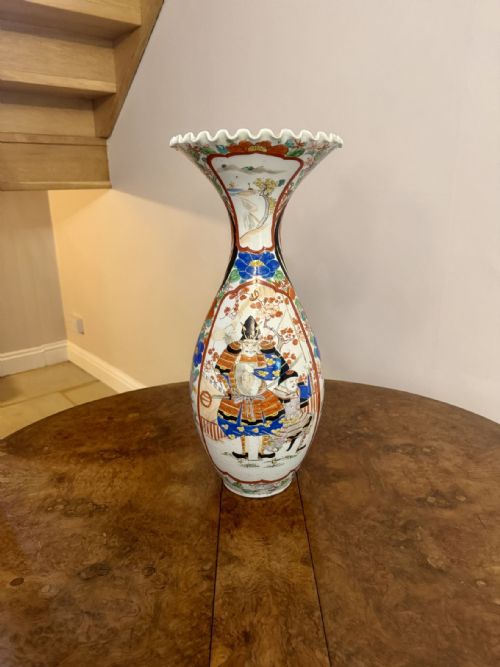
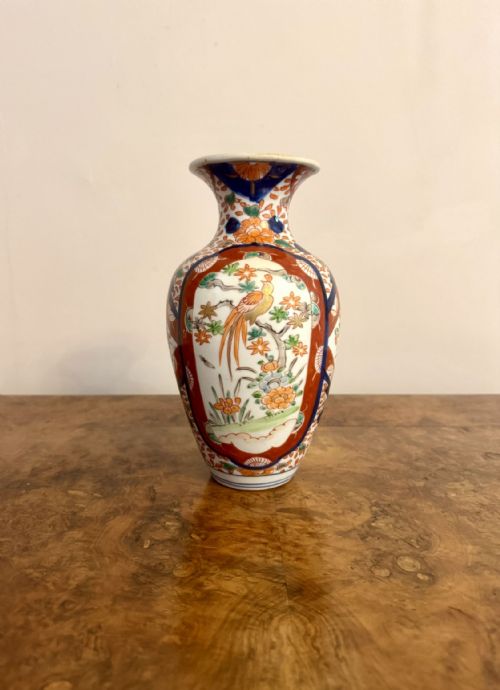
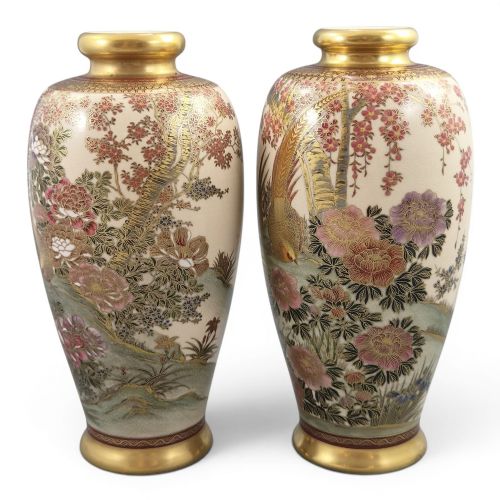
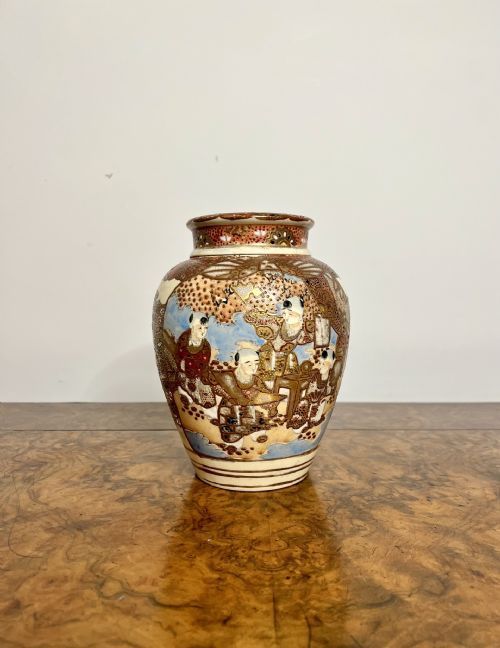
The selection on this page frequently includes Japanese Imari wares with rich blue and red underglazes, alongside intricately detailed Satsuma earthenware and Kutani porcelain. Forms vary from monumental baluster shapes to double gourd vessels and delicate miniature vases, reflecting centuries of skilled ceramic production.
Many examples stem from workshops in Kyoto, Kobe, and Arita, capturing distinct regional aesthetic movements across the late Edo, Meiji, Taisho, and early Showa periods. Buyers select these objects to anchor a room with historic craftsmanship and layered visual narratives.
Materials and construction methods
Potters shaped fine porcelain and earthenware clays on the wheel or in moulds before applying underglaze cobalt blue and vibrant overglaze enamel pigments. Artisans then integrated generous amounts of gold leaf and gilt detailing to accentuate figurative scenes, floral motifs, and geometric borders.
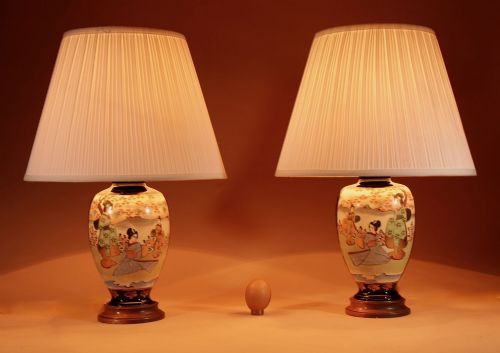
Kiln firing fused the mineral glazes and enamel colours to the ceramic body, creating durable surfaces that preserved brilliant hues over generations. Selected larger vessels incorporated matching original porcelain stands or were later adapted with electrical fittings to function as table lamps.
Listings feature porcelain, earthenware, enamel, and gold leaf spanning the seventeenth to the twentieth century.
Distinctions in craftsmanship
Superior examples display exceptional precision in the painted brushwork, where intricate figural processions or landscape vistas show remarkable detail without crowding the composition. The distribution of gold leaf and the vibrancy of the enamel pigments reveal the proficiency of the specific studio or artist.
The physical scale and structural integrity of the ceramic body also separate standard output from exhibition-quality pieces, particularly in monumental floor vases and multi-piece garnitures. Original matching components, such as covers on ginger jars and original porcelain stands, enhance the overall integrity of a piece.
Manpei·Kinkōzan·Kato Sanhei·Chosei·Seiko-en Chokei
The Japanese Painted Porcelain Urns Glossary
- Imari
- A style of Japanese porcelain featuring a distinctive palette of underglaze blue, iron-red, and supplementary gilt highlights. These wares originated in Arita and gained immense popularity for export during the Edo and Meiji periods.
- Satsuma
- A type of Japanese earthenware characterised by a warm, ivory-coloured crackle glaze richly decorated with enamels and gold leaf. Kyoto workshops produced many of the finest exhibition-grade Satsuma pieces.
- Kutani
- A traditional style of Japanese ceramic known for bold, saturated colour palettes, particularly deep greens, blues, purples, and reds. Kutani pieces frequently depict natural scenes and narrative figures.
- Garniture
- A set of matching vases or jars designed to be displayed together on a mantelpiece or sideboard. These matched groupings typically consist of three or five graduated vessels.
- Baluster
- A vase form featuring a rounded body that tapers toward the base and swells gracefully before flaring at the neck. This classic silhouette provides a stable and balanced canvas for detailed surface painting.
Japanese Painted Porcelain Urns: Frequently Asked Questions
How do I identify a Meiji period piece?
Meiji period pieces typically exhibit dense, highly detailed overglaze painting combined with generous gilt work. Artisans during this era frequently incorporated signatures or studio marks on the base.
Examinations of the paste and glaze textures help confirm the late nineteenth-century production window, distinguishing them from later twentieth-century reproductions.
Were these vessels originally made as lamps?
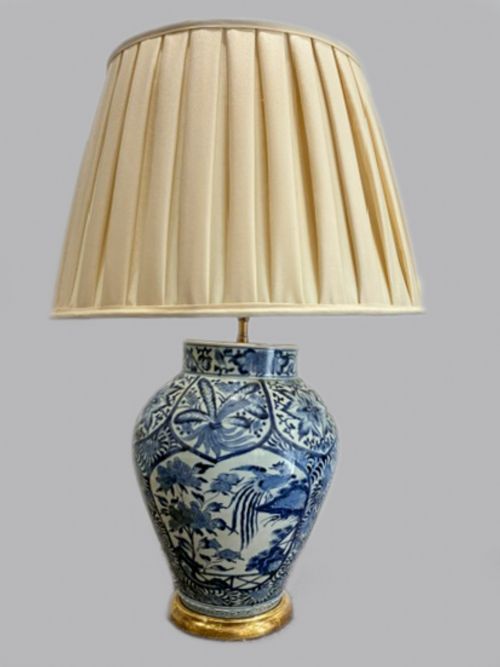
Most of these vessels started as traditional display vases, ginger jars, or storage urns rather than lighting fixtures. Importers and later owners often converted antique vases into table lamps to suit Western interior tastes.
Conversion usually involved drilling the base for wiring or securing custom fittings, though the ceramic bodies retain their original decorative integrity.
What is the difference between Imari and Satsuma?
Imari pieces are true hard-paste porcelain decorated with underglaze cobalt blue and iron-red enamels, producing a resonant ring when tapped. Satsuma pieces consist of buff-coloured earthenware covered with a fine crackle glaze that absorbs enamels and gold leaf differently.
Satsuma wares focus heavily on pictorial narratives and figural processions, whereas Imari designs lean towards geometric and floral panels.
How should I display a large floor vase?
Large floor vases require secure placement away from heavy household traffic to prevent accidental tipping. Pairing them with original ceramic stands or placing them on stable wooden flooring protects both the vessel and the surface beneath.
Natural light enhances the gilt highlights and painted enamel details without exposing the pigments to harsh, direct sunlight over long periods.