



Cream Earthenware Japanese Vases
Cream earthenware japanese vases bring intricate Meiji and Taisho period artistry into a room through finely painted ceramic vessels.
Cream Earthenware Japanese Vases
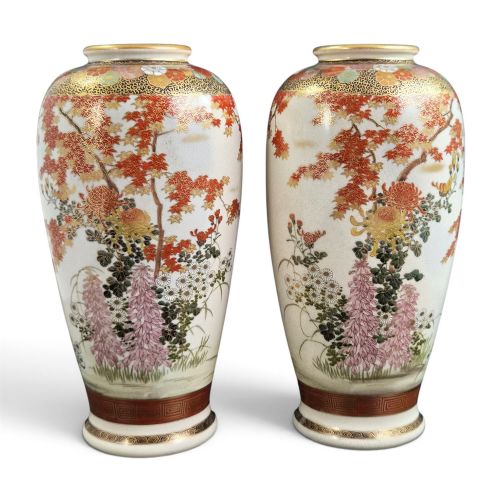
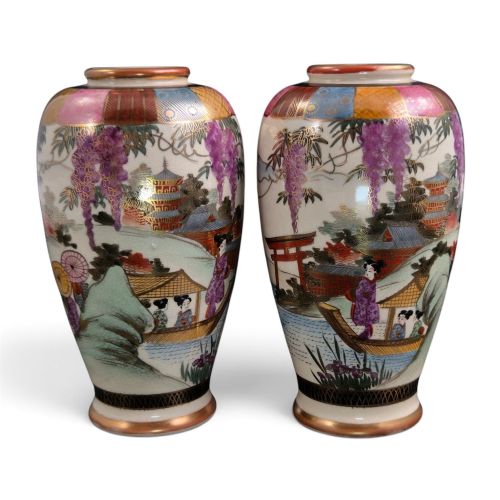
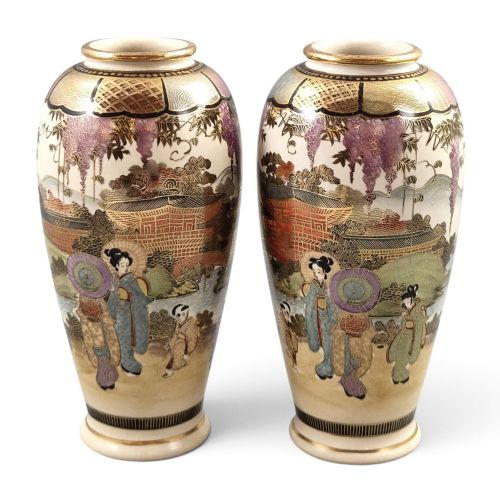
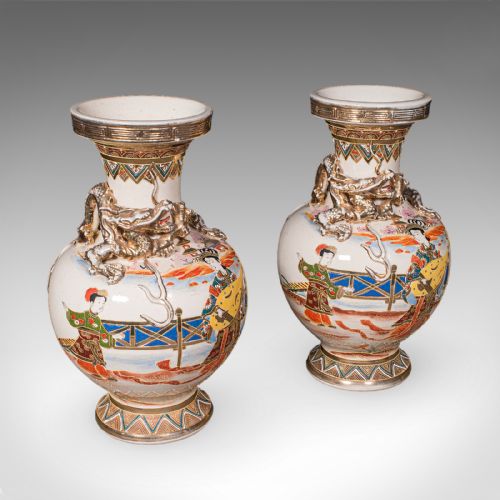
These pieces encompass traditional Satsuma ware vessels produced during the Meiji and Taisho periods, spanning the late nineteenth and early twentieth centuries.
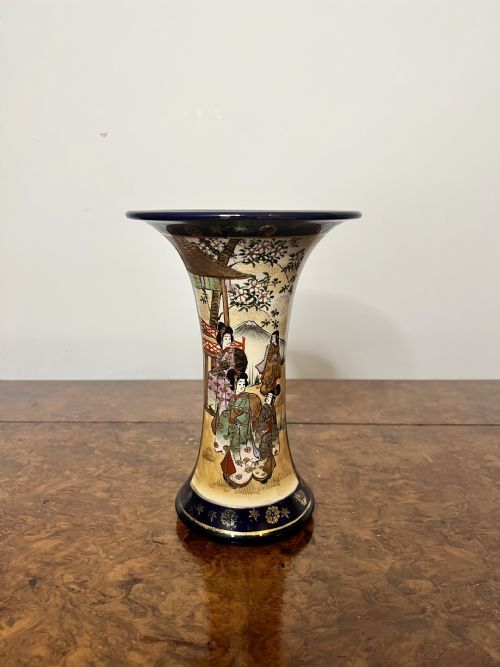
The selection centres on ceramic baluster vases, bottle vases, and lidded jars featuring detailed figurative and landscape scenes.
Makers from production centres such as Kyoto contributed significantly to this category, utilising distinct earthenware bodies decorated with polychrome and gilding.
Materials and construction
Potters formed the vessels using earthenware bodies covered in a characteristic creamy, crackle-glazed finish.
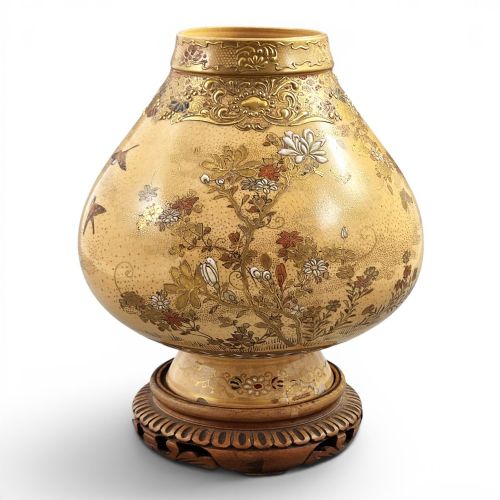
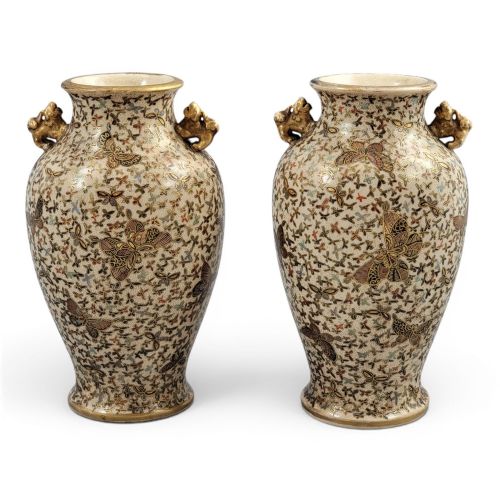
Artisans applied detailed enamel painting alongside gold leaf and gilt highlights to render complex figurative and natural motifs.
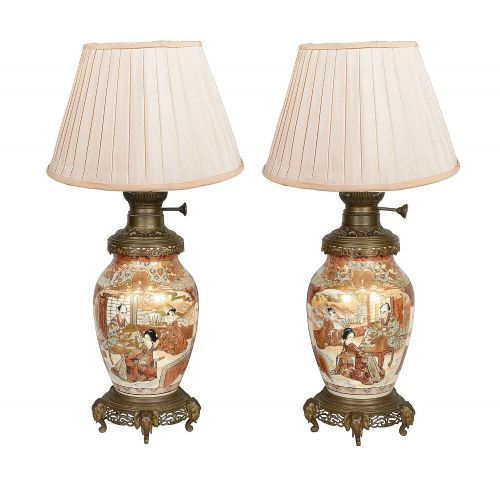
Selected pieces incorporate additional structural elements like brass fittings or wood components, particularly in lamp adaptations.
Certain miniature vases feature processions so tiny that collectors require a magnifying glass to count every gilded figure.
Evaluating craftsmanship
The precision and density of the hand-painted enamel work dictate the visual success of each piece, distinguishing simple export wares from master-level studio output.
Control over the crackle glaze and the crisp application of gold leaf reveal the technical discipline maintained by specific workshops.
Attribution to known makers or signed workshop ciphers adds documented provenance to individual vessels.
Maruni Kobe·Shozan·Kinkōzan·Kinzan·Hododa·Chosei·Seiko en Chokei·Yamashu·Choshuzan·Hakusan·Tagawa·Hayakawa
The Cream Earthenware Japanese Vases Glossary
- Satsuma ware
- Earthenware pottery originating from Satsuma province, noted for an ivory crackle glaze and elaborate enamel decoration. This style became widely exported during the Meiji period.
- Meiji Period
- The era of Japanese history lasting from 1868 to 1912, associated with rapid modernisation and a surge in decorative arts for international markets.
- Baluster
- A vase form characterised by a rounded body that tapers toward the base and swells outward before narrowing into a distinct neck. This shape provides a generous surface for pictorial scenes.
- Koro
- A traditional Japanese incense burner, often supported on three feet and fitted with a pierced cover. These items frequently share the decorative vocabulary of contemporary vases.
- Mon
- A Japanese heraldic badge or crest used to identify families or clans. These symbols occasionally appear on high-status export ceramics.
Cream Earthenware Japanese Vases: Frequently Asked Questions
What is Satsuma ware?
Satsuma ware is a type of Japanese earthenware traditionally recognised by its ivory-coloured body and fine crackled glaze. Artisans decorated these surfaces using rich enamels and gold leaf.
Production expanded significantly during the Meiji period to satisfy international demand for decorative ceramics.
How can I date these vases?
Dating relies on stylistic markers, historical periods such as the Meiji or Taisho eras, and identifying signatures from specific Kyoto workshops. Examining the fineness of the crackle glaze and enamel palette also offers chronological clues.
Most pieces on this page originate from the late nineteenth and early twentieth centuries.
Where were these pieces made?
While the style originates from Satsuma province, many of the finest decorated vases from this era were produced in Kyoto workshops. Major studios in Kyoto employed skilled painters to execute complex figurative scenes.
These urban workshops catered directly to the export market during the late nineteenth century.
How do I display a vase safely?
Place earthenware vases on stable, level surfaces away from direct sunlight and areas prone to sudden temperature fluctuations. Ensuring adequate clearance protects delicate gilt surfaces and raised enamel details from accidental knocks.
Avoid using water inside antique earthenware vessels unless they contain a modern inner liner.