








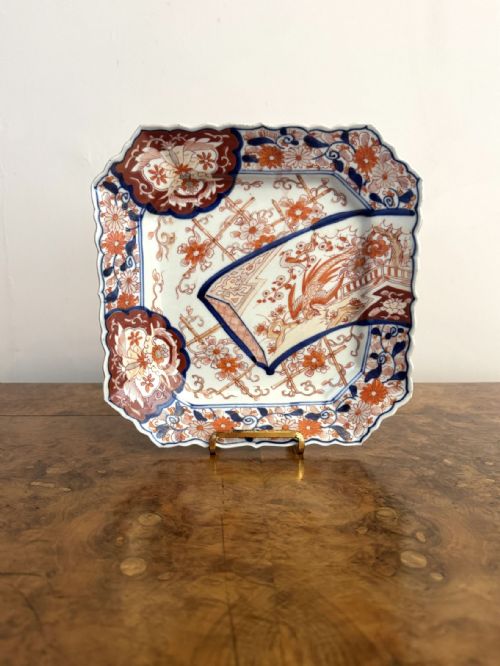
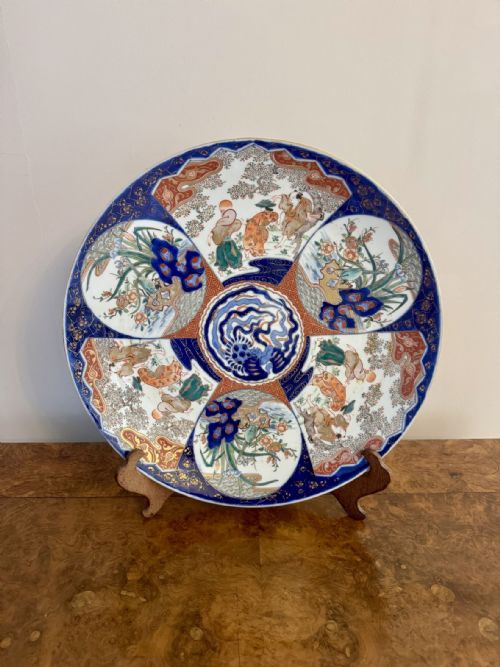


Japanese Imari Porcelain Charger
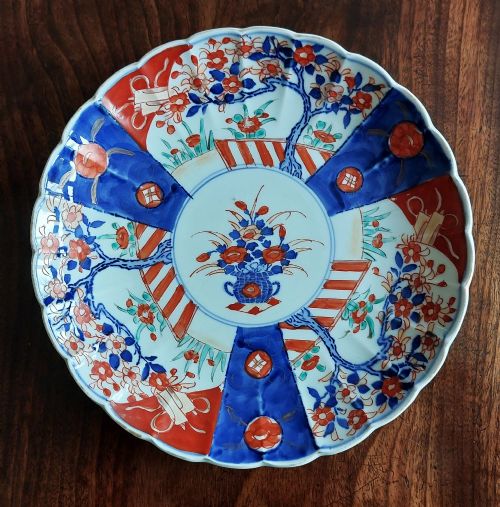
A Japanese imari porcelain charger brings bold cobalt blue, rust-red enamel, and gold leaf into a room, offering striking decorative presence.

Japanese Imari Porcelain Charger
A Japanese imari porcelain charger is a large decorative plate or dish designed primarily for display rather than dining. When searching for this phrase, collectors encounter substantial earthenware forms, often featuring scalloped, hexagonal, or square edges alongside traditional circular shapes.
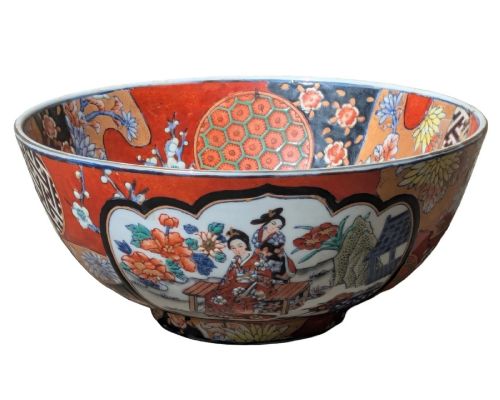
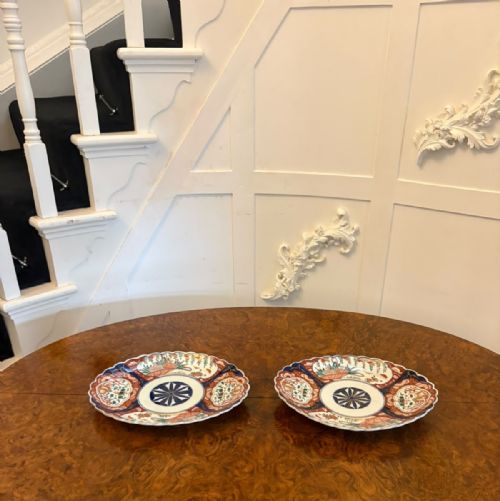
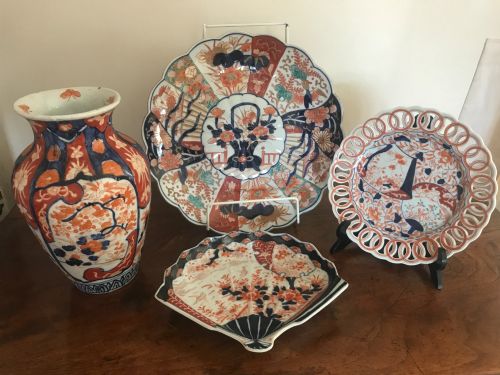
The pieces appearing on this page span the 1850s through to the Showa period, with the majority originating in the Meiji period and the late 19th century. Alongside chargers, the selection includes large bowls, pairs of dishes, and sets of plates sharing the characteristic aesthetic.
Originating from the Arita kilns, these objects reflect distinct historical periods including the Edo and Meiji eras. Buyers frequently find pieces styled with floral motifs, exotic birds, and intricate geometric panel borders.
Materials and manufacture
These items are constructed from white porcelain clay, providing a durable and smooth foundation for subsequent decoration. Cobalt underglaze is applied directly to the body before the initial firing, establishing the deep blue elements of the design.
Following the primary firing, artisans add enamel colours, particularly rust-red, along with gold leaf, gilt, or gilding for surface highlights. A subsequent firing fuses these overglaze pigments to the glazed porcelain surface.
Many antique chargers feature exotic birds peering out from floral thickets, seemingly judging the room's interior design choices.
Assessing quality and execution
Quality in a Japanese imari porcelain charger rests upon the precision of the hand-painted brushwork and the complexity of the design layout. Superior examples display crisp cobalt underglaze lines combined with finely applied enamel and rich gold leaf details.
The physical form itself contributes to desirability, particularly where potters have shaped the porcelain into crisp scalloped edges, hexagonal profiles, or large, well-balanced circular chargers. Consistency within matched pairs also elevates the standing of the pieces.
The Japanese Imari Porcelain Charger Glossary
- Imari
- A style of Japanese porcelain decorated in underglaze cobalt blue, iron red, and enriched with gold, originating from the town of Arita. The aesthetic became immensely popular across Europe during the 17th and 18th centuries.
- Charger
- A large decorative plate or dish intended for display on a sideboard or wall rather than for practical table service. These substantial vessels often measure significantly wider than standard dining plates.
- Meiji Period
- The era of Japanese history lasting from 1868 to 1912, marked by the opening of trade with the West and a surge in the export of decorative arts. Pieces from this time demonstrate exceptional technical skill.
- Cobalt Underglaze
- A blue pigment applied to the raw porcelain body prior to glazing and firing, ensuring the colour remains permanent and protected beneath the glassy coating.
- Enamel
- Opaque or translucent vitreous coloured glass applied over the fired glaze to introduce vibrant hues like iron red into the decorative scheme.
Japanese Imari Porcelain Charger: Frequently Asked Questions
What is an Imari charger used for?
These large ceramic vessels are intended for visual display, frequently placed on stands, hung on walls, or set upon sideboards to add colour to an interior.
Historically, wealthy households utilised such large plates as centrepieces for formal presentation rather than for serving food.
How do I date a Japanese charger?
Dating relies on stylistic clues, historical periods such as the Meiji era or Edo period, and the character of the porcelain body and pigments. Comparing the painting technique to known examples helps narrow down the decade of production.
Markings on the reverse can also provide clues, though many export pieces carry decorative rather than maker marks.
What colours define Imari porcelain?
The traditional palette relies on a strong contrast between deep cobalt blue underglaze and iron red enamel, frequently enhanced with gold leaf. This distinct colour combination creates the vibrant visual impact typical of the type.
Additional secondary colours occasionally appear, but the blue and red scheme remains the primary identifier.
Are these chargers fragile?
Like all antique porcelain, these chargers require careful handling to prevent chipping or cracking along the rim. Wall mounting or display stands should be secure and properly fitted to the weight of the dish.
Normal domestic dusting is sufficient for daily upkeep, avoiding harsh chemical cleaners that might affect the overglaze gold.