


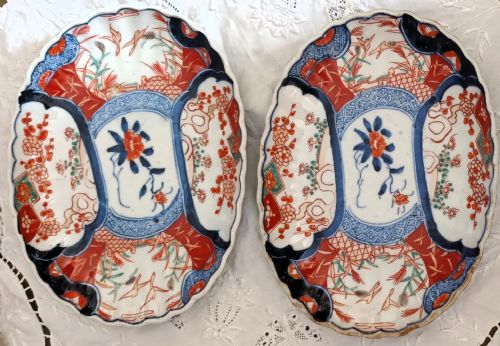
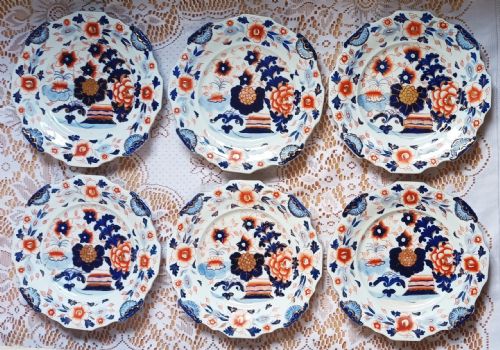
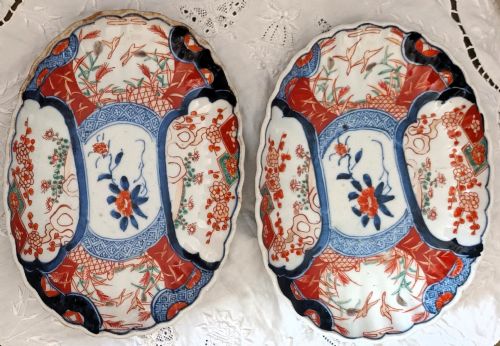
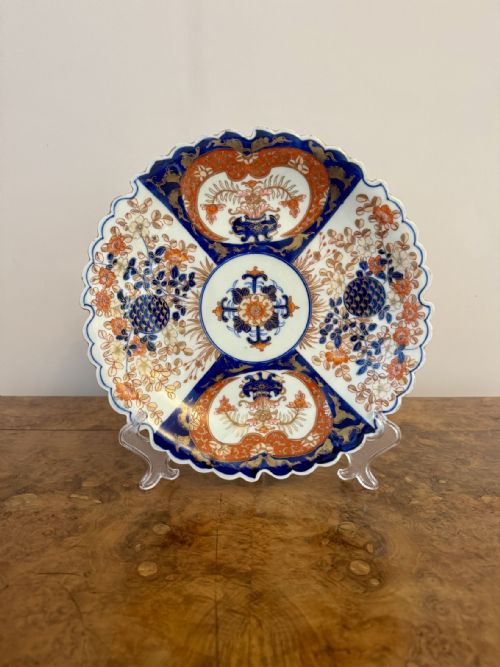
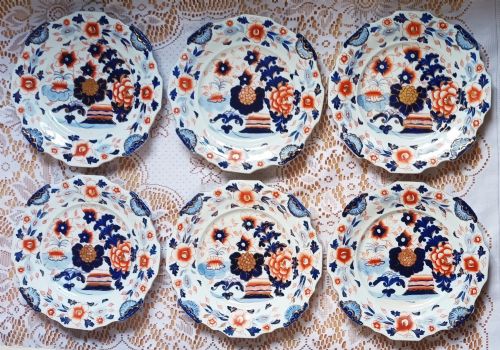
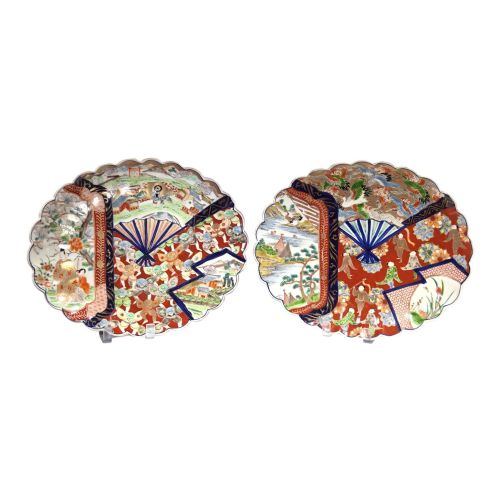


Vintage Imari Wall Plate
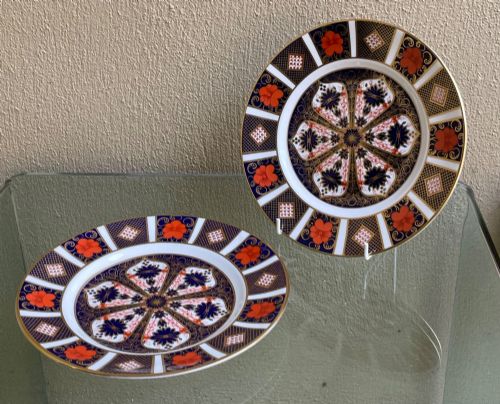
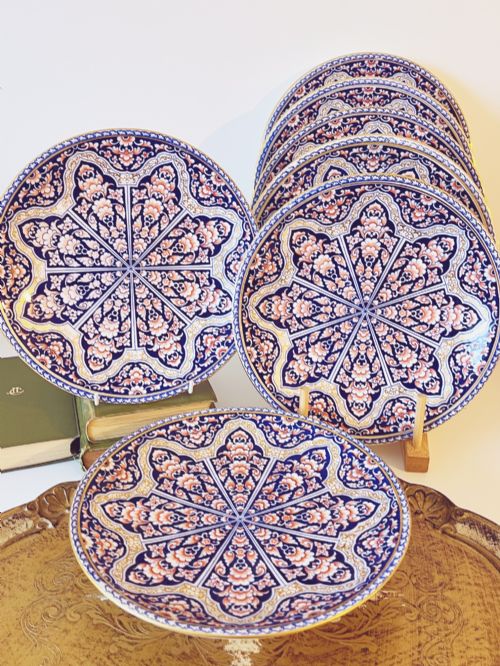
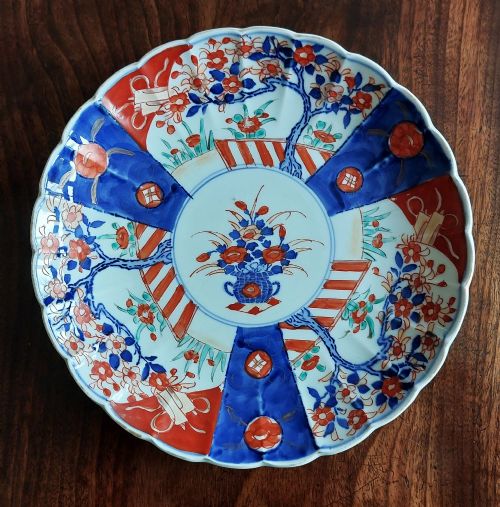
A vintage imari wall plate brings together bold iron-red and cobalt pigments on porcelain, offering a striking focal point for interior display.

Vintage Imari Wall Plate
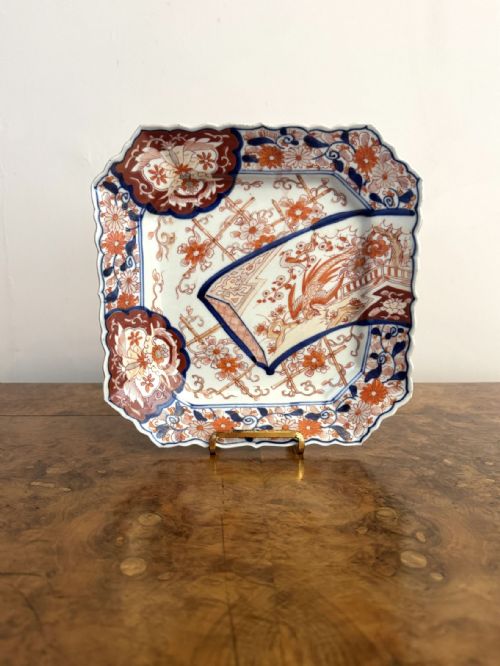
A vintage imari wall plate typically originates from Japanese production, particularly the Meiji period, alongside English interpretations in ironstone china and bone china from the nineteenth century. These items manifest as chargers, square plates, and scalloped dishes intended primarily for visual impact rather than dining.
The aesthetic bridges traditional East Asian ceramic motifs and domestic nineteenth-century taste, encompassing decorative chargers and dessert services. Buyers encounter objects spanning from the Edo period through to mid twentieth-century iterations.
Forms vary from standard circular dishes to unusual square shapes and ribbon edges, often incorporating detailed depictions of figures or traditional patterns.
How they were made
Potters shaped ceramic, ironstone, and porcelain bodies before applying hand-painted underglaze blue and overglaze enamel colours, frequently accented with gold leaf or gilt highlights. This layered technique requires multiple firings in kilns to fix the intricate cobalt designs and vibrant red pigments.
Glaze provides the glossy protective surface that seals the intricate polychrome decoration. Artisans shaped these pieces using moulds or threw them on wheels before meticulous hand painting brought each surface to life.
Several plates depict the Seven Lucky Gods, ensuring your wall display comes heavily staffed with divine Japanese management.
What varies in quality
Precision and crispness of the hand-painted brushwork separate standard production from superior examples. Finer pieces demonstrate greater control in the iron-red and cobalt pigments, alongside intricate gilding that remains sharp and detailed across the surface.
The complexity of the ceramic form, such as scalloped edges, square shaping, or large charger dimensions, demands higher technical skill during firing. Superior specimens maintain structural integrity without warping, while preserving the vibrancy of the enamels.
Royal Crown Derby
The Vintage Imari Wall Plate Glossary
- Imari
- A style of Japanese porcelain decorated in contrasting underglaze blue, iron-red, and gold. It originated in Arita and gained popularity across Europe.
- Charger
- A large decorative plate utilised for display rather than serving food. These pieces form a prominent focal point on walls or furniture.
- Meiji Period
- A Japanese historical era spanning from eighteen sixty-eight to nineteen twelve. Items from this time often exhibit detailed hand-painted polychrome decoration.
- Ironstone
- A type of heavy durable ceramic developed in Britain. It served as a robust alternative to porcelain for patterned plates and tableware.
- Enamel
- Opaque glass fused to ceramic surfaces through firing to create coloured decoration. It provides the characteristic bright red and secondary hues found on these plates.
Vintage Imari Wall Plate: Frequently Asked Questions
How do I hang a wall plate safely?
Use a spring-loaded brass plate hanger that grips the rim securely without causing damage to the ceramic body. Ensure the wall fixing matches the weight of larger chargers.
Verify that the wire or hook behind the plate is tightly secured before mounting the piece at eye level.
Are these plates suitable for daily dining?
These decorative items are intended for display and visual appreciation rather than regular use at the dining table. Overglaze enamels and gold leaf can wear away with frequent washing and cutlery contact.
Gentle dusting and occasional cleaning with a soft cloth preserve the painted surfaces over time.
How do I distinguish Japanese imari from English copies?
Japanese imari typically utilises a finer porcelain body with characteristic spur marks on the base from kiln supports. English versions often employ ironstone or bone china with distinct nineteenth-century registry or maker marks.
The palette and weight also provide clues, as British ironstone feels substantially heavier than traditional Japanese porcelain.
What periods do these plates come from?
The selection includes pieces from the Edo and Meiji periods of Japan, alongside nineteenth-century Victorian and Georgian English wares. Later examples extend into the mid-twentieth century.
Dating relies on stylistic shifts in the painted motifs and the type of ceramic body used by the potter.