




Taisho Period Japanese Ceramic
These taisho period japanese ceramic pieces bring expressive hand-painted detail and distinctive relief work straight from early twentieth-century kilns.

Taisho Period Japanese Ceramic
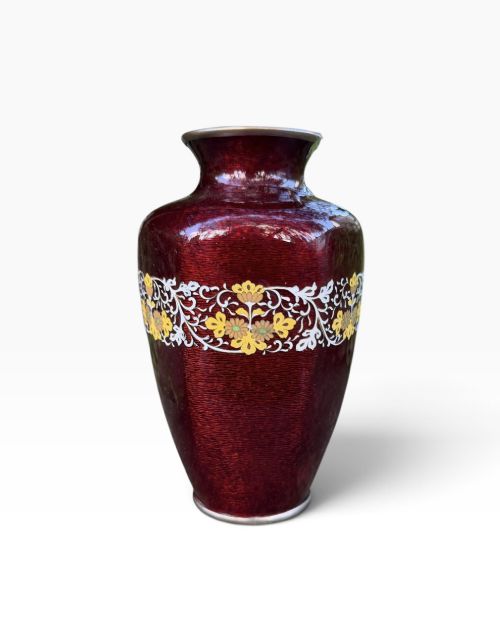
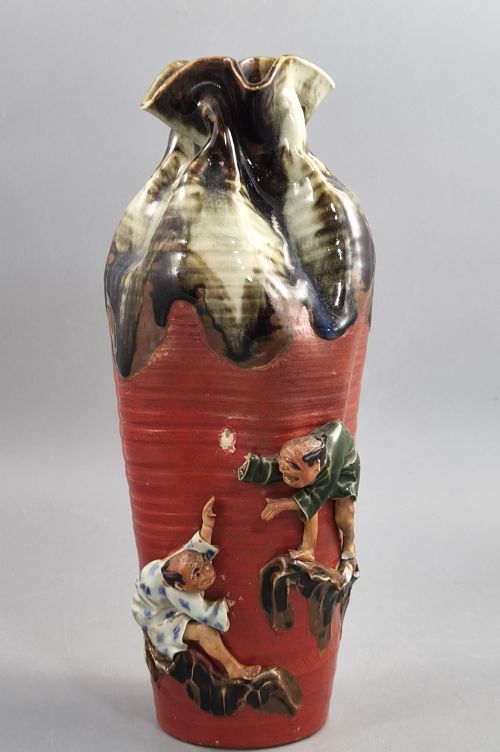
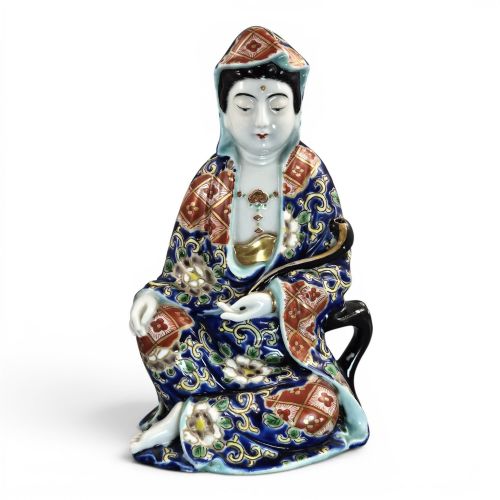
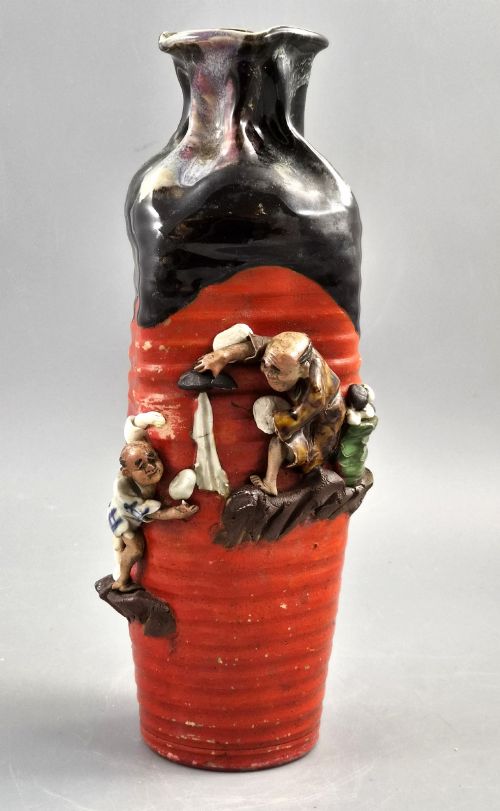
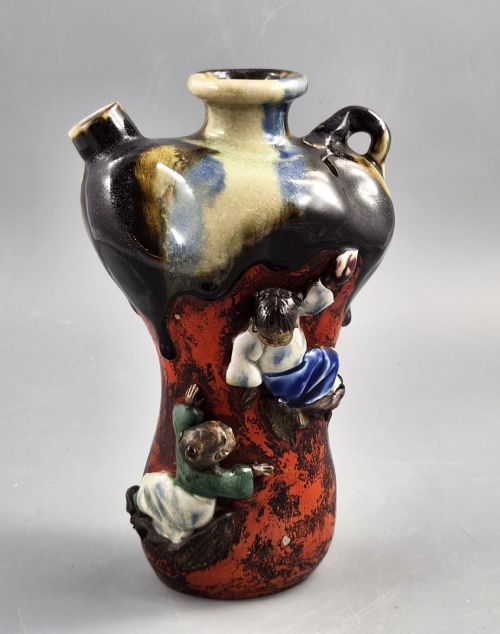
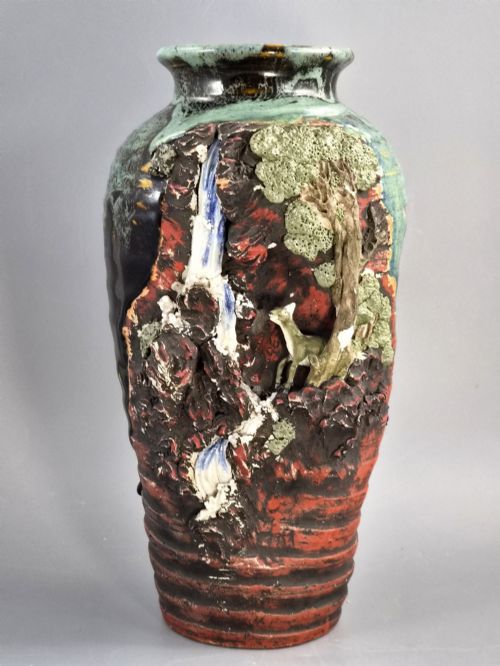
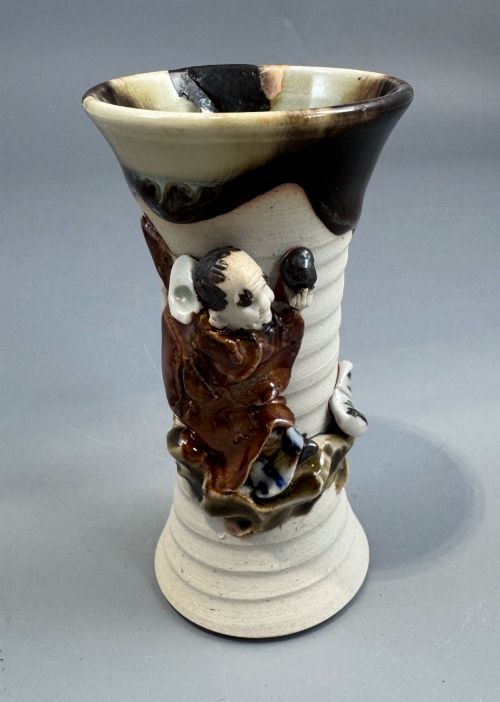
When you search for taisho period japanese ceramic, you encounter a distinct blend of traditional forms and evolving early twentieth-century decorative arts. The selection here centres heavily on sculptural Sumida Gawa wares, Kutani porcelain, Imari chargers, and Satsuma pottery.
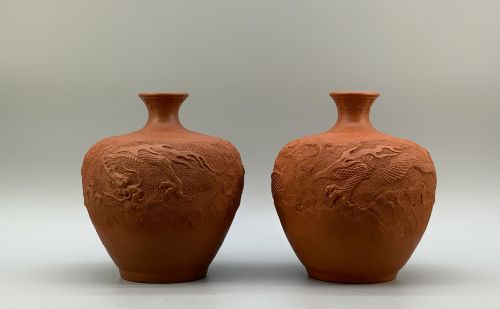
Vases, pitchers, and chargers dominate the physical forms available, often carrying elaborate hand-painted scenes or applied figures in high relief. These objects bridge late nineteenth-century aesthetics with the transitional designs of the nineteen-tens and nineteen-twenties.
Works attributed to notable names like Inoue Ryosai and Ishiguro Koko appear alongside Kutani figures and Imari tableware. Buyers find pieces ranging from domestic tea sets and footed bowl burners to monumental baluster vases and scenic plates.
Materials and Techniques
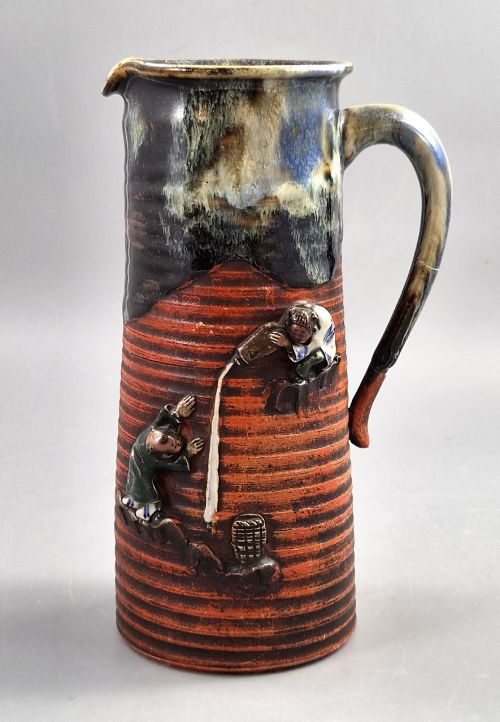
Potters utilised earthenware, stoneware, and porcelain as the primary foundational bodies, shaping them into fluted bodies, hexagonal vases, and pinched sack rims. Stoneware and red clay served particularly well for the heavily textured Sumida Gawa pieces.
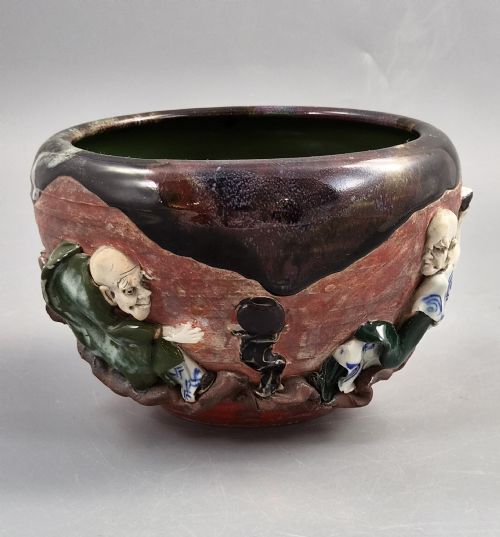
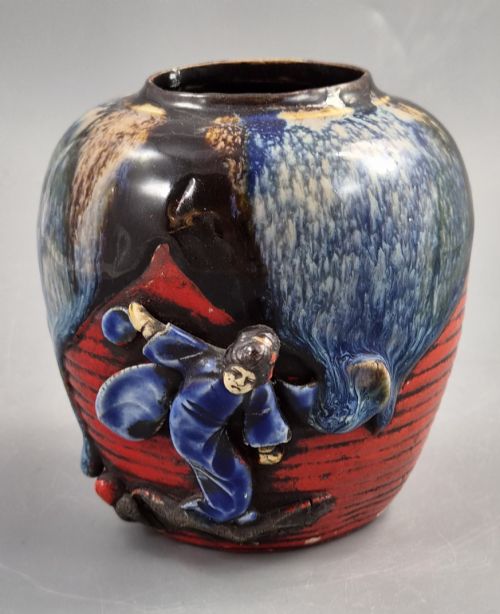
Makers applied dramatic flambe glazes, gold leaf, and intricate enamel work to enhance the surface textures. Applied figures, modeled in high relief directly onto the ceramic body, distinguish much of the sculptural output from this era.
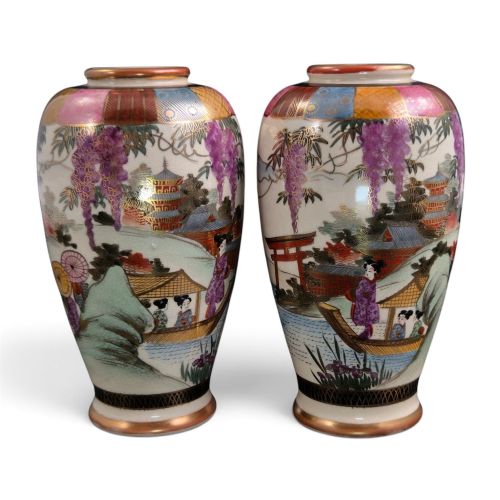
Gilt highlights and moriage enamel dots add raised decorative elements to Satsuma and Kutani surfaces. Artisans combined these painterly techniques with raw clay bodies and glossy glazes to create sharp contrasts in tactile finish.
Listings feature porcelain, earthenware, and stoneware bodies decorated with enamel, gold leaf, and flambe glazes across the nineteen-tens and twenties.
Standards of Quality
The precision of the modeling on applied figures dictates much of the distinction between standard and superior pieces. Skilled modellers rendered facial expressions and drapery on figures like Rakan and sages with sharp clarity rather than soft definition.
The execution of the glaze work separates ordinary production from exceptional studio output. Controlled flambe effects and meticulously applied gold leaf demonstrate superior kiln management and brushwork control.
Signed works by recognised practitioners carry distinct weight over anonymous workshop pieces. The clarity of signatures, especially on Sumida Gawa and Satsuma items, points to the standing of the individual artist within the kiln community.
Inoue Ryosai·Ishiguro Koko·Makuzu Kozan II·Tagawa·Taniguchi
The Taisho Period Japanese Ceramic Glossary
- Sumida Gawa
- A distinctive type of Japanese pottery originating from the banks of the Sumida River in Tokyo, known for its raw unglazed patches and heavily modeled figures in high relief.
- Imari
- A traditional style of Japanese porcelain featuring vibrant underglaze blue and overglaze iron red, gold, and green enamel designs.
- Satsuma
- A type of earthenware pottery with a characteristic ivory-coloured, crackle-glazed surface, typically decorated with elaborate enamel patterns and gilding.
- Kutani
- Japanese porcelain or pottery renowned for its bold, multicoloured overglaze painting, often incorporating detailed figures and floral motifs.
- Flambe Glaze
- A rich, streaked glaze that produces unpredictable, variegated colour patterns during high-temperature kiln firing, often shifting between blues and reds.
- Moriage
- A Japanese ceramic decoration technique where slip is piped onto the surface like cake frosting to create raised, textured patterns.
Taisho Period Japanese Ceramic: Frequently Asked Questions
What is Sumida Gawa pottery?
Sumida Gawa pottery is a distinctive form of Japanese ceramic work characterised by heavy, textured bodies, drip glazes, and figures modeled in high relief. These pieces often depict sages, landscapes, or genre scenes moulded directly onto the exterior of vases, bowls, and pitchers.
Originating around Tokyo, this style broke away from smooth porcelain traditions by celebrating raw, tactile surfaces and quirky sculptural additions. Collectors value them for their distinct storytelling and individualistic modeling.
How do I spot a Satsuma vase?
Satsuma wares are readily identified by their characteristic cream-coloured or ivory earthenware body covered in a fine network of decorative crackle glaze. They frequently feature intricate enamel paintings enhanced with raised gold details.
These pieces range from tea sets to large hexagonal vases, often bearing artist signatures or workshop marks on the base. The delicate interplay between matte crackle and glossy gilding defines the look.
Are these pieces purely decorative?
While many items on this page function primarily as display pieces, such as chargers, figurines, and large baluster vases, several forms served practical daily purposes. Cups, saucers, pitchers, teapots, and brush washers were made for active use.
Living with these ceramics simply involves integrating them into modern spaces as focal points or functional vessels. Their robust construction allows them to endure daily presence in a room.
How do I distinguish Meiji from Taisho?
Distinguishing Meiji pieces from Taisho examples relies on noticing subtle shifts in decorative restraint and stylistic influences. The Meiji era favoured dense, highly intricate ornamentation, whereas the Taisho period occasionally introduced cleaner lines and looser brushwork.
Because many kilns operated across the transition of these imperial periods, pieces are frequently dated across the overlap. Looking at the specific potting techniques and signature styles helps clarify the dating.