





Traditional Imari Decorative Charger
These traditional imari decorative charger pieces bring vibrant historic palettes to a room, offering striking focal points for display.

Traditional Imari Decorative Charger
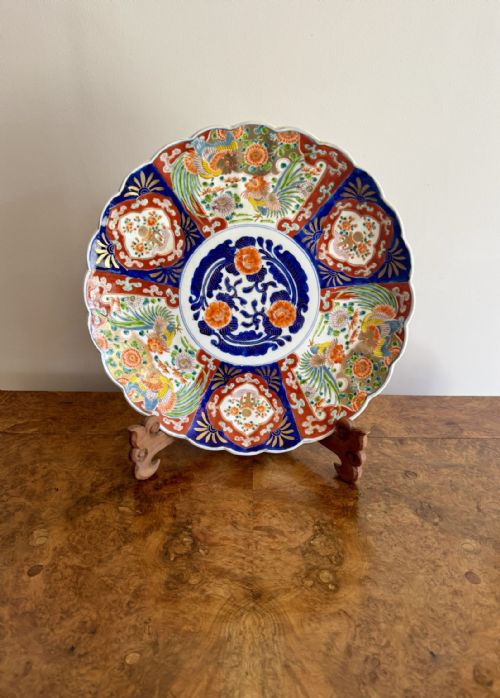
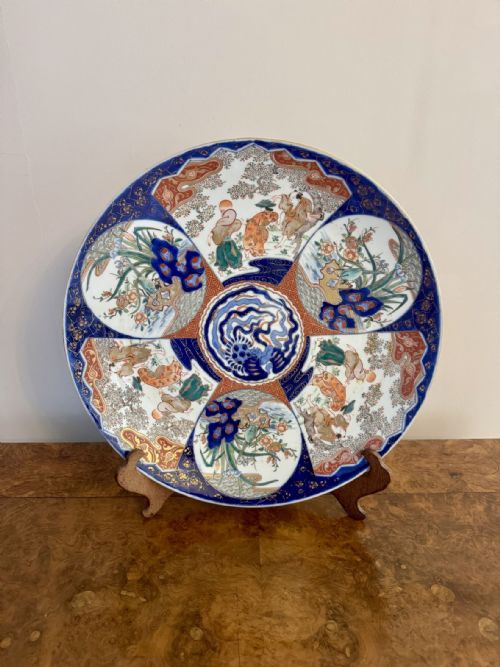
A traditional imari decorative charger stands as a large, bold display dish intended for visual impact rather than dining use. When seeking a traditional imari decorative charger, buyers encounter substantial porcelain vessels shaped into rounds, squares, or scalloped edges.
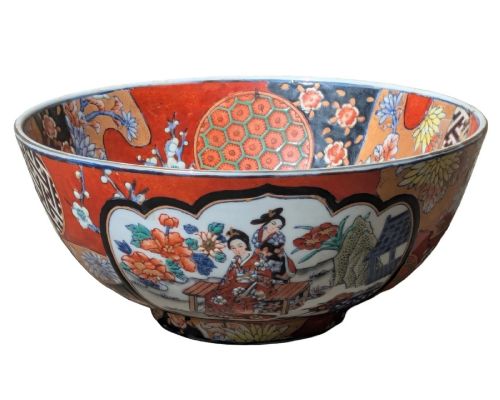
Most examples originate from Japan, spanning the Meiji period, the Edwardian era, and the early twentieth century. Alongside these, related forms such as bowls, dishes, and plates appear in collections, though the large charger remains the defining piece.
Earlier origins also surface, including late seventeenth-century Japanese wares and Chinese export pieces. These objects showcase deep historical roots in Asian ceramic traditions.
How they were made
Artisans built these pieces using ceramic and porcelain bodies, applying cobalt underglaze beneath clear finishes. This foundational blue pigment is fired at high temperatures to create deep, permanent tones.
Enamel and gold leaf, or gilding, were applied over the glaze in subsequent low-temperature firings. This layered technique produced the characteristic rich red, blue, and gold surface designs.
Square-shaped plates prove that potters occasionally grew tired of circles.
What varies in quality
The precision and complexity of the hand-painted motifs dictate the upper tiers of quality. Finer chargers display crisp lines in the cobalt underglaze and carefully registered enamel overlays.
Weight, symmetry of the porcelain body, and richness of the gilding also separate standard production wares from exceptional collector pieces. Greater depth in the palette points to superior kiln work.
The Traditional Imari Decorative Charger Glossary
- Charger
- A large decorative plate or platter traditionally used for display on a sideboard or wall rather than for serving food. These pieces provide a wide surface for intricate painted scenes.
- Cobalt Underglaze
- A blue pigment applied to raw porcelain before glazing and firing, which reacts with heat to produce a permanent rich tone. It forms the stable dark foundation of traditional patterns.
- Enamel
- Opaque or translucent coloured glass fused to the surface of fired porcelain during a secondary low-temperature firing. It adds the bright reds, greens, and other hues characteristic of the palette.
- Gilding
- The application of gold leaf or gold paint to highlight specific areas of the design. This technique catches the light and adds depth to the finished display piece.
- Meiji Period
- A major era in Japanese history spanning from eighteen sixty-eight to nineteen twelve, noted for prolific ceramic exports. Pieces from this era often feature dense, confident brushwork.
- Aka-e
- A Japanese term meaning red pictures, referring to red-dominant enamel decoration. This style frequently anchors the multi-coloured schemes found on earlier dishes.
Traditional Imari Decorative Charger: Frequently Asked Questions
How do I display a charger safely?
Large plates require sturdy plate stands designed for heavy porcelain, or specialist wall-mounting brackets that distribute weight evenly.
Keep pieces away from direct sunlight and high-traffic walkways to protect the overglaze enamels and gold leaf from accidental knocks.
Are these chargers safe for food use?
Antique porcelain pieces with extensive overglaze enamel and gilding are intended strictly for display and decorative purposes.
Historic glazes and surface pigments can wear down with use and may not meet modern food safety standards.
How do I tell Meiji period pieces apart?
Meiji period items often exhibit dense cobalt underglaze work paired with vibrant enamel highlights and generous gilding. They reflect the industrial and artistic expansion of late nineteenth-century Japan.
Earlier seventeenth-century examples typically show softer clay bodies, more restrained brushwork, and simpler compositions.
What is the difference between a plate and a charger?
A charger is significantly larger than a standard dining plate, usually measuring well over twelve inches across. Their primary function was visual display on dining tables or sideboards.
Plates in these collections are smaller and were often produced in matched sets for domestic use.