







Japanese Floral Decorative Plate
These pieces of Japanese floral decorative plate bring together centuries of skilled hand painting and rich enamel work.
Japanese Floral Decorative Plate
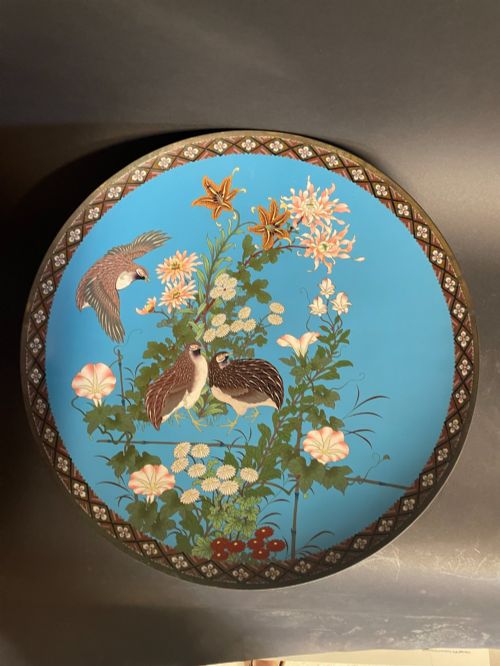
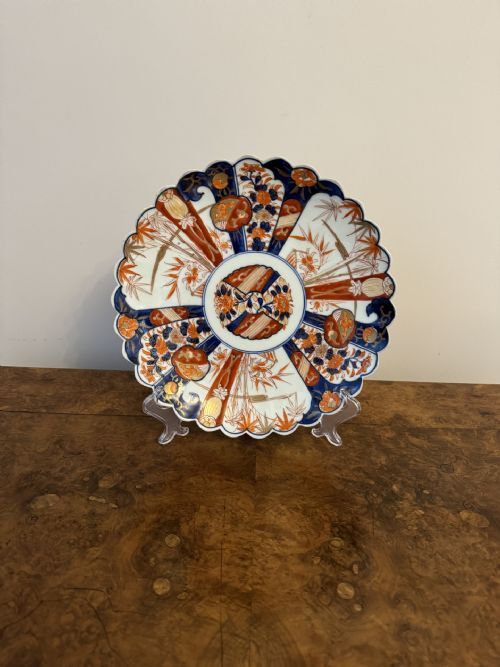
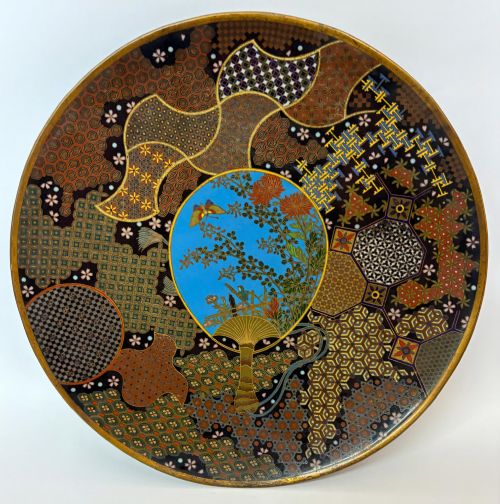
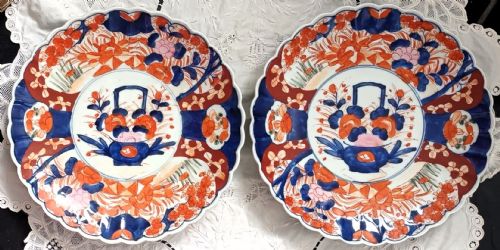
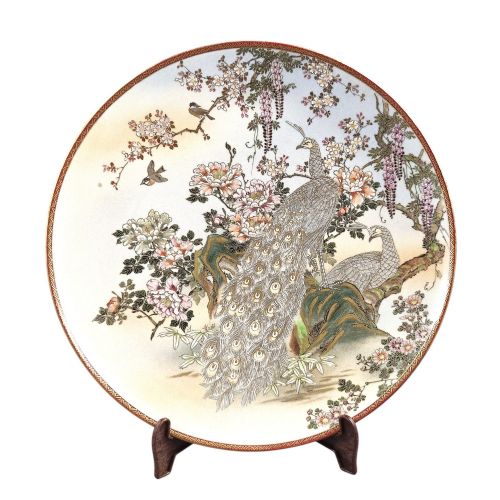
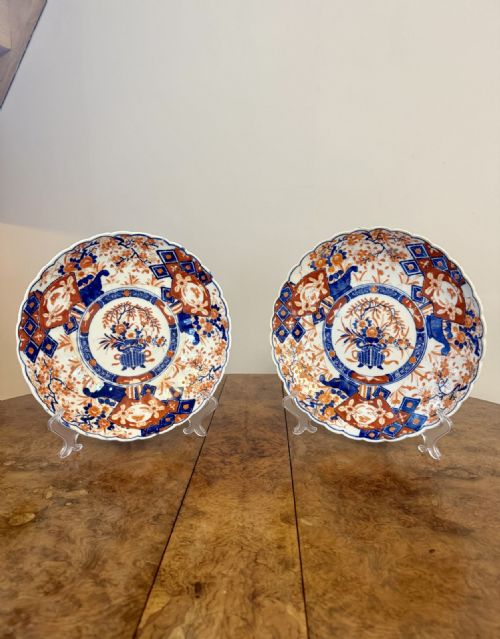
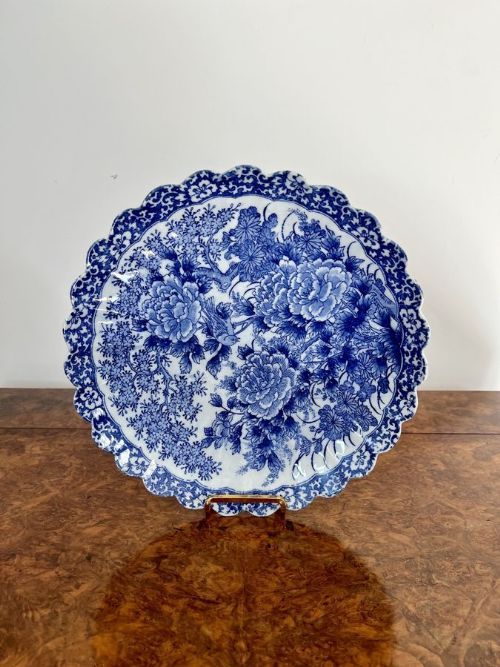
A japanese floral decorative plate spans a variety of forms from the nineteenth and early twentieth centuries, including large chargers, scalloped dishes, and octagonal trays. Most examples found here belong to the Imari tradition or utilise cloisonne enamel techniques on metal bases.
Makers and artisans produced these items across the Meiji and Edo periods, incorporating traditional motifs such as chrysanthemums, peonies, and birds. Buyers encounter both blue and white porcelain and vibrant polychrome designs intended for display.
The selection ranges from cabinet plates to substantial chargers measuring over a foot across. Many survive in pairs or larger sets, pointing to their original use as decorative objects in interiors.
How they were made
Porcelain items rely on cobalt underglaze and enamel applied to a ceramic body, often associated with the kilns of Arita. Artisans painted floral and bird patterns by hand before firing.
Cloisonne pieces employ copper or brass bases combined with enamel and occasionally gold leaf or wirework to partition the floral motifs. The resulting surface receives extensive polishing to achieve an even texture.
Listings feature periods spanning from the eighteenth century through to the Edwardian era, with a strong concentration of late nineteenth-century Imari porcelain.
What varies in quality
The precision of the hand painting determines visual clarity, particularly in complex floral and avian compositions. Finer pieces demonstrate control over cobalt tones and enamel placement.
On metal vessels, the delicacy of the wirework and the depth of the enamel surface separate standard production from superior examples. Porcelain pieces rely on the crispness of the moulded edge and the richness of the glaze.
The Japanese Floral Decorative Plate Glossary
- Imari
- A style of Japanese porcelain featuring cobalt blue and iron red, often accented with gold. It originated in Arita and became popular for export during the Edo and Meiji periods.
- Cloisonne
- A metalwork technique where fine wires create small compartments on a copper or brass base to hold coloured enamel. Artisans then fire and polish the surface smooth.
- Charger
- A large decorative plate intended for display on a wall or sideboard rather than for serving food. These pieces measure significantly larger than standard dining plates.
- Moriage
- A decorative ceramic technique that applies raised slip or clay paste to create textured surface patterns. This adds physical relief to floral and bird designs.
- Edo Period
- A historical epoch in Japan lasting from 1603 to 1868, known for cultural stability and the development of distinct regional pottery styles.
Japanese Floral Decorative Plate: Frequently Asked Questions
How do I hang a heavy charger safely?
Large chargers require specialised spring-loaded wall hangers designed to distribute weight evenly across the rim. Ensure the mounting bracket anchors securely into solid wall material.
Avoid wire attachments glued directly to the reverse of ceramic or metal vessels. Inspect the grip of the hanger periodically to maintain security.
Were these plates used for dining?
Most items described as chargers or decorative dishes served primarily as ornamental display pieces in traditional interiors. Their size and painted decoration made them unsuited for everyday meals.
Smaller plates occasionally saw use in formal settings, but surviving examples in good condition generally spent their lives on display stands or walls.
How do I clean cloisonne and porcelain?
Dust porcelain and cloisonne items gently with a dry, soft cloth to remove surface particles. Moisture can seep into tiny fractures or affect metal bases over time.
Refrain from using chemical cleaners, abrasive pads, or immersion in water. Professional conservation advice remains necessary for pieces with fragile enamel.
How do I distinguish Meiji period work?
Meiji period items often reflect the opening of Japan to international trade, combining traditional motifs with ambitious scale and technical precision. Look for detailed cloisonne wiring and rich moriage texturing.
Earlier Edo period pieces tend toward restrained blue and white palettes or traditional Imari patterns without the dense decorative layering of later decades.