





Large Oriental Display Plate
A large oriental display plate brings rich hand-painted colour and substantial ceramic presence to a wall or table.
Large Oriental Display Plate
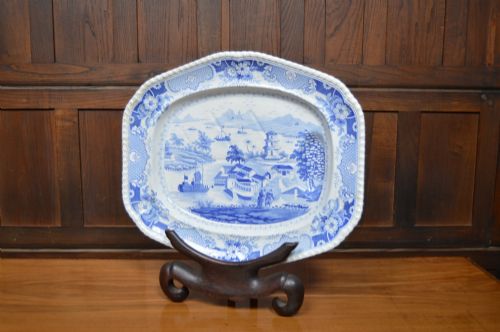
A large oriental display plate is a broad decorative dish created for visual impact rather than dining. When you search for a large oriental display plate, you encounter expansive platters and chargers originating predominantly from Japan and China during the nineteenth century.
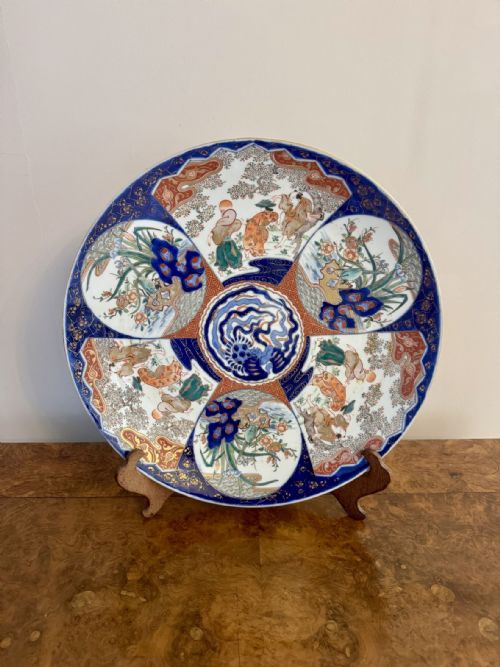
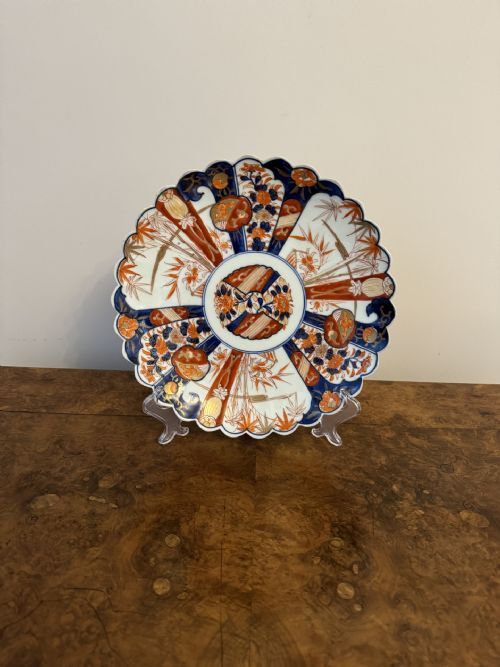
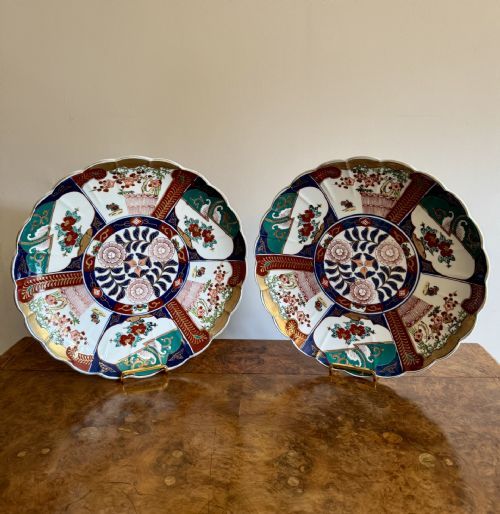
The material forms on this page divide cleanly between Japanese Imari porcelain decorated in iron red, cobalt blue, and gilt, and heavy copper-based cloisonne enamel chargers depicting dragons, birds, and landscapes. These pieces arrive from periods spanning the late Edo, Meiji, and Victorian eras.
Makers utilised these wide surfaces to display elaborate scenes of court life, mythological figures such as the Seven Lucky Gods, and natural motifs like koi carp and Mount Fuji. Most examples measure significantly wider than standard domestic plates, designed specifically for prominent display on sideboards or walls.
How They Were Made
Potters and artisans formed the ceramic foundations from porcelain and heavy ceramic bodies, firing them at high temperatures to achieve durable bases. Artisans then applied underglaze blue pigments alongside vibrant overglaze enamel colours and gold leaf accents.
Cloisonne pieces required soldering thin brass or copper wires onto a copper base to form distinct cells, which workers filled with coloured enamel paste before firing and polishing. This intricate process produced detailed imagery of owls, trees, and single dragons with smooth, gleaming surfaces.
Materials recorded across the inventory include porcelain, ceramic, copper, brass, enamel, glaze, gold leaf, and gilt.
What Varies in Quality
The hierarchy of quality rests on the precision of the hand-painting, the richness of the enamel palette, and the crispness of the gilt details. Superior examples exhibit intricate brushwork and deep, saturated tones across complex figural scenes.
Weight and structural stability distinguish heavier chargers, particularly larger copper cloisonne pieces where wirework alignment and enamel depth signal master craftsmanship. Simpler transferware plates lack the hand-painted nuance found on fine Meiji period porcelain and enamel works.
The Large Oriental Display Plate Glossary
- Charger
- A large decorative plate or platter traditionally utilised for display or ceremonial service rather than everyday dining. These items often exceed thirty centimetres in diameter.
- Imari
- A traditional style of Japanese porcelain originating from Arita, characterised by a distinctive palette of cobalt blue, iron red, and supplementary gold leaf. Many pieces date from the Meiji period.
- Cloisonne
- A decorative metalwork technique where wire compartments are soldered to a copper body and filled with enamel paste. Artisans fire and polish the surface to create pictorial scenes.
- Meiji Period
- The era in Japanese history spanning from eighteen sixty-eight to nineteen twelve, known for exceptional decorative arts exported to Western markets. Pieces from this time often feature highly detailed hand-painting.
- Famille Verte
- A Chinese porcelain palette dominated by green enamel hues, often combined with iron red and other colours. This style frequently depicts historical narratives and court life.
Large Oriental Display Plate: Frequently Asked Questions
How were large oriental display plates used?
These large plates served primarily as decorative items rather than tableware. Wealthy households placed them on sideboards, tables, or walls to showcase intricate artistry.
Their substantial size and vibrant hand-painted scenes made them focal points in Victorian and Edwardian interiors.
How do I hang a heavy charger safely?
Due to their considerable weight and broad diameters, these pieces require robust wall fixings and specialised spring-loaded plate hangers. The hanger must distribute the weight evenly across the rim.
Professional framing or custom display stands offer alternative methods for heavy ceramic and metal platters.
How can I tell the age of a plate?
Dating relies on stylistic markers, materials, and backstamps where present. Nineteenth-century examples often display the characteristic aesthetics of the Meiji period or late Victorian era.
Variations in glaze texture and pigment application further help distinguish nineteenth-century works from later twentieth-century reproductions.