
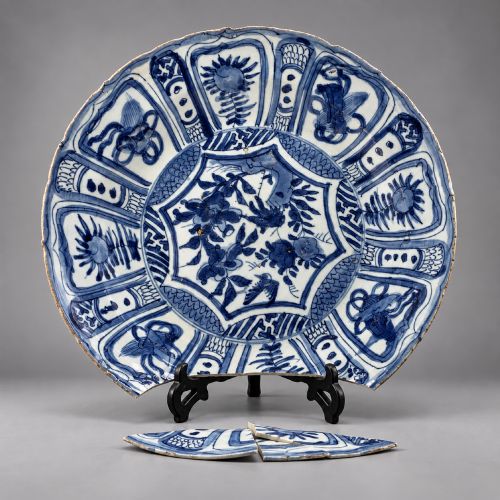
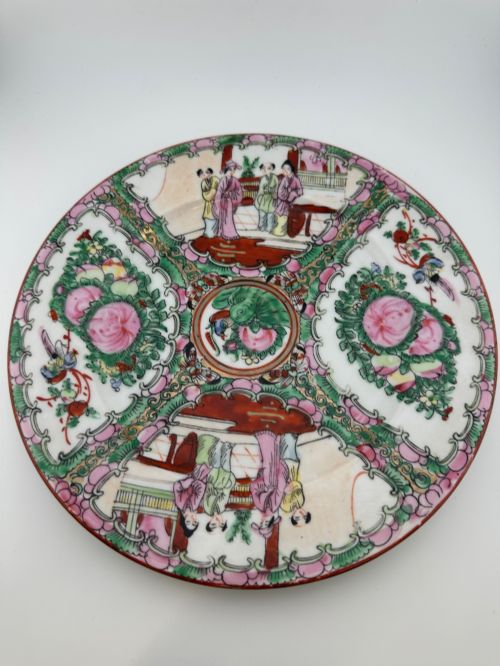
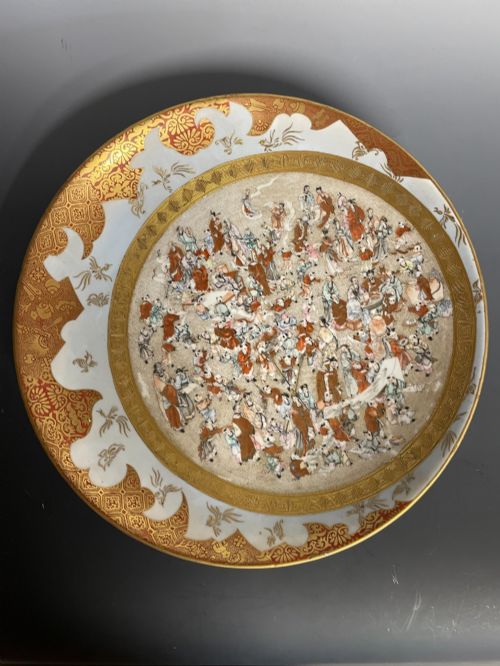



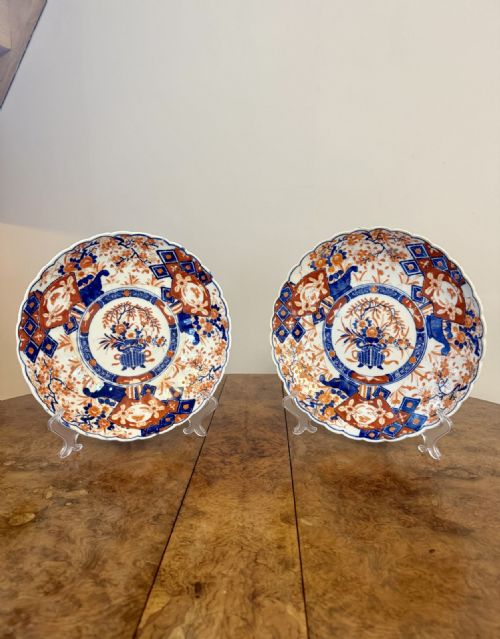


Japanese Export Ceramic Plate
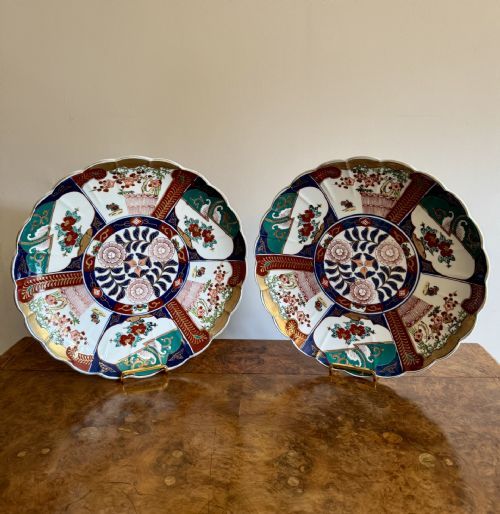
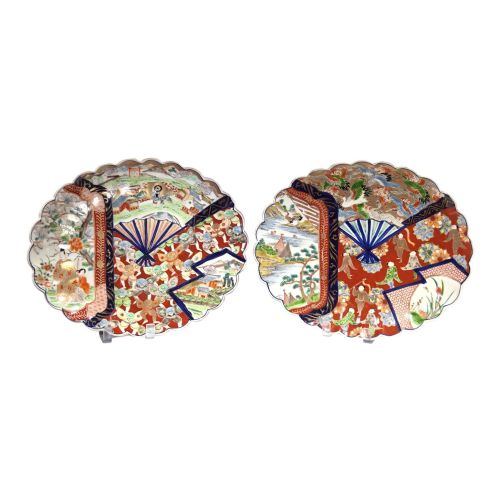
A japanese export ceramic plate brings vibrant colour and intricate pattern to a room, drawing the eye with centuries of craft.
Japanese Export Ceramic Plate
A japanese export ceramic plate encompasses various forms made for overseas markets, ranging from smaller dishes to large wall plates and chargers. The selection spans the Edo and Meiji periods, stretching back to the late seventeenth century and forward into the twentieth.
Most examples found here belong to the Imari style, originating from Arita and characterised by distinctive palettes. Buyers encounter individual plates alongside matched pairs and larger collections, including scalloped shapes, octagonal pieces and ribbon plates.
Pieces originating from the Edo period sit alongside Meiji examples, showing how output evolved across generations. Makers utilised traditional forms such as deep chargers and flat dishes to serve both decorative and functional roles.
How They Were Made
Potters shaped porcelain bodies on the wheel or pressed clay into moulds to achieve specific forms like octagonal and scalloped edges. Artisans then applied underglaze cobalt pigments before the initial firing.
Details emerged through the application of enamel paints and gold leaf over the glaze, followed by a lower-temperature secondary firing. Gilding and meticulous hand painting completed the surface decoration on these export wares.
Materials recorded across the available pieces include porcelain, cobalt underglaze, enamel, glaze, gilt, gold leaf and ceramic.
What Varies in Quality
The precision and detail of the hand painting separate standard examples from finer works, particularly in the rendering of birds, floral motifs and figures. Cobalt underglaze depth and the crispness of moulded edges dictate overall refinement.
Preservation of applied gold leaf and surface enamels alters the visual impact of each piece. Superior examples maintain intact gilding and vibrant pigments across decades of handling and display.
The Japanese Export Ceramic Plate Glossary
- Imari
- A traditional Japanese style of porcelain decoration utilising cobalt underglaze blue, iron red and gold on a white body. Pieces in this palette were widely produced in Arita for export.
- Charger
- A large decorative plate intended for display on a wall or sideboard rather than daily dining use. These substantial pieces often showcase the most complex painted compositions.
- Edo Period
- The historical period in Japan lasting from 1603 to 1867, governed by the Tokugawa shogunate. Export ceramics from this era display early forms of Imari and Arita wares.
- Meiji Period
- The era spanning from 1868 to 1912, marked by the opening of Japan to international trade. Output during this time increased significantly to meet foreign demand.
- Aka-e
- Red-painted wares featuring iron-red overglaze enamel as a dominant colour. This technique often combines with gold leaf and cobalt underglaze.
- Cobalt Underglaze
- A blue pigment applied to the raw porcelain body before glazing and firing. It yields a permanent colour beneath the glossy surface.
Japanese Export Ceramic Plate: Frequently Asked Questions
How were these plates used originally?
Export ceramic plates served dual purposes as both functional dining items in wealthy households and decorative display pieces for overseas markets. Larger chargers were frequently mounted on walls or placed on sideboards to showcase wealth and taste.
Over time, many of these pieces transitioned entirely into ornamental objects, valued for their intricate designs rather than daily utility. Their survival in good condition suggests careful handling and preservation by generations of owners.
How do I date an Imari plate?
Dating relies on examining the characteristics of the porcelain body, the depth of the cobalt blue underglaze and the application style of the overglaze enamels. Edo period pieces often display heavier bodies and softer blue tones compared to later Meiji examples.
Moulded shapes and stylistic motifs also provide clues, with seventeenth and eighteenth-century wares differing subtly in palette execution from nineteenth-century productions. Comparing the potting technique and edge finishes helps narrow the period of origin.
What is the difference between a plate and a charger?
A charger is significantly larger than a standard dining plate, usually measuring well over thirty centimetres in diameter. These oversized pieces were designed primarily for decorative display on walls or central tables rather than holding food.
Plates are smaller and were created for both table service and display. Both forms utilise similar decorative palettes, but chargers typically feature more elaborate and expansive hand-painted compositions.
How should I care for antique porcelain?
Antique porcelain requires gentle handling, avoiding abrasive cleaning agents that can damage fragile overglaze enamels and gold leaf. Dusting with a soft, dry cloth is usually sufficient for maintenance.
When displaying wall plates, ensure secure mounting brackets support the weight safely without putting pressure on the rim. Keep pieces away from direct sunlight to preserve the vibrancy of the red and gold pigments.