



Traditional Oriental Ceramic Dish
A traditional oriental ceramic dish brings hand-painted colour and historical depth to a room, offering enduring appeal for collectors of East Asian porcelain.
Traditional Oriental Ceramic Dish
When searching for a traditional oriental ceramic dish, buyers encounter a focused selection of decorative plates, chargers, platters, and bowls originating from Japan and China. The inventory spans several periods, notably the nineteenth century, the Victorian and Edwardian eras, and the early twentieth century.
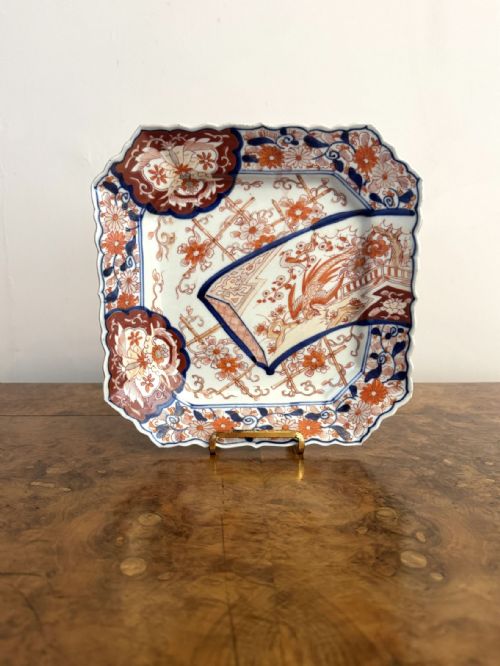
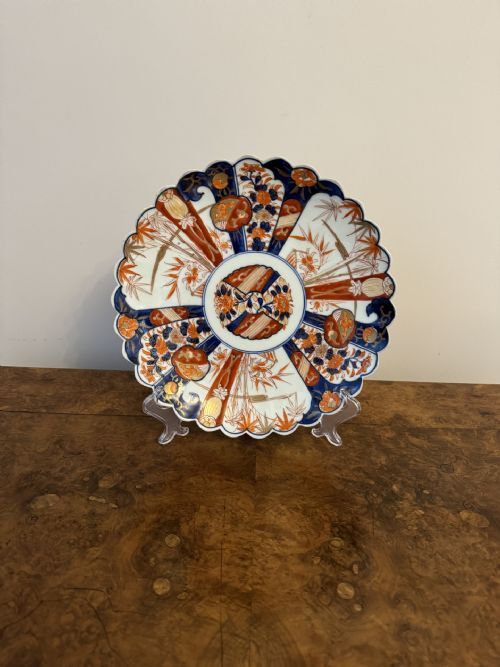
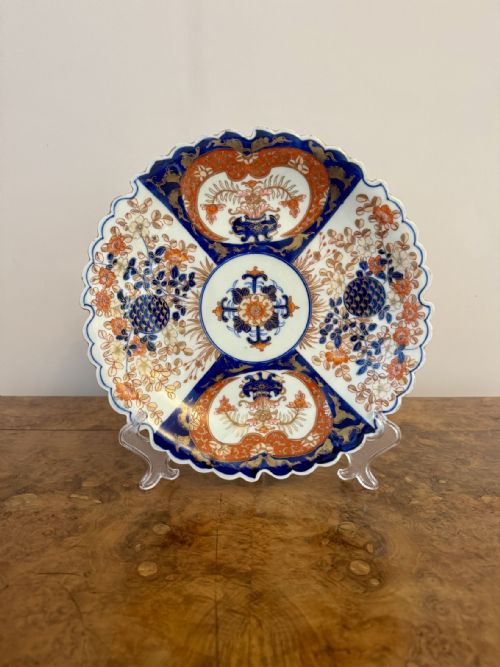
Japanese Imari pieces dominate the selection, appearing frequently in both standard round forms and unusual variations such as square shapes, scalloped edges, and large display chargers. Alongside these, Chinese porcelain plates and blue and white bowls represent earlier periods reaching back to the eighteenth and nineteenth centuries.
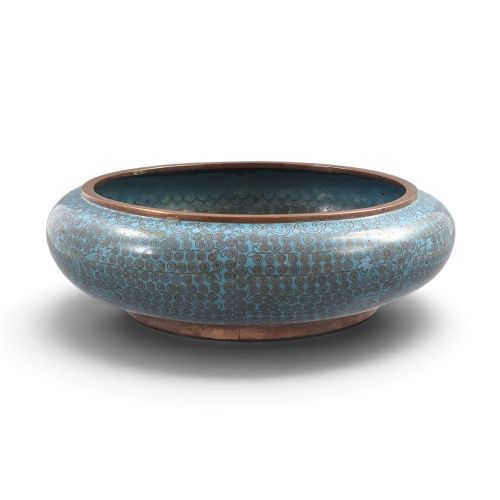
Buyers also find sets of sushi plates and larger collections housed in storage boxes, alongside specialised items like a Chinese cloisonné enamel scholar's brush washer. The core of the offering centres on Imari plates and chargers produced during the Meiji period and around nineteen hundred.
How they were made
These items are shaped from ceramic and porcelain, decorated using cobalt underglaze, enamel, and glaze techniques to achieve rich surface patterns. Many pieces incorporate gold leaf, gilt, and gilding to accentuate the painted motifs.
Production methods rely on traditional kiln firing and hand-application of pigments, particularly evident in the layered red, blue, and gold designs characteristic of Japanese Imari work. Cloisonné items utilise metal wire boundaries filled with enamel paste before firing and polishing.
Several sets come complete with their original storage boxes, proving that nineteenth-century packaging could outlive its contents.
What varies in quality
Quality in these ceramics rests upon the precision of the hand-painted detailing, the crispness of the underglaze cobalt, and the richness of the applied gilding. Superior examples display balanced composition and vibrant, stable enamel colours without blurring or fading.
Form and scale also influence standing, with large chargers, square shapes, and scalloped edges demonstrating greater ambition in manufacture than standard round plates. Collections that survive complete with storage boxes add contextual depth to the physical object.
The Traditional Oriental Ceramic Dish Glossary
- Imari
- A style of Japanese porcelain exported from the port of Imari, traditionally decorated in underglaze blue, iron red, and gold. This style became immensely popular in Europe during the nineteenth century.
- Charger
- A large decorative plate or platter intended primarily for display on a wall or sideboard rather than for serving food. These pieces often feature the most intricate painting in a maker's repertoire.
- Cloisonne
- A technique where metal compartments are soldered to a base and filled with enamel paste before firing. This method creates complex, colourful patterns across bowls and vessels.
- Cobalt underglaze
- A blue pigment applied to ceramic ware before glazing and high-temperature firing. The glaze vitrifies over the pigment, protecting the colour permanently.
Traditional Oriental Ceramic Dish: Frequently Asked Questions
What is an Imari charger?
An Imari charger is a large Japanese decorative plate featuring distinctive red, blue, and gold patterns. These substantial pieces were designed for display on sideboards or walls.
They represent a major category within nineteenth-century ceramic imports, valued for their vibrant palettes and intricate hand-painted motifs.
How do I display a large ceramic plate?
Large chargers and display plates sit securely on sturdy plate stands or mounted wall brackets designed for heavy ceramics. Placement away from direct sunlight protects the enamel and gilding from fading over time.
Grouping plates by style or colour creates a striking visual arrangement on dining room walls or living room cabinets.
How can I tell the period of a Chinese blue and white bowl?
Dating relies on examining the weight of the porcelain body, the depth of the cobalt blue underglaze, and the characteristics of the foot ring. Earlier pieces from the eighteenth century show distinct potting techniques compared to nineteenth-century examples.
Handling multiple pieces builds familiarity with how body density and glaze texture shift across different eras.
Are these dishes meant for daily use?
Antique ceramic dishes and chargers are primarily intended for decorative display rather than heavy modern dining. Hand-washing in lukewarm water without harsh detergents helps preserve delicate enamel and gold leaf.
Using them carefully for special occasions or fruit display allows you to live with the pieces while protecting their historic surfaces.