


Japanese Enamel Plaque
A japanese enamel plaque brings intricate artistry and detailed natural motifs into a room, making them enduring focal points for collectors.
Japanese Enamel Plaque
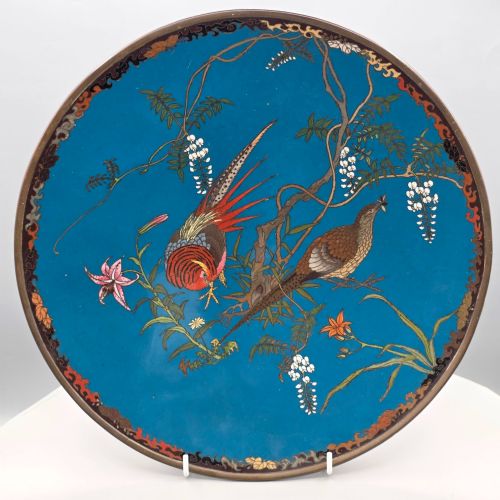
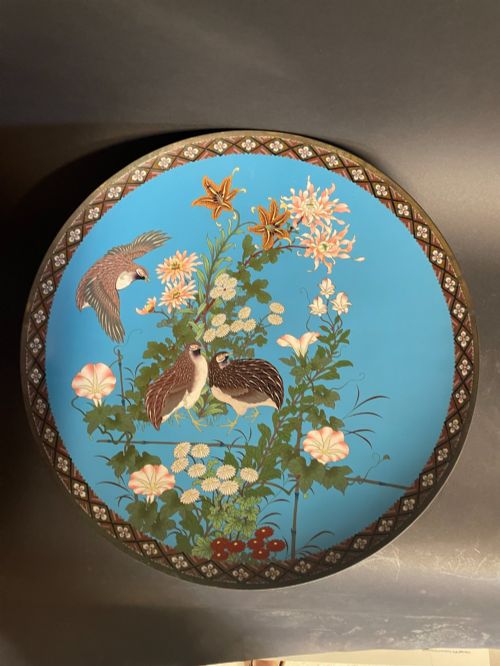
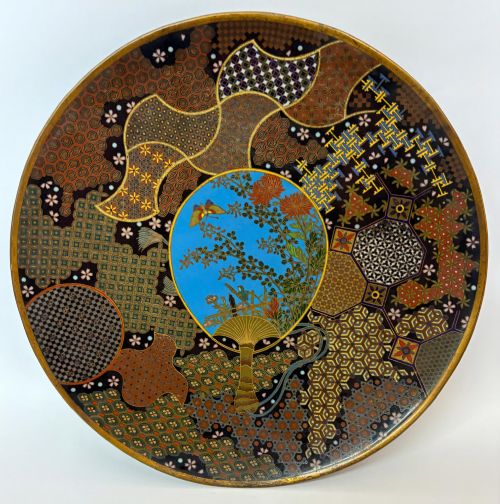
A japanese enamel plaque typically manifests as a charger, decorative plate, or tray created during the Meiji and Edo periods. These pieces display distinct subjects such as birds, koi, dragons, and floral arrangements across circular and octagonal surfaces.
The selection here includes works spanning from the 1860s through to 1900, capturing the transition of decorative styles across late nineteenth-century production. Buyers encounter large chargers alongside smaller trays, reflecting diverse display functions from the period.
Materials and construction
Craftsmen built these items using a base of copper, brass, bronze, or occasionally porcelain for Totai Shippo pieces. Artisans applied vitreous enamel pastes within cells formed by soldering thin metal wire onto the metallic foundation.
The application of cloisonne enamel required meticulous firing and polishing stages to achieve smooth surfaces. Metal wire outlines defined intricate motifs like chrysanthemums, bamboo, and figures before final finishing.
Materials recorded across the inventory include copper, brass, bronze, wire, and porcelain.
Evaluating quality and execution
The refinement of the wirework and the complexity of the subject matter distinguish superior examples from standard production. Pieces featuring detailed pictorial narratives, such as samurai or leaping koi, demonstrate advanced technical control by the maker.
Scale and proportion also influence distinction, with large chargers requiring immense precision during the enamel firing process to prevent distortion. Signed works often indicate higher artistic ambition and workshop mastery.
The Japanese Enamel Plaque Glossary
- Cloisonne Enamel
- A technique where metal wire creates raised cells on a body to hold coloured vitreous pastes. These wires remain visible as distinct outlines in the finished design.
- Totai Shippo
- A method of applying cloisonne enamel directly onto a porcelain body rather than metal. This technique produces unique textural effects resembling tree bark.
- Charger
- A large decorative plate utilised for display rather than dining purposes. These items often feature elaborate pictorial scenes across a wide surface.
- Meiji Period
- The historical era spanning from 1868 to 1912 noted for expansive decorative arts production. Works from this time demonstrate remarkable technical refinement.
Japanese Enamel Plaque: Frequently Asked Questions
How were these decorative plates displayed historically?
These items served primarily as decorative chargers in domestic interiors, positioned on tables or mounted for visual impact.
Their substantial scale and intricate pictorial themes made them centrepieces within reception rooms.
What subjects appear on these pieces?
Common motifs include birds such as ibises, leaping koi, dragons, and botanical studies like chrysanthemums and bamboo.
Some examples also incorporate cultural figures and auspicious symbols executed in coloured enamels.
How do I distinguish Edo period pieces from Meiji period works?
Edo period items often date from the mid-nineteenth century and tend to exhibit specific early characteristics in palette and scale.
Meiji period examples span the later decades, showing shifts in workshop production and stylistic detail.
Are these items made of solid copper?
The foundation typically consists of copper, brass, or bronze, providing a stable metallic base for the enamel layers.
Alternative substrates like porcelain also appear in specialised Totai Shippo variations.