








Japanese Decorative Charger
When you want a japanese decorative charger, you look for large plates and trays made in porcelain, enamel, or metal.

Japanese Decorative Charger
A japanese decorative charger is a large display plate or tray created for visual impact rather than dining use. These pieces span the nineteenth and early twentieth centuries, with heavy representation from the Meiji period.
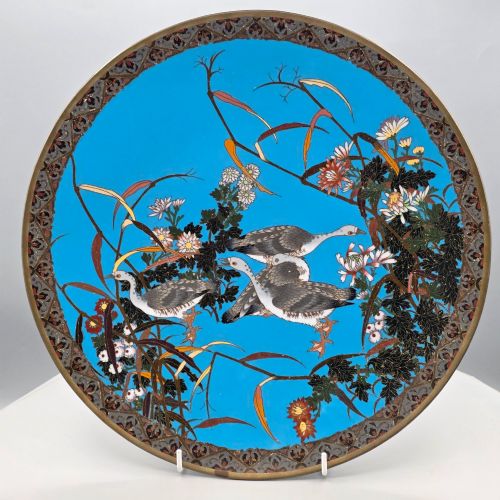
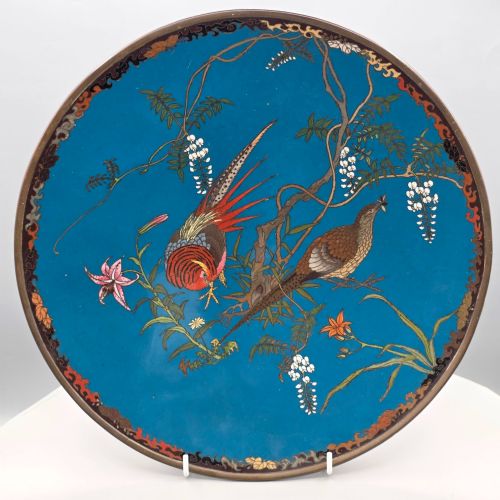
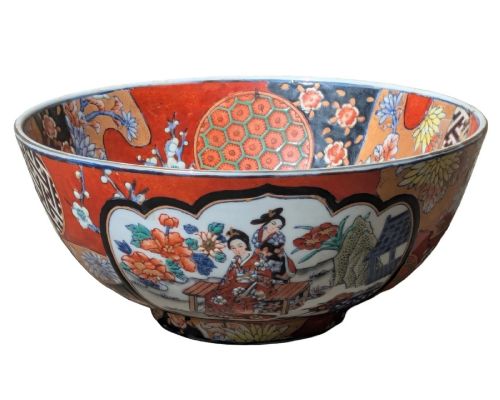
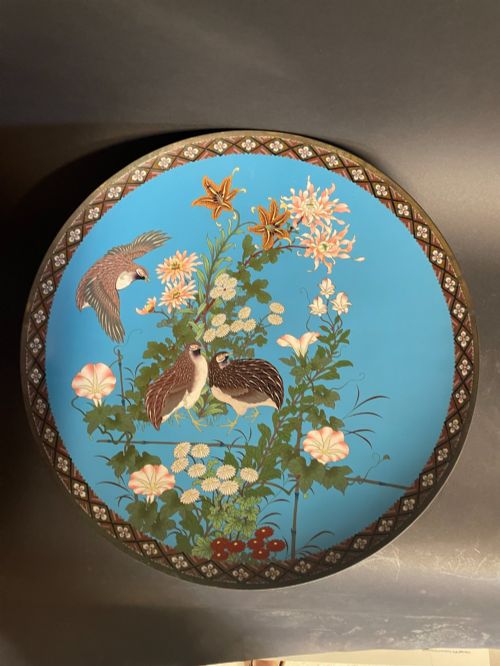
The most common versions met on this page are porcelain imari chargers and copper-bodied cloisonne enamel chargers. Makers shaped them with round, scalloped, octagonal, or square edges to suit intricate hand-painted or wired motifs.
Originating from kilns and workshops across Japan, these items served as prominent interior display objects. Collectors today seek them for their scale, intricate colour palettes, and traditional pictorial themes.
Materials and construction methods
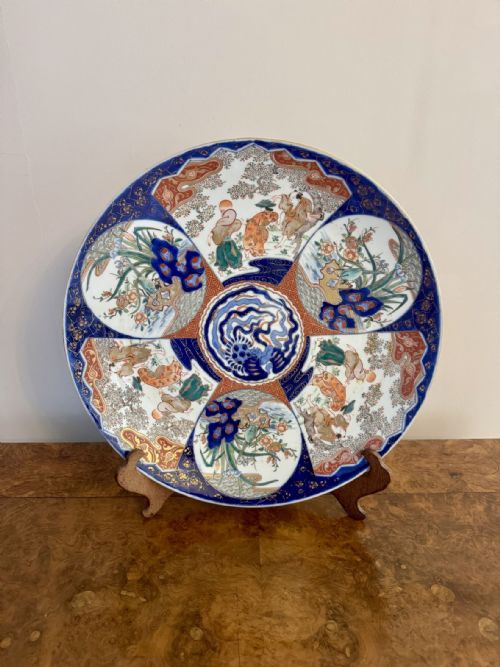
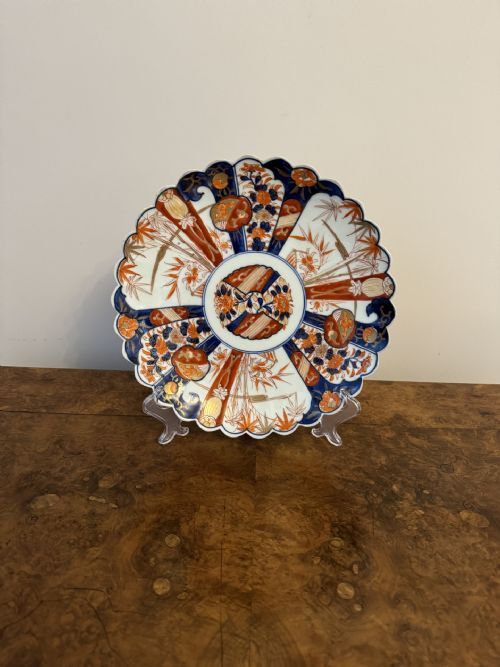
Porcelain chargers utilise refined clay bodies finished with cobalt blue, iron red, and gilt glazes before high-firing. Artisans hand-painted complex floral, bird, and landscape designs directly onto the surface.
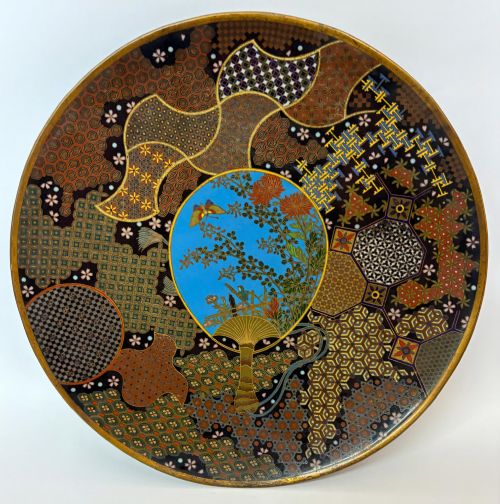
Cloisonne enamel chargers employ copper or brass bases fitted with thin metal wires that form cells called cloisons. Workers filled these compartments with coloured enamel pastes before firing and polishing the piece to a smooth finish.
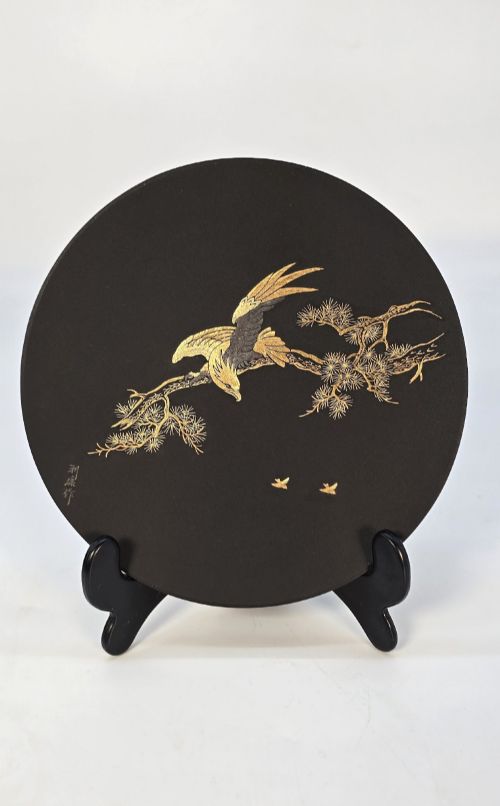
Metalwork pieces also incorporate patinated iron embellished with gold and silver inlay techniques. These methods required precise hand-cutting and hammering to secure precious metal details into the base metal.
Listings span the nineteenth and twentieth centuries, utilising porcelain, copper, brass, gold leaf, and cloisonne enamel across multiple decorative forms.
Distinctions in craftsmanship and design
The standard of a japanese decorative charger rests on the precision of its execution and the complexity of its composition. Finer examples display meticulous brushwork in porcelain or perfectly uniform wirework in enamel without surface pitting.
Design density and subject matter separate standard production from masterwork pieces. Chargers depicting intricate natural scenes like birds, koi, or Mount Fuji with varied colour tones represent advanced technical skill.
The weight, symmetry, and finish of the base metal or ceramic body indicate the maker's dedication. Superior pieces maintain crisp detail across the entire surface and harmonious balance in their decorative schemes.
Koshida
The Japanese Decorative Charger Glossary
- Imari
- A style of Japanese porcelain featuring underglaze blue and overglaze iron red, often augmented with gold leaf. It originated in the town of Arita and was shipped from the port of Imari.
- Cloisonne
- A decorative metalwork technique where flat wires are soldered to a metal base to create compartments for enamel paste. These cells are then fired and polished flat.
- Satsuma
- A type of earthenware pottery with a crackle glaze, typically decorated with elaborate polychrome and gilt designs. Items often feature figures, flowers, and natural motifs.
- Meiji Period
- The era of Japanese history lasting from 1868 to 1912, characterised by the opening of trade with the West and the production of highly detailed decorative arts.
- Moriage
- A ceramic decorating technique involving the application of thick slip or clay to create raised, textured patterns on the surface of the piece.
Japanese Decorative Charger: Frequently Asked Questions
How were cloisonne chargers made?
Artisans formed cloisonne chargers by soldering thin metal wires onto a copper or brass body to create distinct patterns and compartments. These wire cells were then filled with coloured enamel pastes and fired multiple times.
After firing, the entire surface was ground down and polished to create a smooth, lustrous finish that locked the design in place.
Where should I display a charger?
Chargers are traditionally displayed upright on specialised plate stands on mantelpieces, sideboards, or inside display cabinets. Their large scale and detailed pictorial themes allow them to serve as focal points in a room.
Because they were built for visual impact, placing them where light can catch the gilt or enamel details enhances their appearance.
How do I tell imari from satsuma?
Imari is a hard-paste porcelain recognised by its distinctive blue and iron-red palette, often highlighted with gold on a white ground. It has a resonant ring when tapped and smooth glazed surfaces.
Satsuma is an earthenware body defined by a characteristic fine crackle glaze and dense polychrome enamel painting, frequently incorporating raised moriage details and figures.