



Japanese Centrepiece Bowl
A Japanese centrepiece bowl brings bold Satsuma scenes and Imari porcelain to a table, offering rich colours and historic craftsmanship.
Japanese Centrepiece Bowl
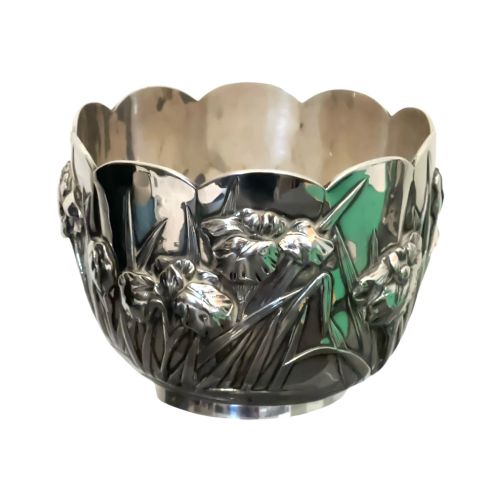
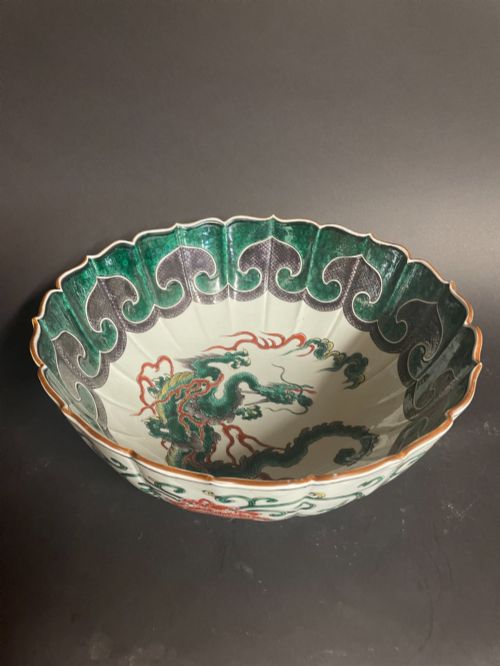
A japanese centrepiece bowl is a large decorative vessel designed to sit centrally on a table or surface, drawing the eye with detailed ornamentation. The examples gathered here span the nineteenth century, the Meiji period, and the Edo period, reflecting distinct eras of design.
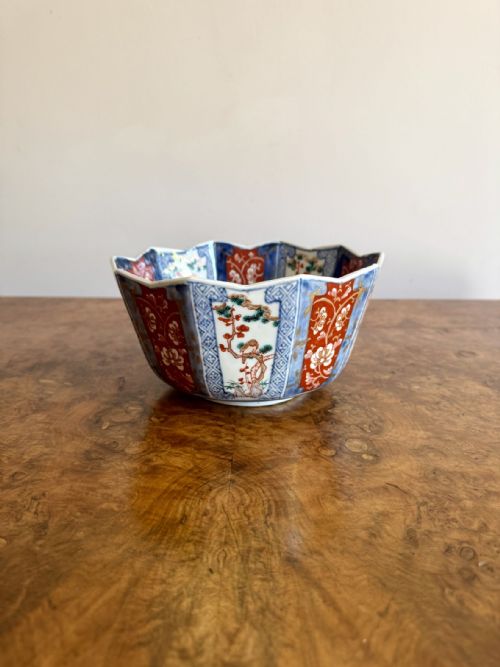
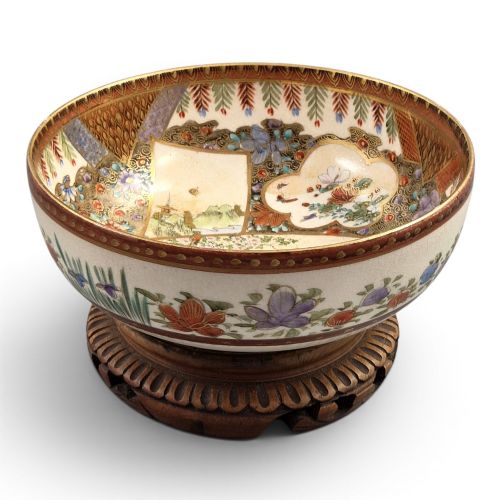
Most pieces encountered on this page belong to the Imari porcelain tradition or feature the intricate hand-painted designs of Satsuma earthenware. Export pieces made for Western markets also appear alongside cloisonne enamel and metalwork.
Forms range from scallop-edge porcelain dishes to deep lidded cloisonne bowls and monumental Kyoto earthenware pieces. Collectors select them for their decorative presence and the depth of their historic decoration.
Materials and Construction
Potters shaped porcelain and earthenware on the wheel or in moulds before firing the clay at high temperatures. Artisans then applied underglaze and overglaze pigments, often incorporating gold leaf to catch the light.
Cloisonne enamel bowls required copper or brass bodies fitted with thin metal wires that formed cells for coloured enamel pastes. Subsequent firings and polishings created smooth surfaces filled with floral and avian motifs.
The selection includes Imari porcelain, Satsuma earthenware, and copper-bodied cloisonne enamel pieces spanning the 19th and early 20th centuries.
Assessing Quality
The fineness of the painting dictates much of the appeal, with master artists achieving remarkable detail in samurai figures, peonies, and millefleur patterns. Signed works by makers such as Kozan, Ryuzan, or Kinkozan command particular attention for their artistic execution.
The condition of the enamel, glaze, and gilding determines the preservation of the piece. Crisp wirework in cloisonne and clean, vibrant underglaze blues on porcelain indicate superior workshop standards.
Kozan·Ryuzan·Kinkozan·François-Eugène Rousseau
The Japanese Centrepiece Bowl Glossary
- Imari
- A style of Japanese porcelain featuring a distinctive palette of underglaze blue, iron red, and gold. It gained immense popularity in Europe during the export eras.
- Satsuma
- A type of earthenware with a crackle-glaze finish, typically decorated with elaborate polychrome enamels and gilding. These pieces frequently depict historic figures, battles, or dense floral fields.
- Cloisonne enamel
- A decorative technique where metal wires are soldered to a copper or brass base to create compartments filled with enamel paste. The vessel is then fired and polished to a smooth finish.
- Meiji Period
- The era in Japanese history lasting from 1868 to 1912, marked by the opening of trade with the West and a flourishing of export arts. Many large decorative bowls originate from this time.
- Mon
- A Japanese emblem or crest used to identify families or clans, such as the Shimazu mon found on Satsuma ceramics. These heraldic symbols add historic context to the decoration.
Japanese Centrepiece Bowl: Frequently Asked Questions
What is the difference between Imari and Satsuma?
Imari is a hard porcelain characterised by cobalt blue and iron red paint, often accented with gold. Satsuma is an earthenware body featuring a pale, crackled glaze painted with intricate figural scenes.
Each ceramic type requires a different firing method and offers a distinct visual texture. Imari provides a ringing porcelain sound and glassy finish, while Satsuma presents an opaque, stone-like surface.
Where should I display a large centrepiece bowl?
Place the bowl on a sturdy dining table, sideboard, or entrance hall console where its scale and colours can be appreciated. Ensure it sits safely away from high-traffic edges.
Good lighting enhances the metallic details of gold leaf and the fine lines of cloisonne wirework. Natural indirect light works best to reveal subtle glaze variations.
How do I care for antique enamel bowls?
Dust the surface gently with a soft, dry cloth and avoid using chemical cleaners or abrasive materials. Moisture can damage exposed metal and vulnerable earthenware bodies.
Keep the piece out of direct sunlight to prevent the fading of delicate enamel colours. Handle the bowl with clean hands and support the base fully when moving it.