



Japanese Painted Punch Bowl
A Japanese painted punch bowl brings centuries of ceramic artistry and vibrant colour straight to the dining table or display centrepiece.
Japanese Painted Punch Bowl
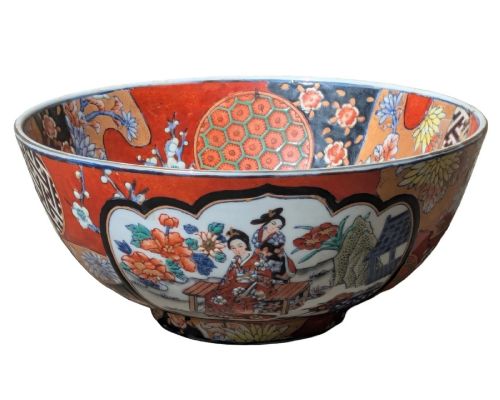
A japanese painted punch bowl encompasses large decorative vessels originating from distinct eras of Japanese ceramic production. Buyers examining this page encounter pieces ranging from seventeenth-century Genroku examples to nineteenth-century Meiji and Edwardian export wares.
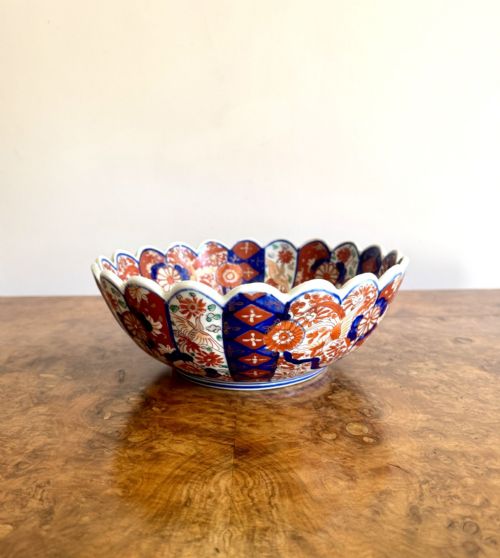
The dominant aesthetic centres on Japanese Imari porcelain, typically featuring scalloped edges and deep decorative bowls. Alongside Imari, large Satsuma earthenware bowls appear in the listings, bringing distinct regional palettes to the category.
Materials and construction
Potters built these vessels using porcelain or earthenware bodies shaped into large decorative bowls. Skilled hands applied glaze and cobalt blue pigments before high-temperature firing set the foundation of the design.
Artisans then added layers of enamel and gold leaf or gilding to enrich the surface pattern. This meticulous secondary decoration defined the traditional export style seen across the nineteenth and twentieth-century pieces.
Materials recorded across the inventory include porcelain, earthenware, cobalt blue, enamel, glaze, gold leaf, and gilding.
Assessing quality and craftsmanship
Superior examples display precise control in the cobalt blue underglaze and the application of enamel and gold leaf. The crispness of the scalloped edge and the balance of the painted motifs distinguish finer studio production from standard export pieces.
The weight, clarity of the porcelain or earthenware body, and the depth of the glaze also mark the distinction between ordinary vessels and exceptional centrepieces. Age alone does not determine merit; the skill of the brushwork remains the primary indicator.
Ryuzan
The Japanese Painted Punch Bowl Glossary
- Imari
- A traditional style of Japanese porcelain decorated in underglaze blue, iron red, and gold. This palette dominated export wares sent to the West during several centuries.
- Satsuma
- A type of Japanese earthenware featuring a pale, ivory crackle glaze decorated with polychrome enamels and gilding. These pieces were particularly prominent during the Meiji period.
- Meiji Period
- The era in Japanese history spanning from eighteen sixty-eight to nineteen twelve, marked by a massive expansion of decorative arts exported internationally.
- Edo Period
- The period of Japanese history lasting from sixteen hundred and three to eighteen sixty-seven, encompassing foundational eras of ceramic development like the Genroku years.
- Gilding
- The application of gold leaf or gold powder to the surface of a ceramic vessel. It highlights specific decorative motifs and adds richness to the finished bowl.
Japanese Painted Punch Bowl: Frequently Asked Questions
What is a Japanese painted punch bowl used for?
Historically, these large vessels served practical functions for serving punch at large gatherings and formal dining tables. Today, collectors primarily utilise them as standalone decorative centrepieces or display bowls.
Their substantial scale and intricate painted surfaces make them striking focal points in a room. Many owners place them on sideboards or tables to showcase the historic craftsmanship.
How do I date a Japanese Imari bowl?
Dating relies on examining the characteristics of the porcelain body, the depth of the cobalt blue, and the specific palette of the enamel and gilding. Earlier seventeenth-century pieces differ noticeably in weight and brushwork from nineteenth-century Meiji or Edwardian exports.
Stylistic cues such as scalloped edges and floral or geometric panel layouts also provide clues to the era of production. Comparing the piece to documented examples helps narrow down the decade of manufacture.
How do I care for an antique bowl?
Gentle handling is essential, particularly with pieces featuring delicate enamel work and gold leaf highlights. Dusting with a soft, dry cloth protects the glazed surface from unnecessary wear.
Keep these bowls away from direct sunlight and moisture to preserve the integrity of the antique pigments. Hand washing in warm water should only occur when strictly necessary, avoiding harsh detergents.