




Japanese Bronze Bowl
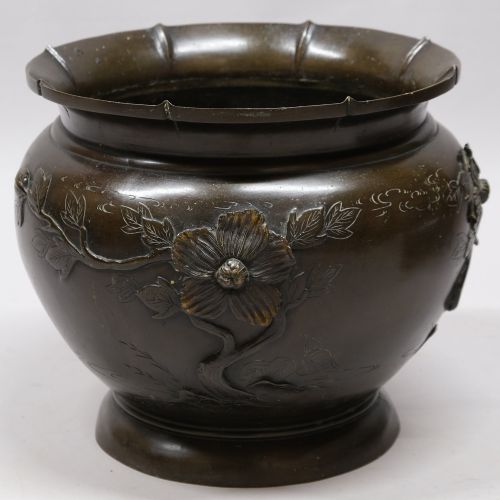
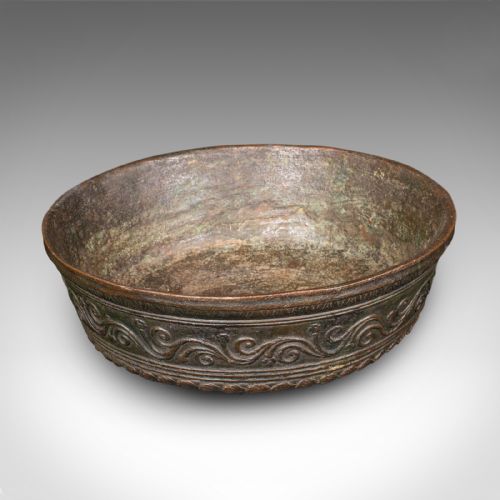
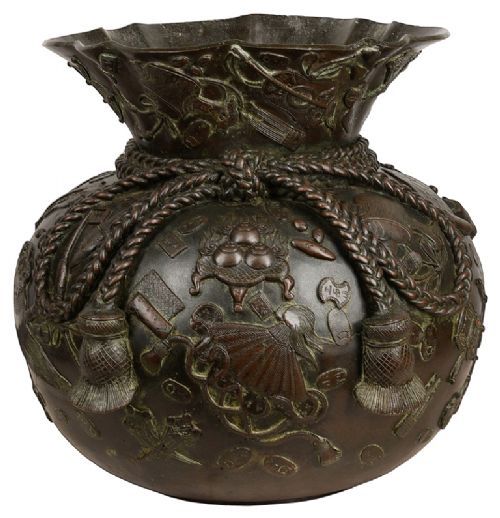
A japanese bronze bowl brings distinct 19th-century craft into a room, offering weight and deep patination.
Japanese Bronze Bowl
A japanese bronze bowl on this page usually appears as a substantial jardiniere, planter, or censer originating from the Edo or Meiji periods. These vessels range from domestic decorative bowls to heavy garden planters designed to hold plants or incense.
Most examples date to the nineteenth century, reflecting the dynamic metalwork production of the Meiji period alongside earlier Edo traditions. Buyers frequently encounter forms intended for botanical display, such as large jardinieres supported by figural bases.
The historical scope spans from the early eighteenth century through the early twentieth century, encompassing both restrained archaic forms and ornate decorative vessels. Pieces arrive in various weights and diameters, suiting tabletops or floor placements.
Materials and construction
Makers utilised bronze, copper, and brass alloy to cast these substantial vessels, often incorporating patinated finishes to achieve dark, rich surface tones. Some pieces integrate copper wire and enamel work, particularly champleve or cloisonne techniques, to form detailed surface decoration.
Construction methods rely on traditional metal casting, finished with hand-chiselled details such as dragons, figural monkey supports, or Buddhist motifs. Wood stands occasionally accompany the bowls, providing a stable base for display.
Listings feature bronze, copper, and brass alloy vessels spanning the Edo and Meiji periods.
Evaluating quality and execution
Quality rests upon the crispness of the cast details, such as the depth and definition of dragons or figural supports, and the stability of the vessel walls. Superior pieces display deliberate patination and balanced proportions rather than flat, uniform surfaces.
The integration of secondary materials like enamel or brass wire distinguishes finer examples, where the inlay remains flush and secure within the bronze body. Weight and wall thickness further separate robust exhibition pieces from lighter domestic wares.
The Japanese Bronze Bowl Glossary
- Jardiniere
- A large ornamental pot or bowl intended for holding plants or flowers. These vessels often feature heavy cast bronze walls and wide rims.
- Meiji Period
- The era in Japanese history spanning from 1868 to 1912, noted for a surge in export metalwork and refined bronze casting. Pieces from this time frequently display naturalistic motifs like dragons and monkeys.
- Edo Period
- The period lasting from 1603 to 1867, characterised by distinct traditional craftsmanship and archaic vessel forms. Items from this era often show simpler, more restrained patination.
- Cloisonne
- A technique where enamel is applied within compartments created by soldering flat metal wire onto a bronze or copper base. This method produces colourful, patterned surfaces.
- Censer
- A vessel designed for burning incense during ritual or domestic use, often featuring pierced lids and tripod supports.
Japanese Bronze Bowl: Frequently Asked Questions
What is a japanese bronze bowl used for?
These vessels originally served practical or ritual functions, acting as planters for large botanicals, censers for burning incense, or decorative display pieces within traditional interiors.
Today, collectors utilise them as striking centrepieces, interior planters, or standalone decorative objects that anchor a room's design.
How do I tell Edo period from Meiji period?
Edo period pieces typically exhibit restrained archaic forms and simpler surfaces dating before 1868, reflecting traditional aesthetics.
Meiji period examples, produced after 1868, frequently display highly detailed cast decoration such as dragons, figural monkey supports, and more complex patination.
Are these bowls heavy?
Many of these vessels are substantial cast metal objects, with larger jardinieres weighing several kilograms due to thick bronze walls.
This weight provides natural stability when holding plants or standing on heavy wooden furniture.
Can I put plants directly inside?
While many examples were built as jardinieres and planters to hold botanical displays, metal bowls can react to prolonged moisture.
Using a protective liner inside the vessel preserves the interior bronze surface and original patina over time.