




Japanese Bronze Decorative Vessel
These japanese bronze decorative vessel examples bring weight and intricate metalwork to a room, offering both sculptural presence and traditional craftsmanship.
Japanese Bronze Decorative Vessel
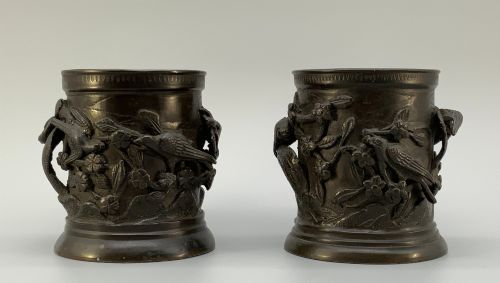
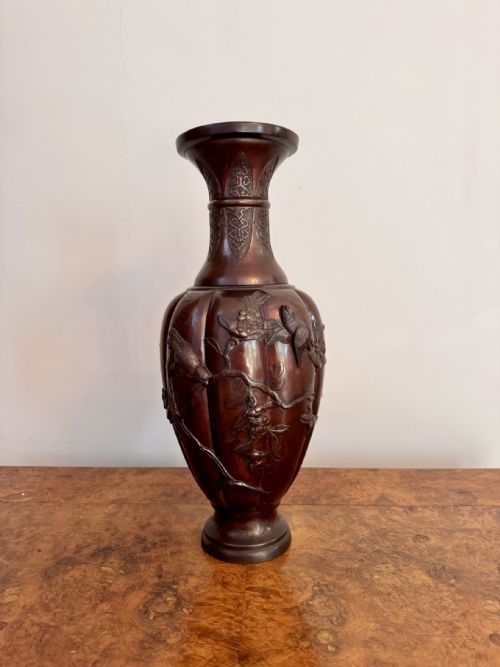
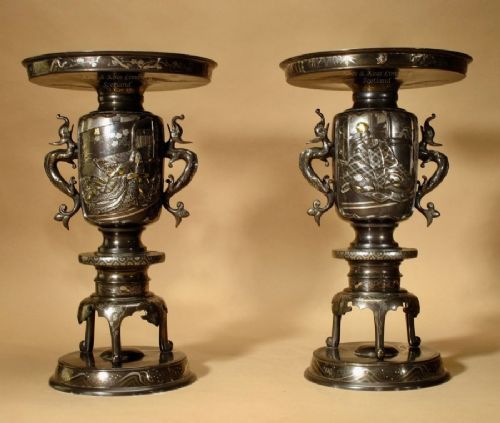
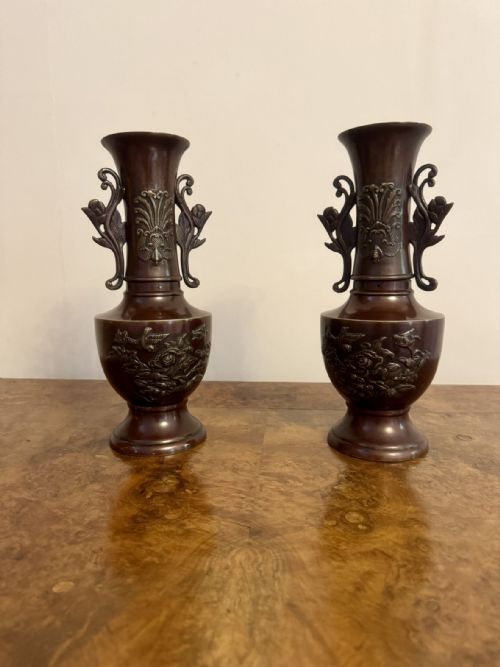
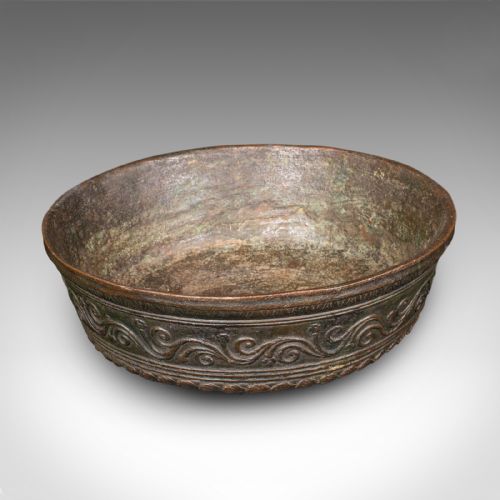
A japanese bronze decorative vessel encompasses a variety of forms including vases, jardinières, incense burners, and decorative bowls intended for display. These pieces frequently emerge from the Meiji and Edo periods, reflecting the shifting aesthetic priorities of Japanese metalworkers over centuries. Collectors encounter pairs of twin-handle baluster vases, substantial planters, and small posy vessels designed to hold floral arrangements or stand alone as objects of art.
The objects span multiple eras, with nineteenth-century Meiji examples appearing most frequently alongside earlier Edo period forms. Makers fashioned these items for both domestic utility and export, adapting traditional vessel shapes to satisfy international demand for oriental decorative arts. Buyers will find variations ranging from modest stem vases to large floor urns.
Vessels on this page often incorporate handles, relief decoration, and specialised patination that signal their origins in Japanese workshops. The forms include amphora-style shapes, cylindrical vases, and deep bowls used as jardinières. Each object maintains a distinct profile shaped by the period of its creation.
Materials and technique
Artisans cast these vessels primarily in bronze, frequently applying chemical treatments to achieve dark, patinated surfaces that highlight the underlying metal. Workshops employed lost-wax casting and related foundry methods to produce hollow forms with consistent wall thickness and stable bases. The resulting metal provides a durable armature for subsequent decorative embellishment.
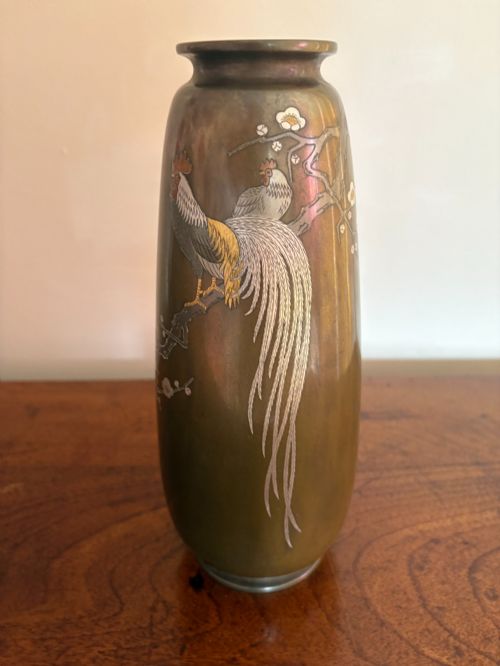
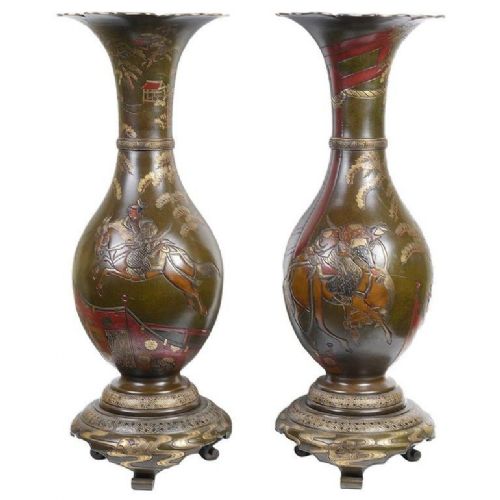
Surface ornamentation relies on contrasting materials such as gold, silver, brass, and enamel inlay set directly into the bronze ground. Craftsmen chased fine lines into the metal to create feathers, foliage, and geometric borders, or applied cloisonné and champlevé enamel techniques to introduce colour. Gold leaf further accents specific motifs on select vessels.
Materials appearing across the inventory include patinated bronze, champlevé enamel, silver, gold leaf, and brass.
What separates the fine from the ordinary
Quality rests in the crispness of the casting and the precision of the inlay work. Finer vessels display deeply rendered relief motifs where feathers, blossoms, and figures possess sharp edges and deliberate detailing rather than soft, muddy outlines. The integration of gold and silver inlay requires exacting hand-skill, and superior examples show no gaps or lifting along the metal seams.
The richness and depth of the bronze patina also distinguish better pieces. A controlled, uniform chemical finish enhances the form without obscuring the fine chasing underneath. Furthermore, balanced proportions and confident signatures or crests elevate certain works above standard production pieces.
KANASAWA·Kizan
The Japanese Bronze Decorative Vessel Glossary
- Meiji Period
- The era in Japanese history spanning from 1868 to 1912, noted for a surge in metalwork exported to Western markets. Pieces from this time often feature elaborate bird and blossom motifs.
- Edo Period
- The period lasting from 1603 to 1867, preceding the Meiji era. Vessels from this timeframe tend to reflect earlier domestic aesthetic traditions.
- Jardiniere
- A large ornamental pot or bowl designed to hold growing plants or flower arrangements. These heavy vessels often feature wide rims and sturdy bases.
- Champleve
- An enamelling technique where troughs or cells are chiselled directly into the bronze surface and filled with enamel paste before firing. This method creates bold, colourful patterns flush with the metal.
- Patinated Bronze
- Metal treated with chemical solutions to produce an aged surface colour ranging from warm brown to deep black. This finish protects the bronze and accentuates decorative relief.
Japanese Bronze Decorative Vessel: Frequently Asked Questions
How do I date a Japanese bronze vessel?
Dating relies primarily on stylistic indicators, manufacturing techniques, and recorded historical periods such as the Meiji or Edo eras. Examination of the patina, the integration of inlay work, and any inscribed signatures help narrow the window of production.
Earlier pieces from the Edo period often display restrained forms, whereas Meiji examples frequently exhibit bolder relief work and complex surface treatments intended for the export market.
What were Japanese bronze vessels used for?
These vessels served both practical and aesthetic functions in Japanese interiors and later in Western homes. Forms like jardinières and planters held greenery, while koro and incense burners diffused scents during gatherings.
Many pieces were created purely as decorative objects, displayed on stands or tables to showcase the metalworker's skill in casting, chasing, and inlay.
How do I care for antique bronze?
Maintenance requires minimal intervention to preserve the original patination and delicate surface inlays. Dusting with a soft, dry cloth prevents particulate buildup without disturbing the metal finish.
Avoid chemical polishes, abrasive cloths, and liquid cleaners, as these can strip away historic patination and damage gold or silver wire inlay.
What is the difference between cloisonne and champleve?
Cloisonné involves soldering thin metal wires onto the bronze surface to form compartments, which are then filled with enamel paste and fired. This technique produces intricate, linear patterns across the vessel body.
Champlevé relies on gouging or carving the design directly into the solid bronze to create recessed channels for the enamel, resulting in bolder, more integrated surface designs.