
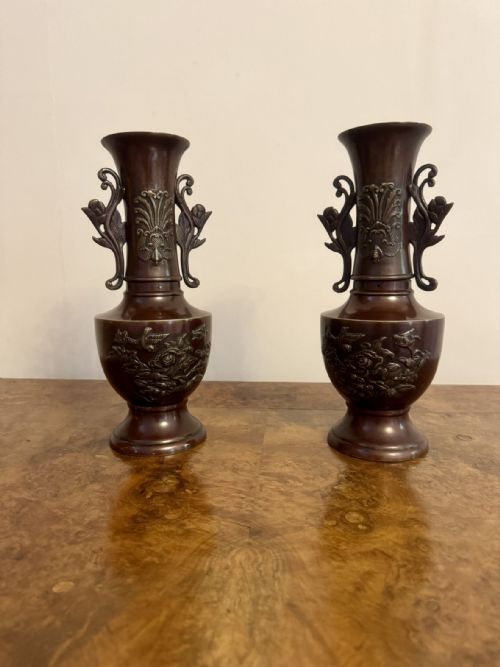


Japanese Bird Motif Vase
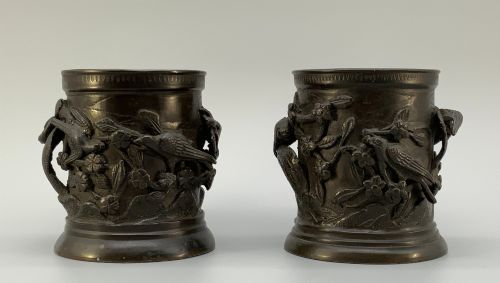
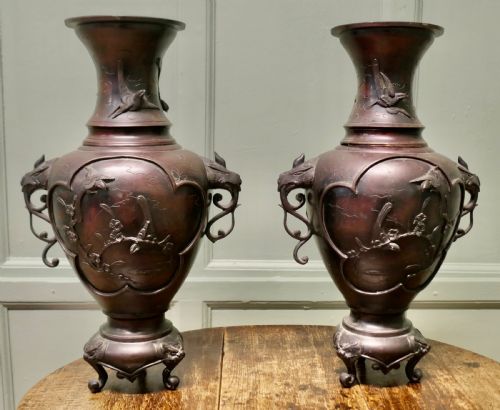
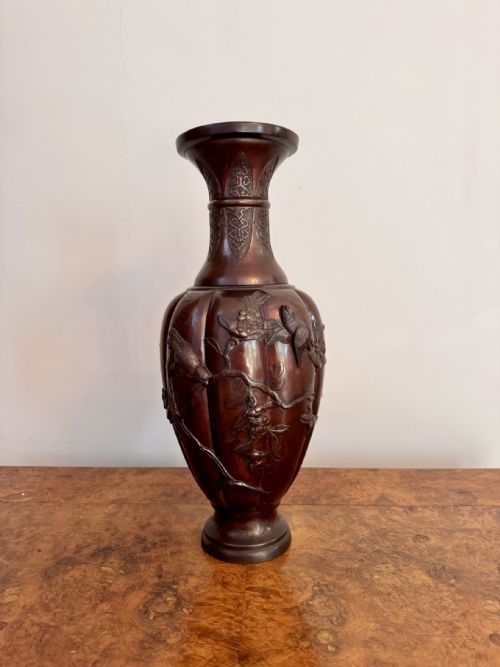
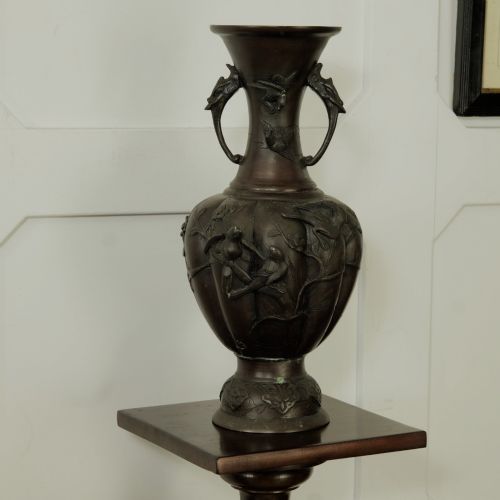
These japanese bird motif vase pieces bring the quiet detail of Meiji craftsmanship and Victorian taste straight into a room.
Japanese Bird Motif Vase
A japanese bird motif vase typically appears as a bronze vessel or a porcelain piece originating from the late nineteenth century and the early twentieth century. Most examples belong to the Meiji period, reflecting the decorative styles popular during the Victorian era and slightly beyond.
Buyers will find single vessels alongside matched pairs, ranging in scale from modest stem vases to large floor pieces. Bronze forms frequently feature birds and blossom, while ceramic alternatives draw upon Satsuma, Kutani and Fukagawa traditions.
How they were made
Bronze vessels are cast and often patinated, sometimes incorporating fine detail through applied elements or contrasting metallic finishes. Porcelain and earthenware pieces utilise traditional potting techniques paired with detailed enamel work, glaze and occasional lacquer over-paint.
Studio pottery and specific workshops employ specialised firing and hand-painting methods to achieve their distinct surfaces. Gold leaf accents also appear on select ceramic surfaces to enhance the avian and floral designs.
Materials recorded across the inventory include bronze, porcelain, earthenware, enamel, glaze and gold leaf.
What varies in quality
Quality rests upon the crispness of the casting in bronze examples and the precision of the hand-painting upon ceramics. Stronger pieces display deliberate proportions, confident handling of motifs like birds and blossom, and well-executed patination or glaze.
Makers and workshops of note achieve a higher degree of refinement in their finished surfaces. Ordinary items show simpler decoration, whereas superior examples demonstrate greater ambition in scale and ornamental depth.
Makuzu Kozan II·Kinrin Workshop·Gerbing and Stephan·Fukagawa
The Japanese Bird Motif Vase Glossary
- Meiji Period
- The period of Japanese history spanning from 1868 to 1912, characterised by opening trade with the West and exceptional metalwork and ceramics. Pieces from this era often feature naturalistic bird and floral motifs.
- Patinated Bronze
- Metalwork treated with chemical solutions or heat to produce a stable surface colour or finish. This technique highlights the sculpted details of birds and foliage.
- Satsuma
- A type of Japanese earthenware featuring a pale, cracked ivory glaze decorated with enamels and gilding. These ceramics are frequently associated with intricate pictorial scenes.
- Kutani
- Japanese porcelain or pottery originating from Kaga province, known for bold colour palettes and detailed overglaze painting. Birds and natural subjects are common themes in this tradition.
Japanese Bird Motif Vase: Frequently Asked Questions
What materials are these vases made from?
The selection includes cast bronze, patinated bronze, porcelain, earthenware and ceramic. Various examples also incorporate enamel, glaze, gold leaf and lacquer over-paint.
Bronze dominates the offerings, particularly from the Meiji period, while ceramic options bring traditional Satsuma, Kutani and Fukagawa styles to the surface.
Are these vases usually found in pairs?
Many of the bronze and porcelain pieces are indeed offered as matched pairs, particularly larger nineteenth-century examples. Single vessels also appear frequently across the listings.
Pairs tend to originate from the Meiji period and were designed for symmetrical display on mantelpieces or pedestals during the Victorian era.
How do I identify a Meiji period piece?
Meiji period items date from between 1868 and 1912, coinciding with the Victorian era in Britain. They typically exhibit confident bronze casting or detailed ceramic painting featuring birds and blossom.
Workmanship from this era often reflects the influence of international exhibitions and traditional Japanese craft guilds adapting to Western tastes.
How should I display a heavy bronze vase?
Heavy bronze vessels require a stable, level surface capable of supporting considerable weight, such as a sturdy sideboard or a dedicated column. Placing them away from high-traffic walkways protects both the piece and surrounding furniture.
Because many feature delicate patination or twin handles, keeping them clear of direct sunlight and moisture preserves the finish.