
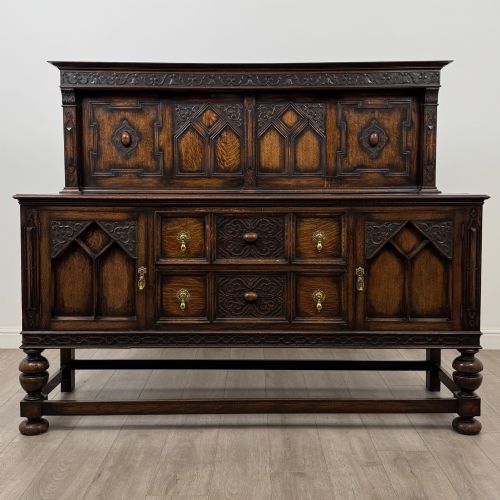
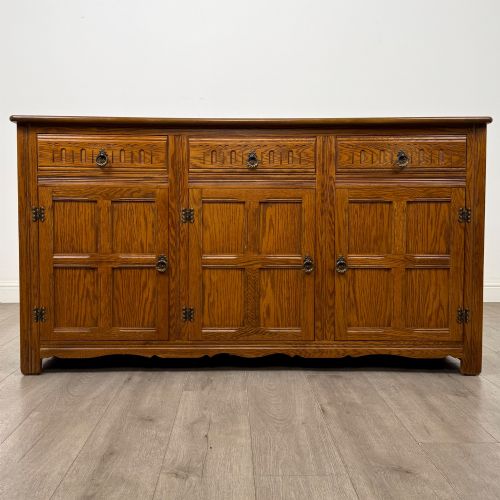
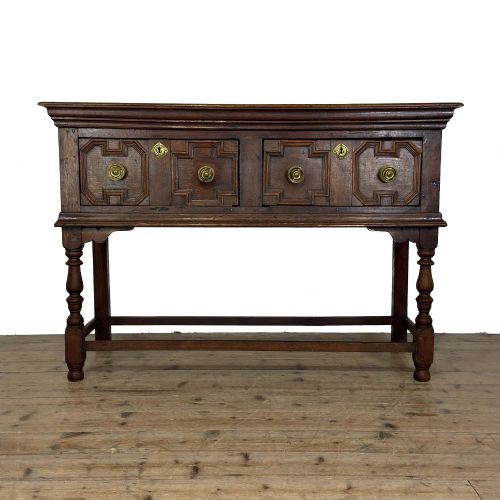
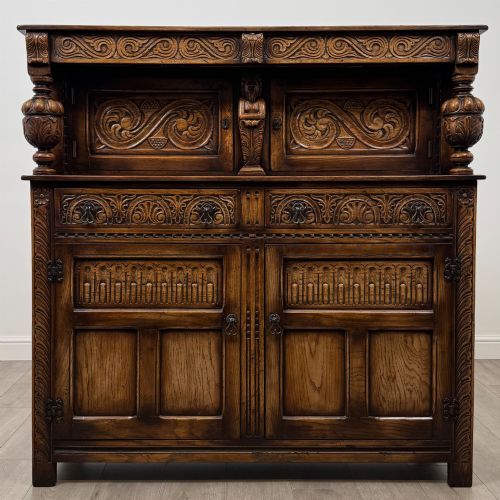
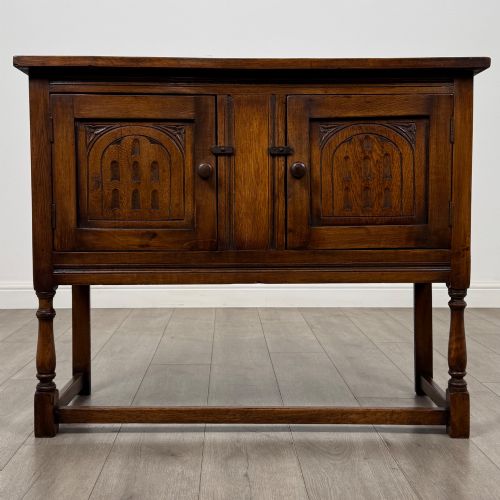
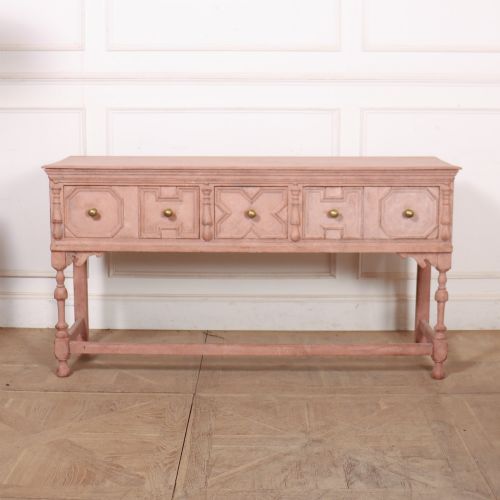
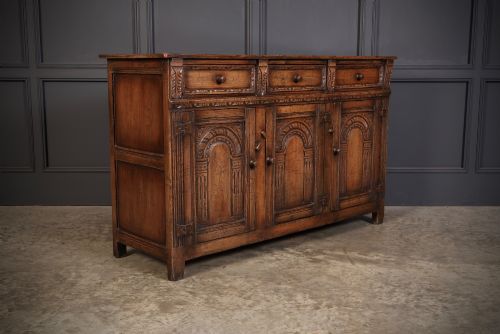
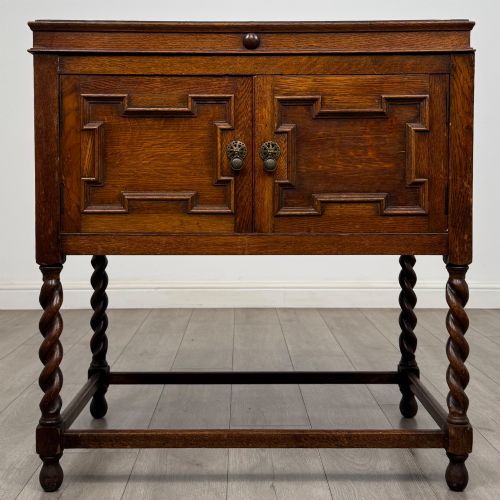


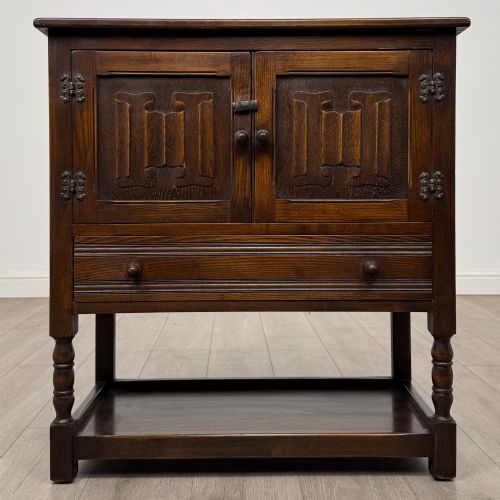
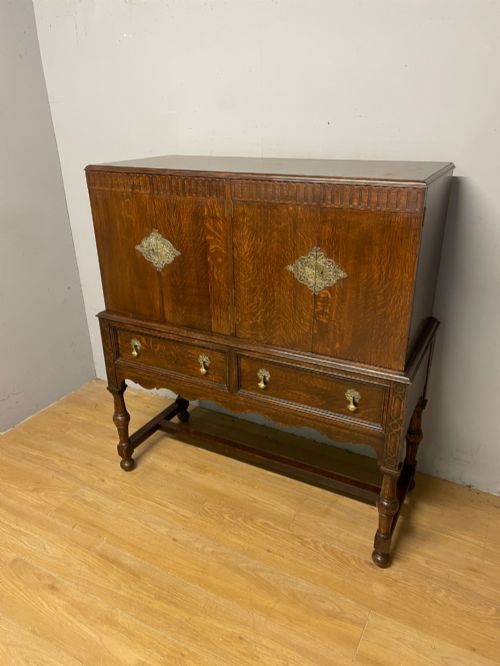
Jacobean Style Oak Sideboard
These jacobean style oak sideboard pieces combine sturdy timber storage with historic revival carving, bringing seventeenth-century weight into domestic rooms.
Jacobean Style Oak Sideboard
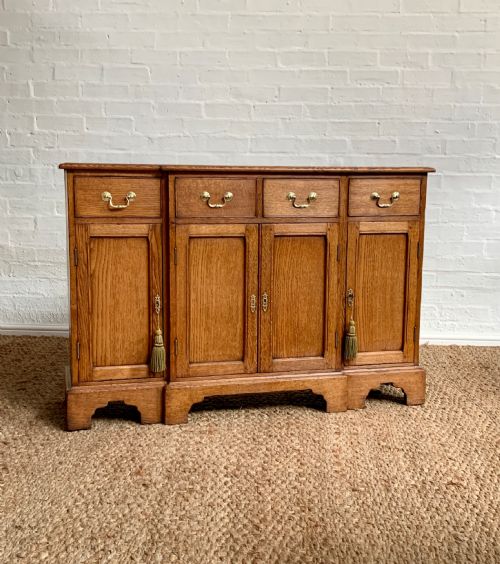
A jacobean style oak sideboard appears in forms such as court cupboards, dresser bases, and side cabinets originating predominantly from the twentieth century, Edwardian era, nineteenth century, and seventeenth century.
The pieces on this page lean heavily toward Edwardian and 1920s revivals, alongside earlier vernacular furniture like Welsh dressers and cottage livery cupboards.
Buyers seeking this phrase will encounter sturdy timber cabinetry designed for dining rooms and halls, featuring foundational storage inherited from seventeenth-century forms.
Craftsmanship and Proportion
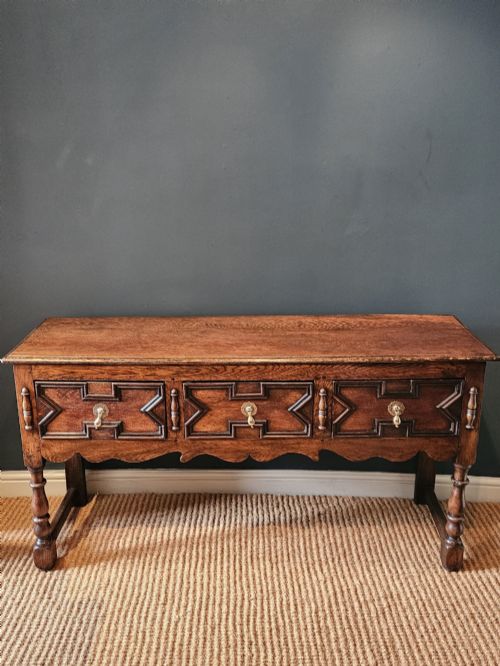
Quality rests in the depth and crispness of the carved details, from geometric drawer fronts to elaborate court cupboard panels.
Proportion and timber selection dictate the success of the piece, separating standard revival furniture from finely balanced examples.
Listings span centuries from original 17th-century pieces to Edwardian and 1930s revival interpretations.
The Jacobean Style Oak Sideboard Glossary
- Court cupboard
- A heavy enclosed wooden cabinet featuring an upper section supported by pillars, typically used for displaying plate.
- Dresser base
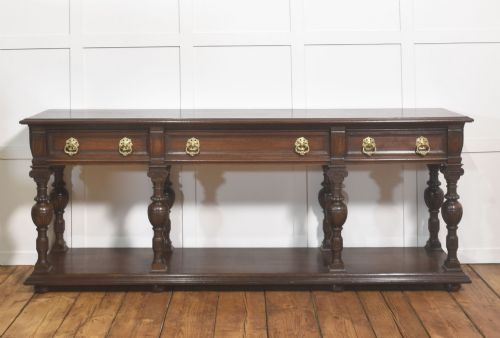
- A low wooden sideboard fitted with drawers and frequently a potboard shelf beneath for storing serving vessels.
- Barley-twist
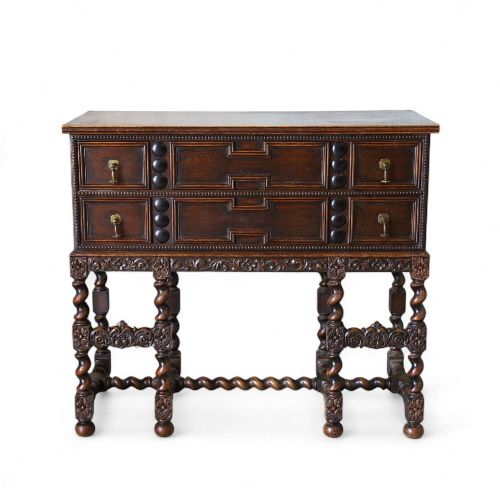
- A spiral turning technique used on table legs and furniture supports during seventeenth-century and revival periods.
- Linenfold
- A style of wood carving that imitates folded fabric, popular on panelled cabinet doors.
- Geometric moulding
- Raised wooden profiling applied to drawer fronts and doors to create structured, panelled patterns.
Jacobean Style Oak Sideboard: Frequently Asked Questions
What is a jacobean style oak sideboard?
These pieces are heavy wooden storage units built with revival styling that echoes seventeenth-century English joinery. They function as dining room servers or hallway cabinets.
Most examples found here date from the Edwardian period or the 1920s, utilising solid oak and traditional carving methods to mimic older forms.
How were these sideboards used originally?
Historically, these cabinets stored dining utensils, serving platters, and dry goods within domestic dining rooms and halls. The top surface served to display plates or food before serving.
Cupboard sections kept valuable tableware secure, while open bases held heavy pots and platters.
Where should I place a court cupboard?
Court cupboards suit dining rooms, large hallways, or living spaces with sufficient wall clearance to accommodate their heavy proportions. Their enclosed shelving offers practical concealment for modern tableware or media equipment.
Keep them away from direct heat sources to protect the solid timber construction.
How can I tell the period apart?
Seventeenth-century originals display hand-split timbers, pegged joints, and darker patination developed through centuries of use. Revival pieces from the Edwardian era or 1920s often feature machine-sawn components and brighter golden or bleached oak finishes.
Examining the drawer construction and interior timber helps clarify the manufacturing decade.