
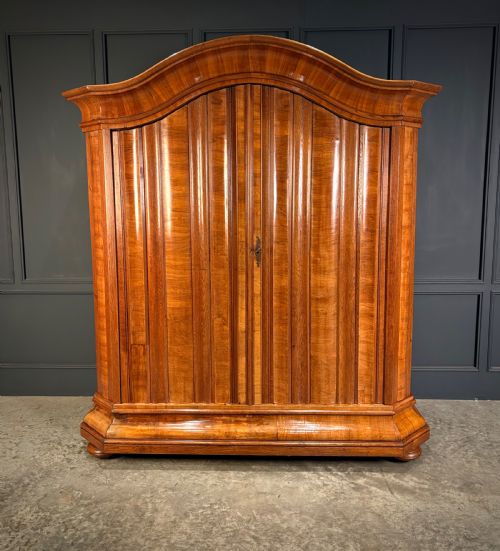
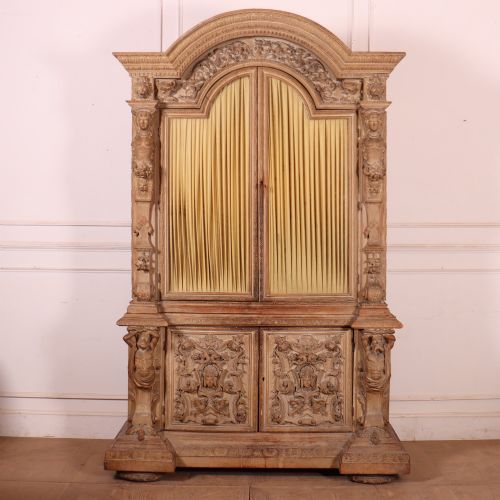


Baroque Oak Cupboard
A baroque oak cupboard brings heavy timber, deep carving and architectural presence into a room.
Baroque Oak Cupboard
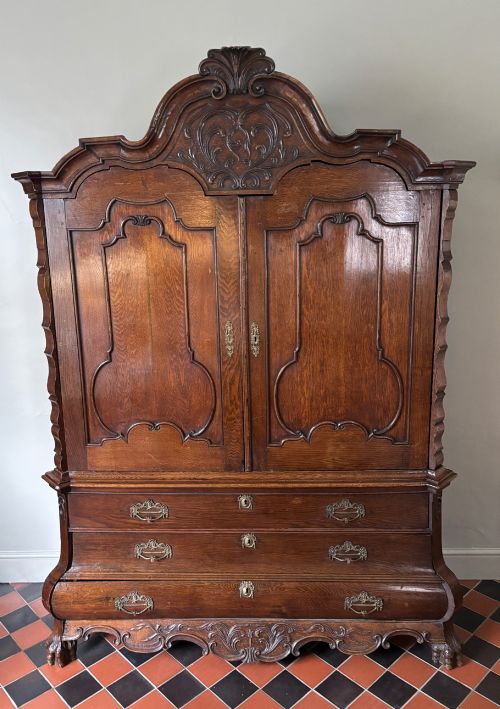
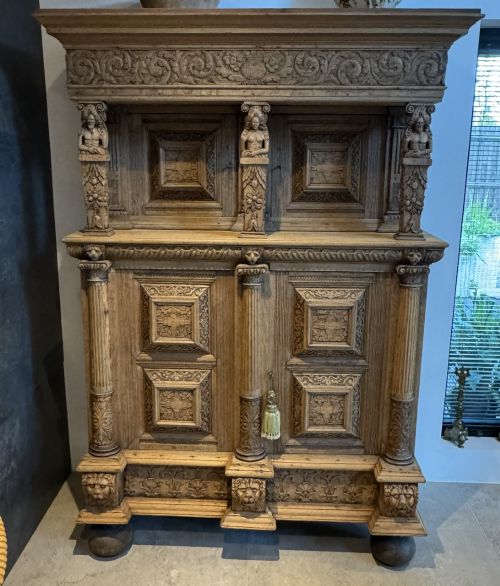
A baroque oak cupboard is a substantial storage piece shaped by continental European cabinet-making traditions from the seventeenth and eighteenth centuries. These items appear in forms such as linen presses, armoires, tall kasten, and smaller table cabinets designed for domestic use. The examples seen here span seventeenth-century origins through to Victorian interpretations of continental styles, showing heavy architectural frames and panelled doors.
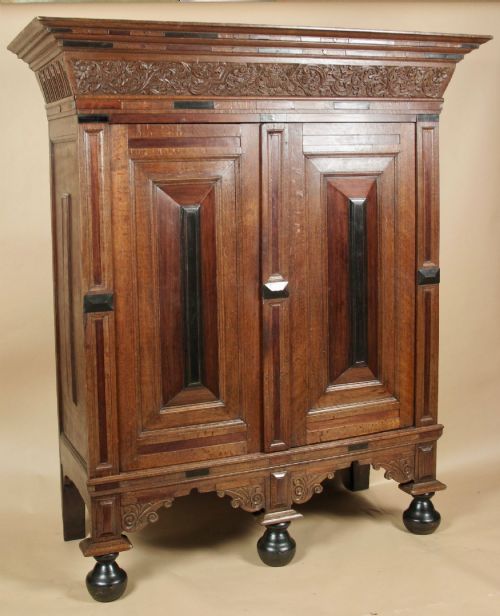
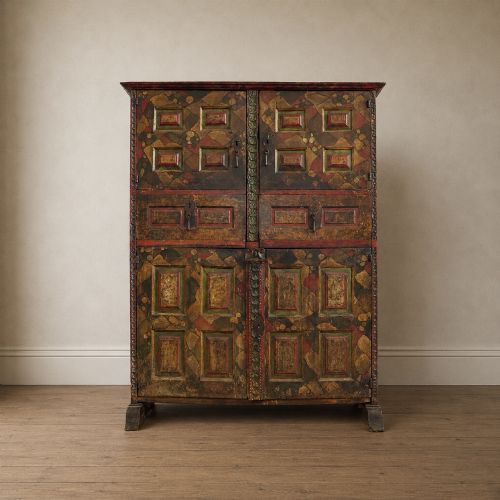
The version most commonly met on this page is the large Dutch or Flemish linen press and armoire, frequently augmented with contrasting mouldings. Spanish and Italian influences also emerge through polychrome paintwork and carved details, demonstrating the diverse regional interpretations of the baroque aesthetic across Europe. Buyers select these heavy timber pieces to anchor a room with period character and robust storage capacity.
How they were made
Makers built these pieces primarily from solid oak, utilising its strength to support grand architectural proportions, heavy cornices, and deep panelled doors. Cabinet-makers often combined this foundational timber with exotic hardwoods such as rosewood and ebony for applied mouldings, geometric panels, and striking visual contrast.
Surface decoration required specialist techniques, ranging from intricate linenfold and geometric carving to polychrome paintwork applied directly to the wood. Iron and brass hardware, including heavy hinges and large escutcheons, fastened the massive doors and drawers essential to these functional storage vessels.
Listings feature oak, rosewood, ebony, walnut, and iron across seventeenth and eighteenth-century continental forms.
What varies in quality
Quality in a baroque oak cupboard rests on the ambition of its architectural detailing and the crispness of the carved elements. Pieces featuring contrasting timber inlays like ebony and rosewood demonstrate higher levels of specialist craftsmanship than plain timber constructions.
The proportion of the timber and the integration of regional decorative traits, such as Flemish mouldings or Spanish polychrome pigment, separate standard utilitarian storage from master-carved examples of continental baroque design.
The Baroque Oak Cupboard Glossary
- Kast
- A large Dutch or continental wardrobe and linen cupboard. These monumental pieces typically feature deep projecting cornices and substantial panelled doors.
- Armoire
- A tall cupboard used originally for storing weapons or clothing. In baroque forms, these display heavy panel construction and architectural mouldings.
- Polychrome
- Decorated in multiple colours. This technique appears on specific continental pieces, using pigment to highlight carved wooden surfaces.
- Vitrine
- A glass-fronted cabinet designed for displaying objects. Some continental iterations incorporate carved wood frames alongside glazed panels.
- Press Cupboard
- A traditional piece of furniture built with compartments specifically for storing folded linens and textiles. They often incorporate heavy lower drawer bases.
Baroque Oak Cupboard: Frequently Asked Questions
Where were these cupboards made?
These cupboards originate from various continental European regions, with strong representation from the Netherlands, Flanders, Spain, and Italy. Each area applied distinct regional characteristics to the baroque style.
Craftsmen in these different workshops utilised local hardwoods and specific decorative techniques, resulting in distinct regional variations like the Dutch kussenkast or the Spanish painted cupboard.
How do I use one today?
A baroque oak cupboard serves effectively as a primary storage wardrobe, a linen press, or a striking display cabinet in a hallway or reception room. Their robust internal space accommodates modern storage needs while adding distinct historical character.
Placing these heavy items requires careful consideration of wall space and floor strength, as their solid timber construction demands adequate room to command the interior.
How do I tell seventeenth from eighteenth century?
Seventeenth-century pieces typically display heavier geometric mouldings, starker rectilinear forms, and extensive use of contrasting ebony or rosewood panels. The construction relies on robust joinery suited to early baroque proportions.
Eighteenth-century examples often soften these severe architectural lines with more flowing carved elements, lighter panel arrangements, and refined regional flourishes.
What is a kussenkast?
A kussenkast is a large Dutch cupboard renowned for its cushion-moulded panels, which project prominently from the doors and frame. These substantial pieces represent a high point of seventeenth-century continental cabinet-making.
Cabinet-makers constructed them using oak as a primary base, frequently overlaying contrasting exotic woods to accentuate the distinctive cushion profile of the geometric mouldings.