
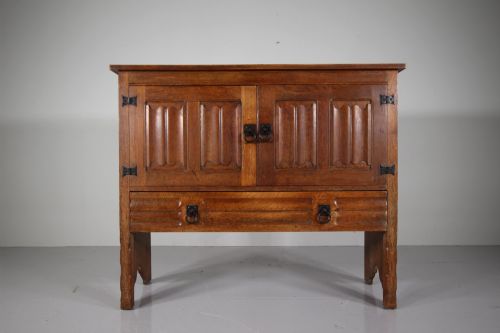
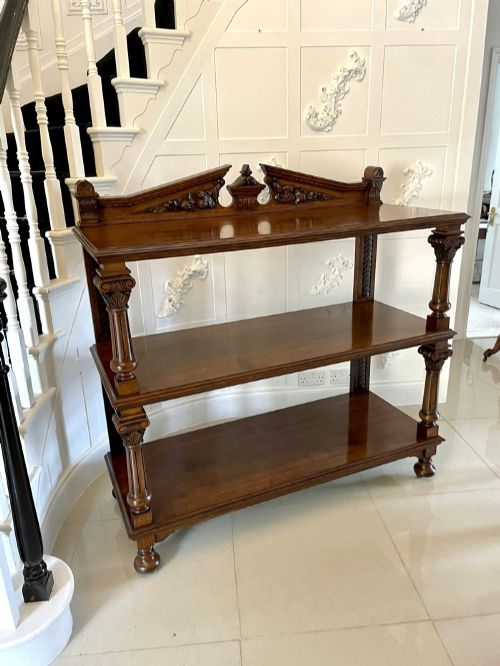
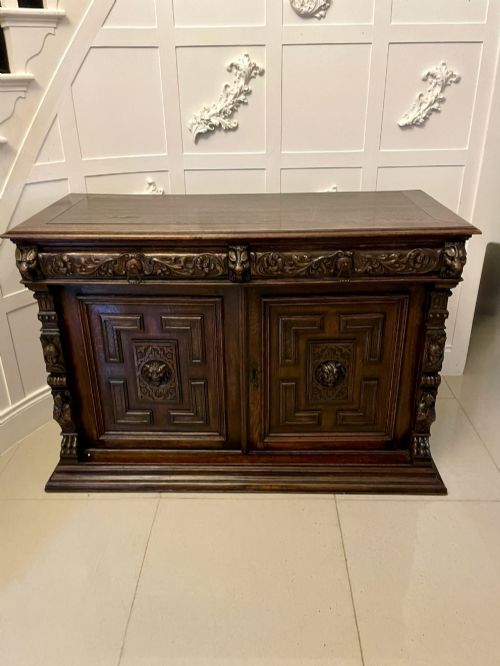
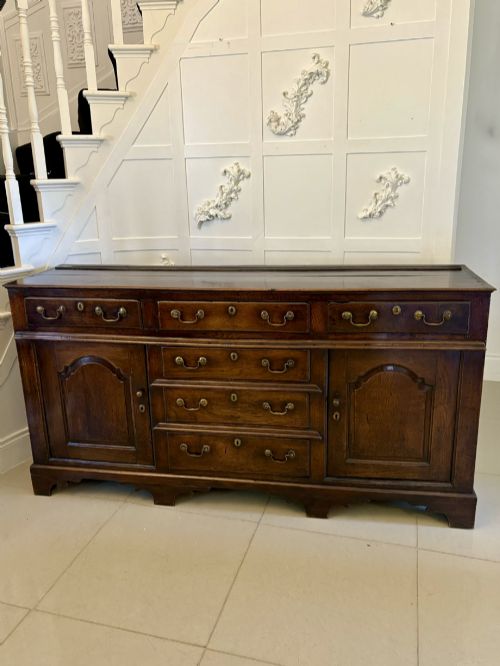
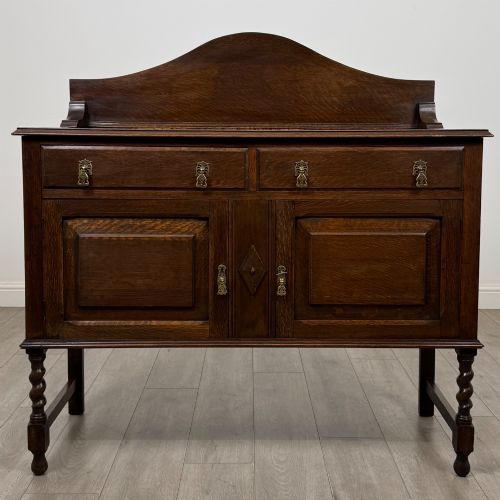
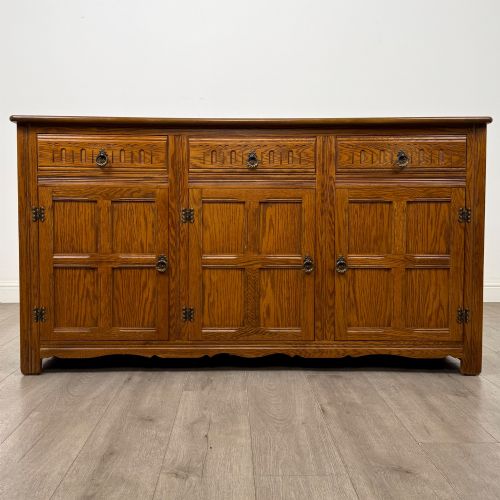
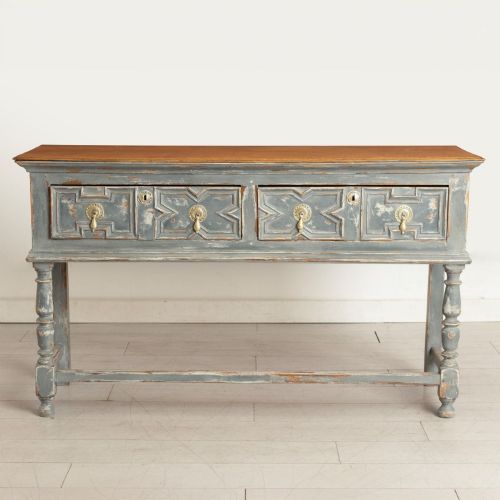
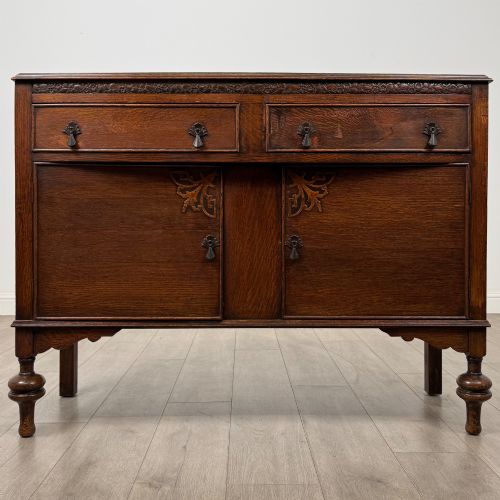
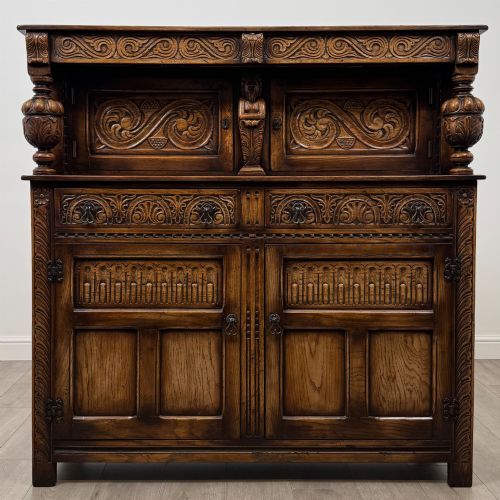
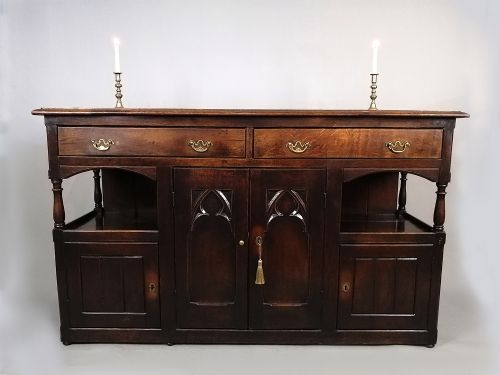
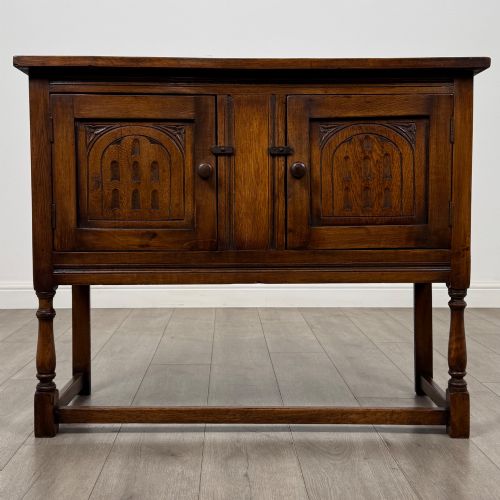
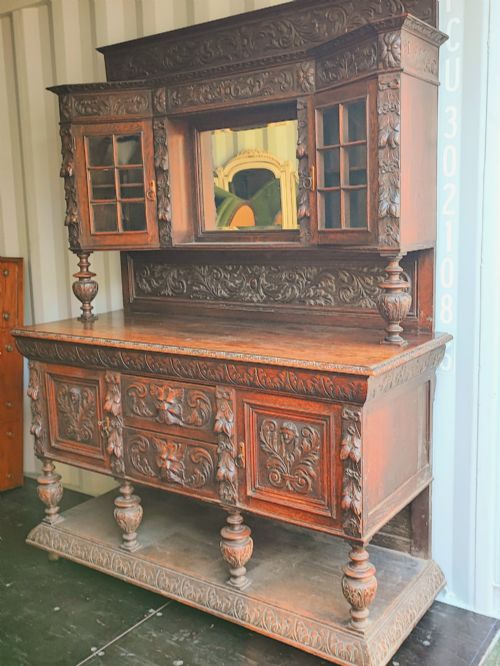
Vintage Oak Buffet Server
A vintage oak buffet server brings solid timber construction and historic storage forms straight into a modern dining room.
Vintage Oak Buffet Server
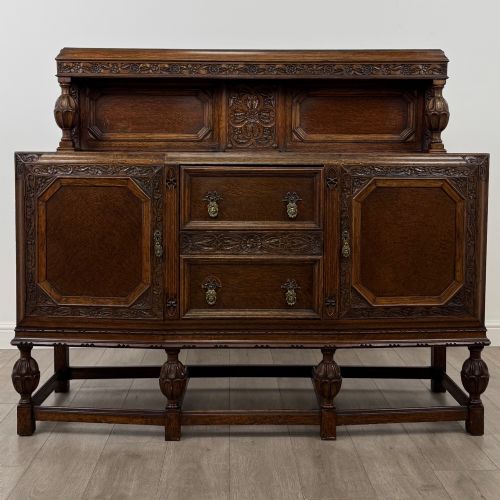
A vintage oak buffet server comprises heavy storage furniture designed for dining spaces, encompassing sideboards, dresser bases, court cupboards and dumbwaiters. These pieces originate from periods spanning the eighteenth, nineteenth and early twentieth centuries.
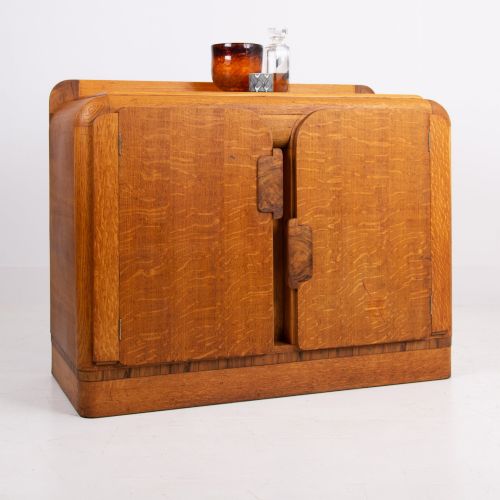
The Edwardian era and the nineteen-twenties provide many of the examples seen on this page, often reflecting revivalist tastes or Arts and Crafts principles. Buyers encounter forms ranging from low cabinet bases with potboards to tall dressers fitted with shelving.
Regional variations include English country pieces, French provincial designs, and Dutch forms, each bringing distinct proportions and carving details to the domestic interior.
Materials and construction methods
Solid oak serves as the primary material, frequently complemented by secondary timbers such as fruitwood or walnut and accented with brass or iron hardware and glass panels.
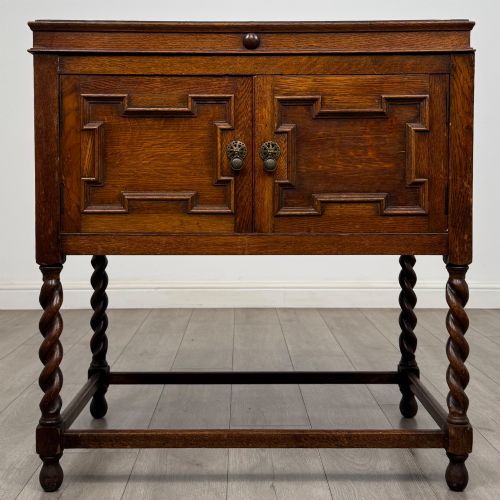
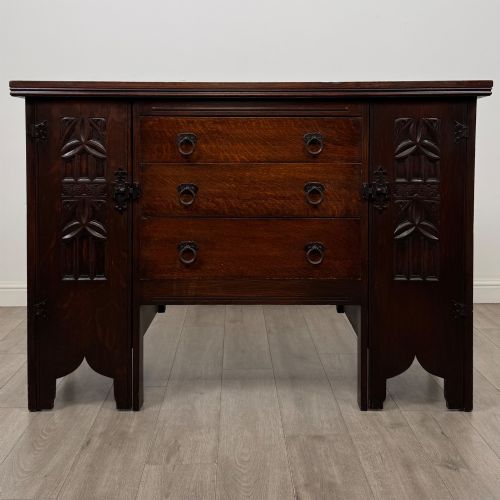
Joinery methods rely on traditional framing and panel construction, often enhanced by hand carving, applied mouldings and turned supports like barley-twist legs.
Keep watch for the occasional carved Green Man peering out from gothic revival foliage.
Judging the standard of execution
Quality rests upon the crispness of the hand carving, the selection of timber grain, and the integrity of the structural joints. Pieces exhibiting well-figured golden or bleached oak with balanced proportions stand apart from simpler utility items.
The refinement of original hardware, smooth drawer action, and the retention of a desirable surface patina distinguish superior examples from ordinary production.
Gomme·Heals of London
The Vintage Oak Buffet Server Glossary
- Dresser base
- A low sideboard or table base fitted with drawers and cupboards below, traditionally used for food preparation and storage.
- Court cupboard
- A heavy enclosed storage cabinet featuring a recessed upper stage supported by pillars, typical of sixteenth and seventeenth-century forms.
- Potboard
- An open slatted lower shelf beneath a dresser base or sideboard, originally intended for storing pots and pans.
- Barley-twist
- A decorative turning style resembling a spiral rope, frequently found on the legs and uprights of nineteenth and twentieth-century furniture.
Vintage Oak Buffet Server: Frequently Asked Questions
What is a vintage oak buffet server used for?
These pieces function primarily as dining room storage for tableware, linen and serving dishes. The flat top surface also serves as a convenient platform for serving food or displaying decorative objects.
Historically, they evolved from simple serving tables and food cupboards into the elaborate sideboard and dresser combinations seen in Victorian and Edwardian homes.
How do I identify an Edwardian oak sideboard?
Edwardian examples frequently exhibit lighter golden oak tones and incorporate revival styles such as Jacobean turning or Arts and Crafts simplicity. Look for lighter hardware and proportions suited to smaller domestic spaces than their heavy Victorian predecessors.
Many pieces from this period utilise barley-twist supports and subtle carved motifs while maintaining a practical, functional layout.
What is the difference between a sideboard and a dresser base?
A sideboard is typically a low cabinet designed strictly for dining room storage and serving, whereas a dresser base often forms the lower section of a larger shelving unit or plate rack.
Dresser bases generally offer deep drawer and cupboard space beneath an open work surface or potboard, originating in earlier centuries for farmhouse kitchens.
How do I care for antique oak furniture?
Maintain oak surfaces by dusting regularly with a soft, dry cloth and avoiding excessive moisture or direct sunlight. Periodic application of natural beeswax helps nourish the timber and preserve the historic finish.
Keep the furniture away from direct heat sources to prevent the solid wood from drying out and splitting over time.