



Carved Oak Clothes Press
These substantial storage pieces offer generous capacity, and a carved oak clothes press brings architectural presence and rich grain to a bedroom.
Carved Oak Clothes Press
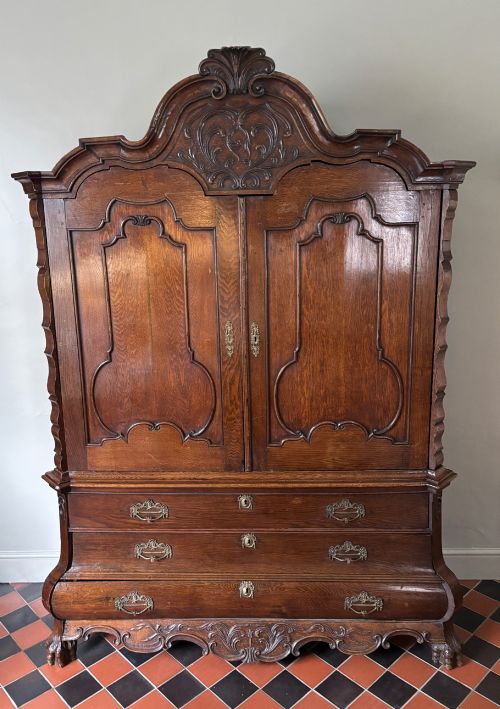
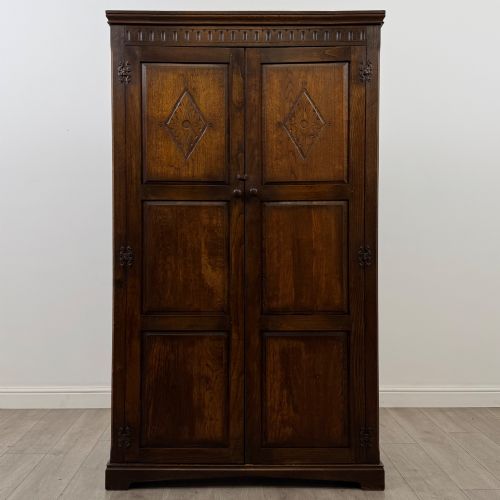
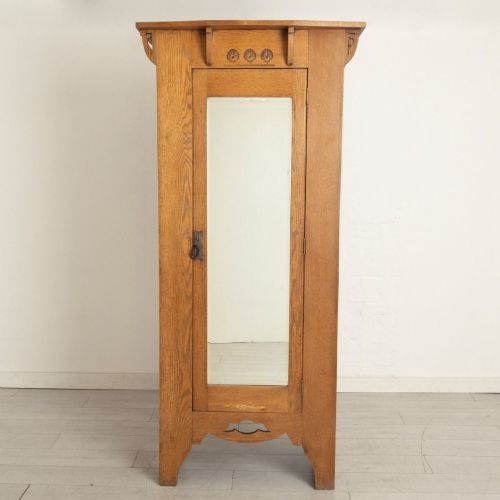
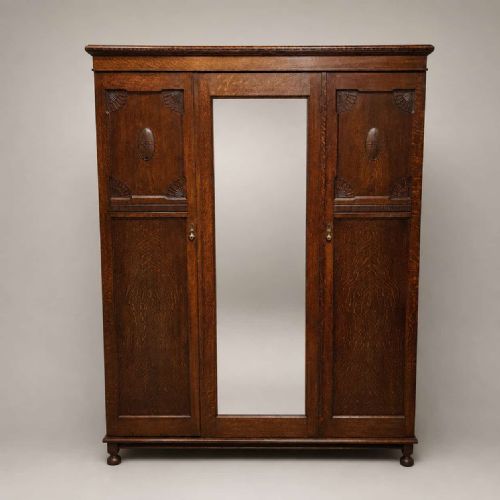
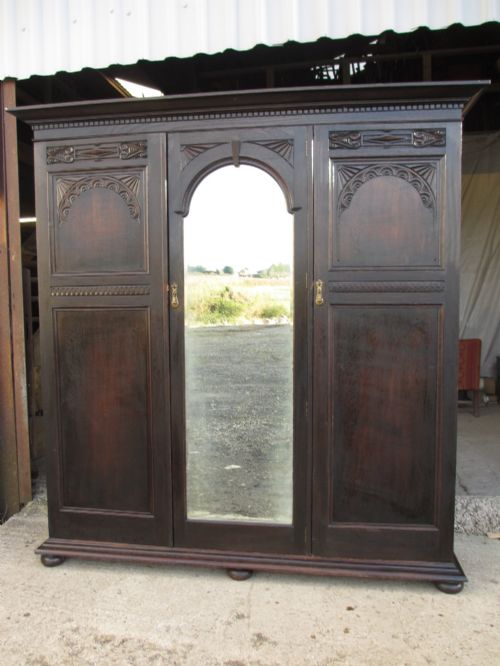
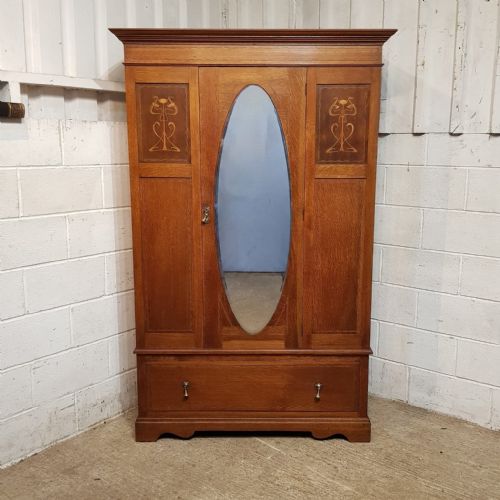
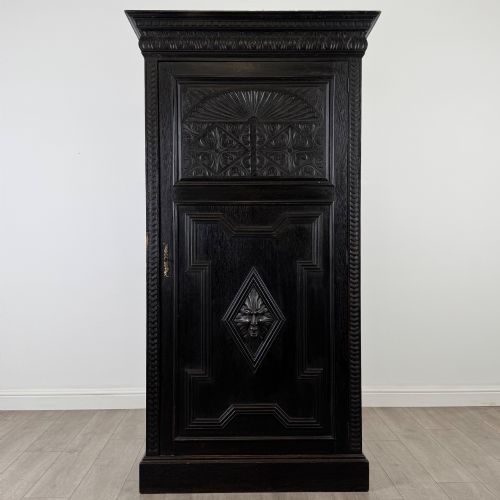
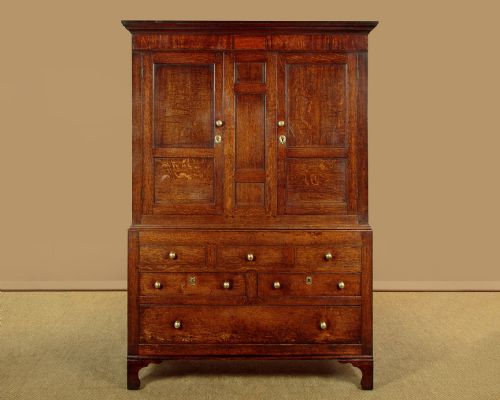
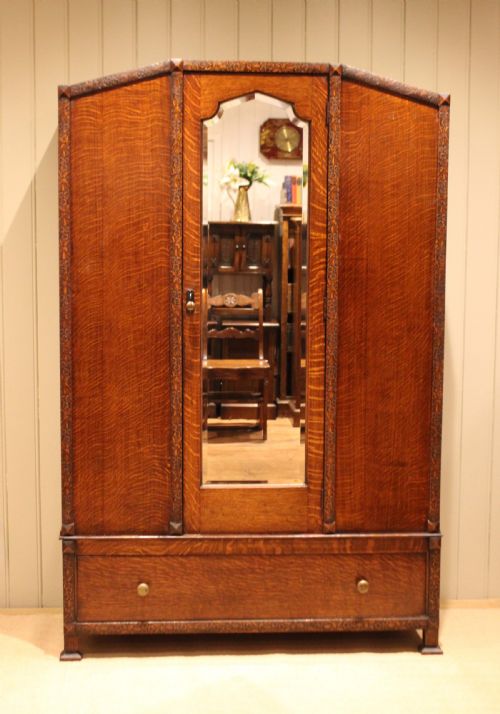
When you search for a carved oak clothes press, you are looking at large storage furniture designed to house linen, garments, and folded apparel. The pieces appearing here span from the 18th century through to the 1920s, encompassing Georgian, Victorian, Edwardian, and Arts and Crafts eras.
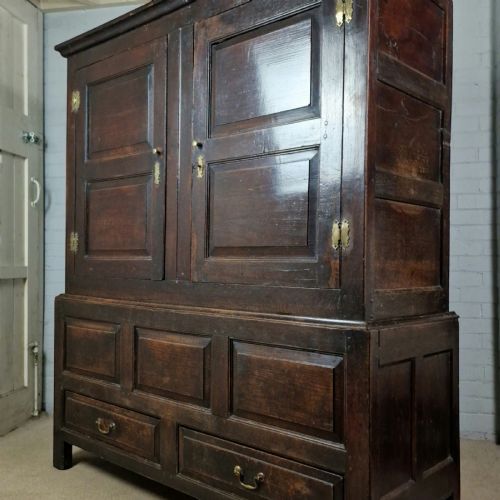
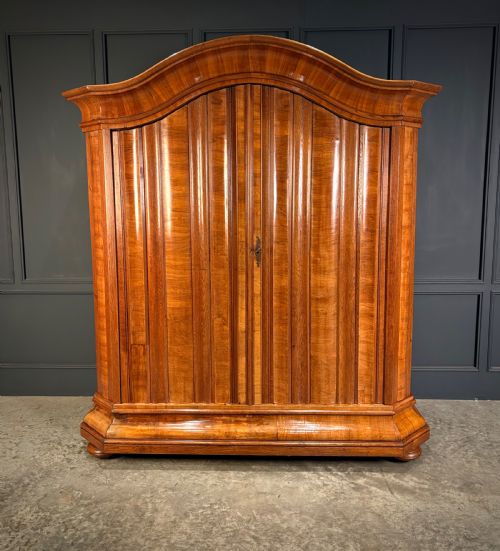
You will encounter regional English and Welsh examples alongside continental armoires and French provincial pieces. Forms range from traditional two-stage press cupboards and livery cupboards to triple-door wardrobes and gentlemen's wardrobes.
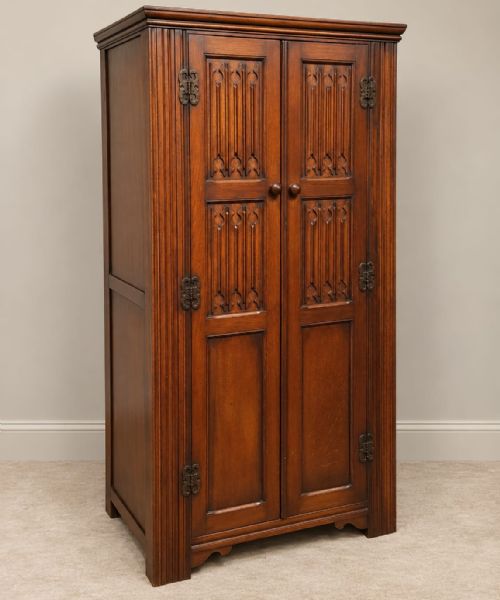
The material vocabulary is grounded in solid oak, occasionally augmented by walnut, brass, glass, and iron fittings. Pieces vary from vernacular country furniture with simple linen folds to heavily carved Gothic Revival and Jacobean Revival creations.
What varies in quality
The distinction between tiers of quality rests upon the depth and crispness of the carving and the selection of the timber. Superior pieces exhibit harmonious grain matching across large panel surfaces and precise joinery that maintains structural integrity over centuries.
Proportion and architectural balance set finer examples apart from utilitarian workshops. The quality of original hardware, such as cast brass escutcheons and working iron locks, further indicates the original tier of production.
Listings feature oak storage pieces spanning from the 18th century to the 1920s, including bleached oak and pollard oak variants.
Maple & Co
The Carved Oak Clothes Press Glossary
- Livery cupboard
- A traditional standing cupboard originally used for storing food or clothing in grand households. These early forms often feature panelled doors and internal shelving.
- Press cupboard
- A two-stage storage piece featuring an upper section enclosed by doors above a lower tier of drawers or cupboards. They were traditionally built to store folded linen.
- Armoire
- A large wardrobe of continental European origin, typically featuring double doors enclosing hanging space or shelving. French examples often display provincial carved motifs.
- Quarter-sawn
- A method of cutting oak logs radially through the growth rings. This technique produces durable boards displaying decorative silver fleck patterns.
- Gothic Revival
- A 19th-century design style drawing inspiration from medieval architecture. Pieces feature pointed arches, tracery, and robust carved mouldings.
Carved Oak Clothes Press: Frequently Asked Questions
How do I use a clothes press today?
These pieces function exceptionally well as bedroom wardrobes or linen cupboards, providing deep shelving and hanging space.
Their substantial internal capacity makes them practical for modern clothing storage while serving as a focal point in a room.
How do I distinguish an 18th-century press from a later revival?
Examine the construction methods, tool marks on the timber, and the nature of the timber shrinkage. 18th-century examples display hand-split or hand-sawn surfaces and pegged joints.
Revival pieces from the Victorian or Edwardian eras often feature machine-sawn timber and standardised fixings even when mimicking earlier styles.
Will a large oak armoire fit in a modern bedroom?
Many continental armoires and presses were built with dismantlable panel-in-frame construction for ease of transport. You should check the overall height and depth against your ceiling clearance.
Some historical examples even survive in flat-pack formats designed for easy assembly.
What is the difference between a wardrobe and a press?
A traditional wardrobe is primarily designed for hanging garments vertically behind full-length doors. A press incorporates internal sliding trays or shelves specifically for folded linen and garments.
Many transitional pieces combine both functions with hanging compartments alongside shelf stacks.