
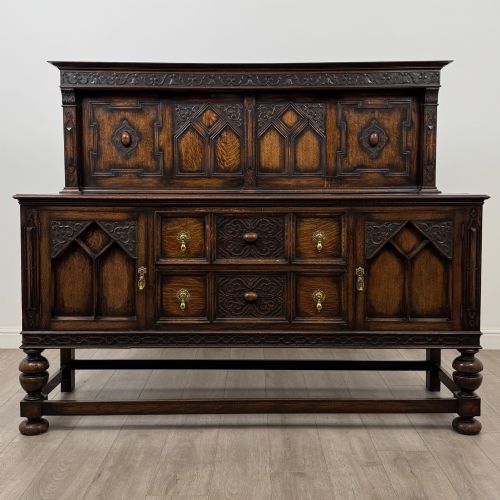
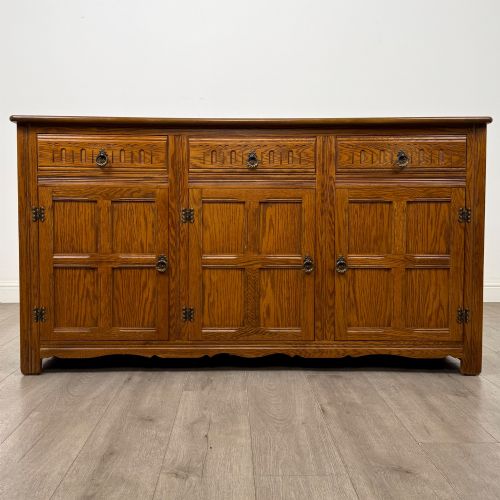
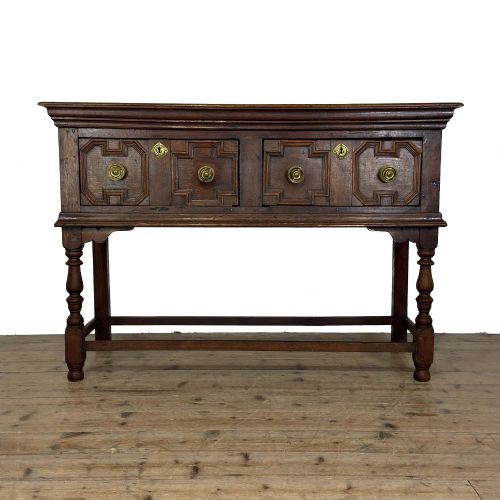
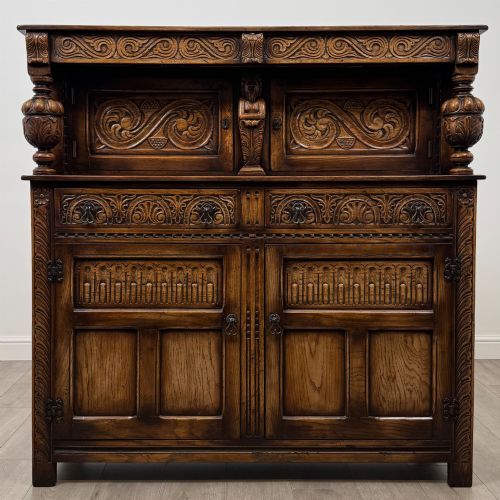
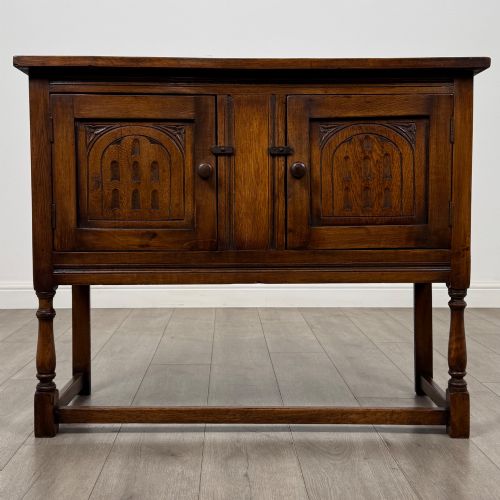
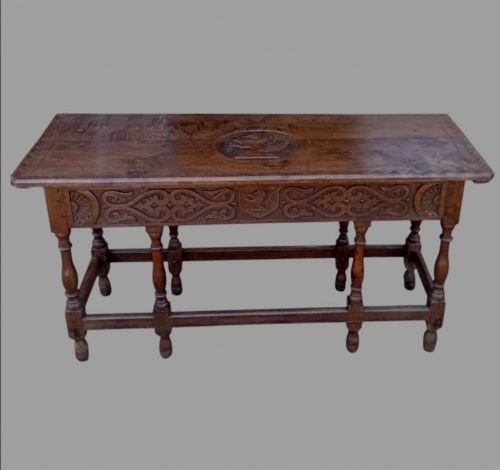
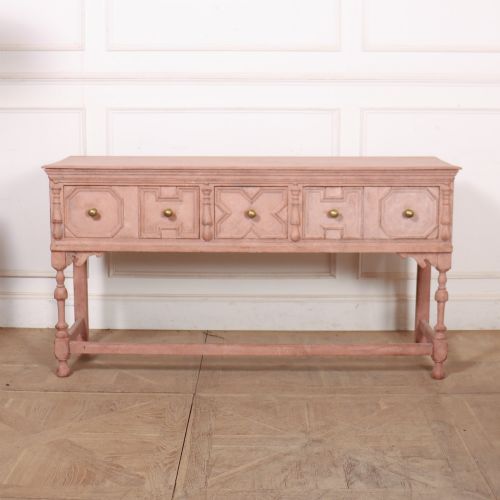
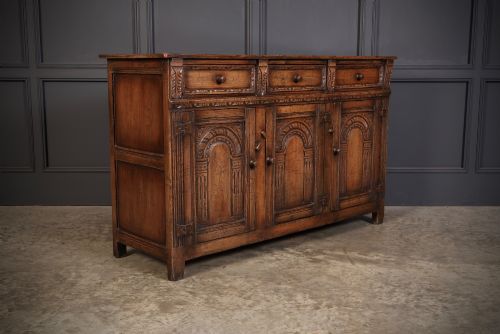
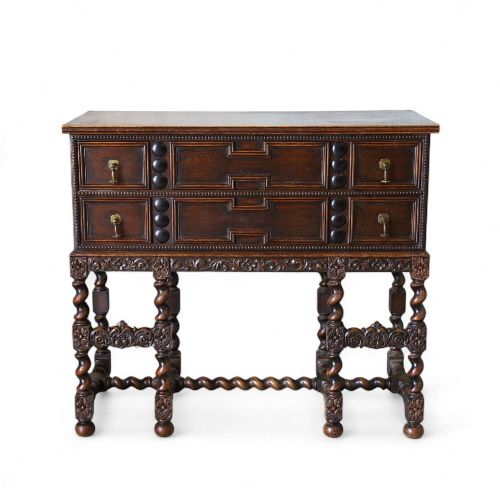
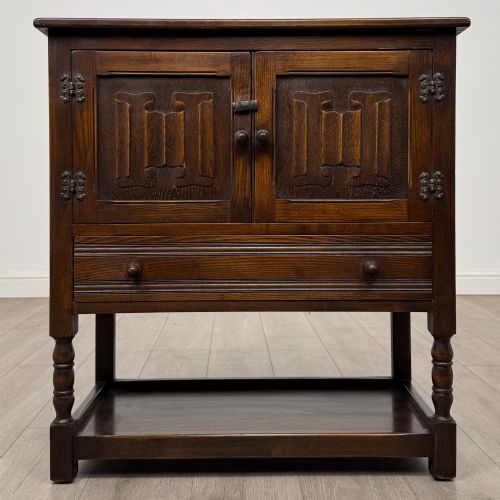


Jacobean Style Oak Server
These jacobean style oak server items are sturdy timber pieces built for storage and display, drawing on early seventeenth-century revivals.
Jacobean Style Oak Server
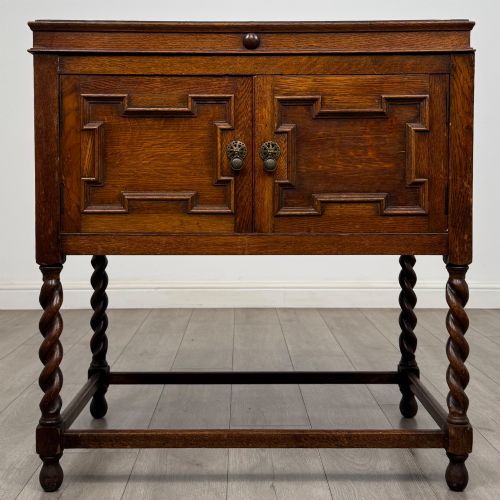
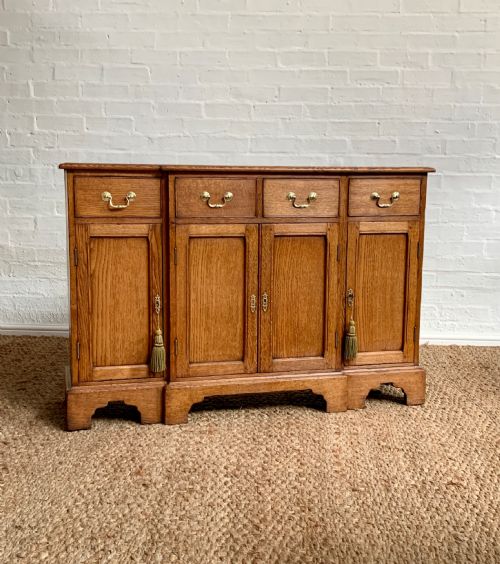
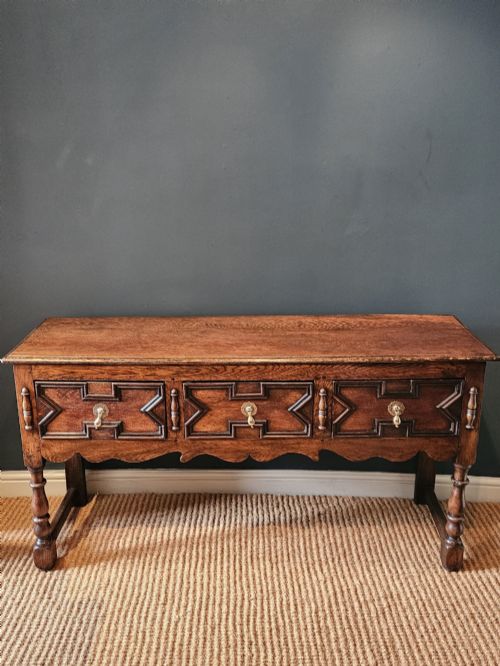
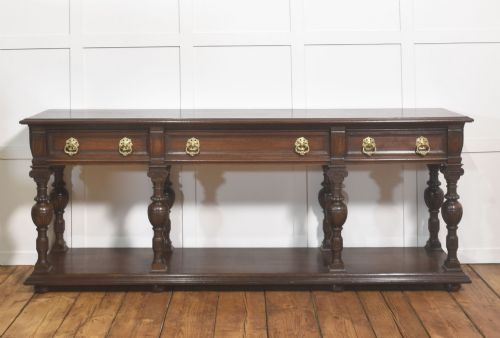
Buyers most commonly meet revival pieces featuring distinctive carved panels, geometric mouldings, and sturdy supports rather than authentic seventeenth-century originals. The selection spans compact side tables and low dresser bases through to tall court cupboards and substantial dining room sideboards.
Materials and Construction Methods
Makers relied primarily on solid oak, selected for its density and strong grain pattern, often complemented by secondary woods and finished with painted surfaces or natural wax. Iron and brass hardware such as drop handles and hinges provide functional contrast to the heavy timber.
Construction techniques include deep chip carving, geometric panel mouldings, and turned structural elements like barley-twist supports. Surfaces show both bleached and golden oak finishes alongside historic painted treatments.
Materials recorded across the selection include solid oak, painted oak, brass hardware, iron fittings, and mirror glass.
Assessing Craftsmanship and Proportion
Quality rests in the crispness of the hand-carved details and the integration of geometric mouldings rather than simple surface decoration. Superior examples display balanced proportions, particularly in smaller sideboard and court cupboard formats.
The choice of timber grain and the integrity of traditional joinery separate standard production pieces from finer revival examples. Sturdiness in the frame and substantial thickness in the oak boards indicate higher standards of construction.
The Jacobean Style Oak Server Glossary
- Court cupboard
- A heavy enclosed storage piece with an upper section supported by pillars, commonly featuring carved oak panels.
- Dresser base
- A low rectangular cabinet fitted with drawers and frequently incorporating an open potboard shelf underneath for storage.
- Geometric moulding
- Raised wooden profiling applied in repetitive angular patterns, frequently seen on drawer fronts and doors of seventeenth-century style furniture.
- Barley-twist
- A turned structural column resembling a twisted rope, popular on legs and supports of revival sideboards.
- Linenfold
- A carved panel decoration resembling folded fabric sheets, utilised widely on wooden cupboard doors.
Jacobean Style Oak Server: Frequently Asked Questions
What is a jacobean style oak server?
It is a heavy timber storage unit or sideboard that borrows decorative motifs from the seventeenth century.
These pieces range from Edwardian and nineteen-twenties revival sideboards to nineteenth-century dresser bases and court cupboards.
How do I date an oak server?
Dating relies on examining tool marks, hardware fixings, timber seasoning, and construction methods. Many pieces found on the market date from the Edwardian period or the nineteen-twenties rather than the seventeenth century.
Revival furniture often adopts earlier styles while retaining the mechanical characteristics of its actual period of manufacture.
Where should I place a dresser base?
These low cabinets suit dining rooms, hallways, or living spaces where substantial surface area and enclosed storage are needed.
Their heavy proportions anchor a room, pairing well with plain walls or traditional interior schemes.
What maintenance does solid oak require?
Solid oak furniture benefits from occasional application of quality beeswax to nourish the timber and maintain its finish.
Keeping pieces away from direct heat sources and strong sunlight prevents the wood from drying out or splitting.